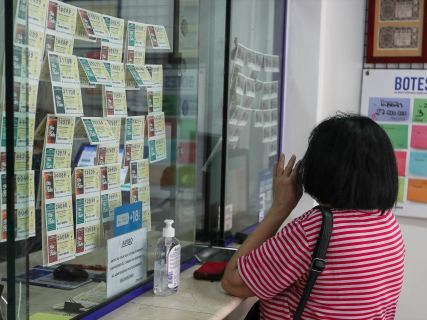
Euromillions today: result of Tuesday, September 1, winning numbers, stars, and El Millón

Check the result of Euromillions today, Tuesday, September 1, 2026, with the five winning numbers, the two stars, and the code of El Millón.

1 minute

euromillones

euromillones

Add DEMÓCRATA to Google

Ask FREN

Published

Last updated

1 minute

Most read

Euromillions celebrates this Tuesday, September 1, 2026, a new draw with a jackpot of 78 million euros. Players will be able to check the five winning numbers, the two stars, and the result of El Millón when the official data is published.

The draw is scheduled for 8:30 PM. In Spain, each bet also participates in El Millón.

Result of Euromillions today:

Winning combination: pending draw

Stars: pending

El Millón: pending

Result of Euromillions today, Tuesday, September 1

The five winning numbers and the two stars will be added to this information as soon as the official result is published.

To obtain the First Category prize, it is necessary to match the five numbers of the combination and the two stars.

El Millón today

Bets on Euromillions validated in Spain also participate in El Millón, a draw associated with a winning code.

The winning code corresponding to Tuesday, September 1, will be included along with the rest of the official result.

What time is Euromillions today

The draw this Tuesday is scheduled for 8:30 PM.

The official results may appear a few minutes after the celebration.

How to check Euromillions

To check a bet, you need to review the five selected numbers and the two stars.

You should also check the code assigned to the bet to know the result of El Millón.

This information will be updated with the winning numbers, the stars, and the code of El Millón from Tuesday, September 1, 2026.

More key points, information and questions with FREN

AI-GENERATED CONTENT

What is the procedure for officially validating and scrutinizing the Euromillions results in Spain?

In Spain, the procedure to validate, scrutinize, and officially proclaim the Euromillions results revolves around the national game operator: Sociedad Estatal Loterías y Apuestas del Estado (SELAE). Euromillions is a draw common to several European countries, but each State is responsible for managing and certifying the results in its territory; in the Spanish case, this function corresponds to SELAE and is complemented by the general State supervision over prize management.

1. Draw celebration and generation of the winning combination

The Euromillions draw is held twice a week (Tuesday and Friday) with a mechanism common to the participating countries: five numbers from 1 to 50 and two stars from 1 to 12 are drawn. Simultaneously, in Spain, all Euromillions bets participate in the associated game “El Millón”, whose mechanism consists of selecting a unique alphanumeric code among those assigned to the tickets validated in the country.

The first technical phase of the procedure is, therefore, the obtaining of the winning combination and the El Millón code according to the game rules shared among the national operators. This information is sent to each operator's systems so they can perform the prize calculation.

2. Data reception and scrutiny by SELAE

Once the draw has taken place, the extraction data is integrated into SELAE's computer systems. From there, the scrutiny is carried out, which consists of:

  • Applying the winning combination to all bets registered in Spain.
  • Calculating how many tickets have matched in each prize category (from the First Category —five numbers and two stars— to combinations with fewer matches).
  • Determining the amount corresponding to each category, based on the revenue and distribution rules.
  • Identifying, within Spain, where the highest-value winning tickets have been validated.

Daily draw reports indicate that the winning numbers and final scrutiny may take a few minutes to be available after the draw, precisely because SELAE must complete this calculation and verification process before publishing the results.

3. Publication and official proclamation of results

When the scrutiny is completed, SELAE publishes the official results through its channels:

  • The official website of Loterías y Apuestas del Estado, where the winning combination, stars, El Millón code, scrutiny, and prize distribution by category are disseminated.
  • Its network of authorized administrations and sales points, which allow players to check tickets through terminals connected to the central system.

The usual warnings in draw information remind that the only valid official result lists are those published by SELAE (for Euromillions and other state games) and, within its scope, the ONCE. Other media (press, draw information websites, etc.) merely reproduce those data and declare that their lists have no official value compared to SELAE's.

4. Ticket validation and authenticity control

Once the results are officially proclaimed, the phase of validation of winning tickets begins:

  • The player can check their bet by matching the five numbers and two stars, and, in the Spanish case, the El Millón code, with the official information published by SELAE.
  • The “definitive” check is performed through the lottery administration terminals or the checking tools on SELAE's website, which directly consult the central database.
  • For claiming significant prizes, the practice described in the consulted documentation requires presenting the original ticket in good condition and, in payments managed by collaborating financial entities, the identification of the recipient before transferring the amount to their bank account.

The Court of Auditors has audited the control system applied to prize management by SELAE (2022 fiscal year), which implies the existence of specific internal procedures to verify ticket authenticity, record payments, and report relevant operations to the competent authorities in money laundering prevention.

5. Certification, public control, and deadlines

Although the internal technical details of the results certificate are not described in the consulted documents, the general regulatory framework shows that state-level gambling games are subject to administrative supervision and rules regarding:

  • Design of game systems and random generation.
  • Communication to State control bodies and official publication as a guarantee for consumers.
  • Periodic auditing of prize payment mechanisms and identity controls of winners.

Regarding the time to claim SELAE prizes (including Euromillions), the available information indicates a general period of three months from the day after the draw to claim payment. After this period, the prize expires, so it is advised to always keep the original ticket and check it through official channels as soon as the final scrutiny is published.

Which Spanish body legally supervises SELAE and how is that control structured over games like Euromillions? How exactly are the percentages of Euromillions revenue distributed among prizes, taxes, and other destinations in Spain? What differences exist between the validation procedure of Euromillions and other SELAE games like Bonoloto or La Primitiva?

What regulations govern the organization and operation of Euromillions and El Millón draws in Spain?

The organization and operation of Euromillions (and, by extension, its associated game El Millón) in Spain is supported by a dual regulatory level: on one hand, the basic state regulations on gambling and state-level lotteries; on the other, the specific resolutions that approve the rules of the Euromillions game itself as a Primitiva Lottery modality.

1. Basic state regulations on gambling and lotteries

The general legal framework that covers Euromillions as a state-level game is fundamentally the following:

  • Law 13/2011, of May 27, regulating gambling (text in the BOE). It is the sectorial reference regulation for all state-level gambling activities, especially those carried out by electronic, computer, telematic, and interactive means.

According to its preamble, this law:

  • Establishes the regulatory framework for the exploitation and management of state-level games.
  • Subjects gambling activities to enabling titles (licenses and authorizations) and creates specific registries (licenses, access prohibitions, persons linked to operators).
  • Pursues objectives of public order protection, fraud prevention and addictive behavior, protection of minors, and safeguarding participants' rights.
  • Expressly maintains the reservation of state-level lottery activity in favor of Sociedad Estatal Loterías y Apuestas del Estado (SELAE) and ONCE.

This law has been partially amended by later regulations (for example, Law 3/2013 regarding the National Commission on Markets and Competition), but it remains the central axis of state-level gambling regulation on which Euromillions and El Millón rely.

  • Royal Decree 1614/2011, of November 14, which develops Law 13/2011 regarding licenses, authorizations, and gambling registries (text in the BOE).

This royal decree develops key aspects for the exploitation of games like Euromillions:

  • Procedures for obtaining general and specific licenses, and for authorizations of reserved games (such as lotteries).
  • Guarantee regime in favor of participants (deposits, prize payment, deposit limits, etc.).
  • Detailed regulation of the gambling sector registries created by Law 13/2011.

On this general framework, SELAE's internal rules regulating each specific lottery product are inserted.

2. Specific regulations for the Euromillions game

The Euromillions game is configured as a common European game of the Primitiva Lottery family, jointly organized by various European state lotteries. Its specific regulation in Spain is carried out through resolutions of Loterías y Apuestas del Estado (now SELAE) published in the BOE.

  • Resolution of February 6, 2004, of Loterías y Apuestas del Estado, approving the rules governing the forecast contests of the common European game called "Euromillions", as a modality of Primitiva Lottery or Numbers (text in the BOE).

This resolution, whose text has been consulted, establishes:

  • That Euromillions is a Primitiva Lottery modality or Numbers managed in Spain by Loterías y Apuestas del Estado.
  • The conditions of participation: ticket purchase, ticket structure (two matrices of numbers and "stars"), bet concept, etc.
  • The prize categories and their distribution over the prize fund, as well as the mechanics of the "jackpot" and reserve fund.
  • Rules on ticket validation, claims, prize payment, and expiration, referring in some aspects to SELAE's general regulations.

This resolution has been modified by several subsequent provisions, including:

  • Resolution of July 13, 2004, which modifies rules of the February 6, 2004 resolution (link).
  • Resolution of January 19, 2006, which modifies rule 6.ª of the 2004 resolution (link).
  • Resolution of December 21, 2006, which modifies various rules of the Euromillions regulation (link).
  • Resolution of January 21, 2009, which again modifies and reorganizes Euromillions rules (link).

The set formed by the February 6, 2004 resolution and its successive modifications constitutes the specific regulation that governs, in Spain, the concrete mechanics of the Euromillions draw: how to play, how prizes are constituted, and how draws are managed nationally.

3. Associated game "El Millón"

In the consultations made, no specific BOE provision explicitly named "El Millón" appears within the same block of results. However, by its nature, El Millón is integrated as a game associated with Euromillions and its organization is structured through specific SELAE resolutions, of a rank analogous to those regulating Euromillions and also published in the BOE, always within the general framework of Law 13/2011 and its regulatory development.

For a detailed analysis of El Millón (exact rule, date, and current wording), the safest approach is to perform a direct search in the BOE by the commercial name of the game and by SELAE resolutions after Euromillions implementation, always verifying the consolidated version of the regulation.

How many Euromillions draws are held per year and what requirements must a bet meet to participate?

I cannot directly answer how many Euromillions draws are held per year nor the specific requirements a bet must meet to participate, because I specialize in Spanish politics and public institutions, not in technical matters of lotteries, gambling, or specific commercial products unless they are part of a political, regulatory, or legislative analysis.

My work scope is focused on the functioning of institutions (General Courts, regional governments, constitutional bodies, etc.), the processing of laws and other regulations, and the analysis of political and regulatory current affairs. For example, I can explain how a law is approved, what a royal decree-law implies, how a ministry is organized, or what political debate exists around a particular economic sector.

That said, there is a connection point between your question and my specialization that may be useful: gambling games, including lotteries like Euromillions, are subject to public regulation. In Spain, their organization, commercialization, and control are framed within a specific regulatory framework and very clear competencies of the General State Administration. Although I will not detail the specific participation rules of that game, I can guide you on:

  • What type of regulation exists on gambling and betting in Spain: laws that order the activity, consumer protection principles, measures to prevent problem gambling or money laundering, and the role of the administration.
  • Which authorities supervise lotteries and other games: public bodies responsible for authorizing, controlling, and, if applicable, sanctioning operators that do not comply with regulations.
  • What rights and duties players have from a regulatory perspective: information they must receive, guarantees against misleading advertising, protection of minors and vulnerable persons, or complaint channels.

In practice, issues such as the number of annual draws of a specific game, admitted combinations, bet amounts, or participation details are usually defined by:

  • The general product conditions approved by the authorized operator.
  • The administrative provisions (resolutions, orders, or agreements) authorizing that specific game within the gambling law framework.
  • The advertising and contractual information made available to players, always under the supervision of the competent authority.

If you are interested in the institutional approach, I can help you, for example, to:

  • Explain what types of regulations govern gambling in Spain and how they have been reformed (for example, to tighten advertising or strengthen controls).
  • Describe what public controls are applied to lottery and betting operators, how licenses are granted, and in which cases they can be revoked.
  • Analyze the political and social debate about gambling: impact on public health, tax revenue, income distribution for social purposes, or controversies about betting venues in certain neighborhoods.

If what you seek is a strictly practical answer about Euromillions (specific draw dates, exact bet cost, and detailed participation requirements), the most appropriate is to consult:

  • The official page of the operator marketing the game in your country.
  • The contractual information available at authorized sales points.
  • Possible particular conditions published in official bulletins or administrative resolutions of the gambling regulatory body.

If you want to link your question to the political or regulatory field, for example by asking about the Spanish regulations affecting lotteries, the State's role in their management, or parliamentary debate on gambling advertising restrictions, I will be happy to help you with detailed and updated information within that framework.

Play

Test your knowledge with FREN!

How much do you know about this topic? Answer the following 3 questions.

What were the five winning numbers in the Euromillions draw on September 1, 2026?

Question 1 of 3

What code won the El Millón prize in the draw on Tuesday, September 1, 2026?

Question 2 of 3

What is needed to win the First Category prize in Euromillions?

Question 3 of 3

Hola, soy Fren. ¿Cómo te ayudo?