

Interior has estimated about 72,000 entries and more than 70,000 returns, although the different balances do not yet allow for a single figure of people remaining in the city. The electoral polls still do not allow attributing a specific shift in the vote to Ceuta, but the surveys on the crisis do show a strong rejection of its management and a widespread suspicion about Morocco's role.
The Ceuta crisis began to take public shape on July 27, 2026. That day, Juan Jesús Vivas conveyed to the central Government his concern about the increase in entries by swimming, the pressure that the city was beginning to bear and the calls circulating on social media.
Three days later, tens of thousands of people crossed from Morocco. The border device was overwhelmed, the Government deployed the Armed Forces, mass returns began, and Ceuta had to improvise accommodations, healthcare, and resources for minors.
The border managed to contain itself, but the crisis did not end there. In August, discrepancies arose regarding the prior warnings from the CNI, the deterioration of coexistence, large citizen mobilizations, disturbances, diplomatic tensions with Morocco, a change in the Government's command structure, and finally, the request for more help from the European Union.
The reconstruction leaves three different levels. There are facts and decisions officially accredited. There are different versions within the State itself regarding the information prior to July 30. And there are journalistic revelations based on anonymous sources that still lack independent documentary confirmation.
Before the crisis: the Supreme Court ruling that circulated distorted on social media
An essential precedent occurred on June 29. The Supreme Court established that the special rejection mechanism at the border provided for Ceuta and Melilla could not be applied automatically to those intercepted at sea before surpassing the physical border elements.
The ruling did not legalize entries by swimming, did not recognize an automatic right to remain in Spain, and did not prohibit returns. It determined that in those cases, the ordinary procedure should be processed, with identification and individualized guarantees.
During the following weeks, false interpretations circulated in Morocco that presented the ruling as a supposed Spanish impossibility to return those who managed to reach Ceuta. Rabat would later attribute part of the mobilization to that disinformation and to trafficking networks.
The Minister of Foreign Affairs, José Manuel Albares, also stated during his parliamentary explanations that the judicial resolution had been manipulated and amplified through false messages. This does not allow us to conclude that the ruling caused the massive entry, but it is part of the information ecosystem prior to July 30.
July 27: Vivas alerts the Government
It is confirmed that Vivas contacted the central Government on July 27 and expressed his concern about the increase in entries. The Ceuta president would later request reinforcements, coordination and an extraordinary response to what he considered a growing risk.
The alarm had an observable basis. In the previous days, the crossings by swimming had multiplied and Vivas would later estimate the accumulated arrivals during the last week at around 1,500.
What is still not fully accredited is how all the contacts of that day developed.
El Independiente publishes today that a telematic meeting was held in which Vivas, the Presidency Cabinet, and representatives from Interior and the CNI participated. According to the newspaper, from the Presidency, the alert would have been downplayed with the argument that such movements occurred every summer and that relations with Morocco were good.
No minutes, recordings, or internal communications have been made public that allow for independent confirmation of all participants and the exact content of that conversation.
Margarita Robles did refer later to contacts maintained on July 27 and to the analysis of messages circulating on networks. That confirms that the situation was being observed before the 30th, but it does not resolve what information each agency received exactly or how it was assessed.
July 29: signals multiply and the CNI warning appears
The day before the massive entry, the pressure was already evident.
More than 1,500 people had arrived by swimming during the last week. About 400 remained around the Temporary Immigrant Stay Center, which housed more than 700 people despite having 512 places. In a single night, another 119 were rescued.
The pressure on the juvenile system was also growing rapidly. Ceuta had gone in a few days from attending to just over 400 to finding itself close to 700.
Weeks later, Robles stated in Congress that CNI agents in Ceuta had detected on July 29 a call on social media to attempt an entry the next day and that this information was communicated verbally.
Interior and the Government Delegation have clarified that version. Their position is that there was no report that allowed for anticipating an entry of the magnitude that ultimately occurred.
The statements are not necessarily incompatible. One thing is to know the existence of movements and calls, and another is to have information capable of predicting that tens of thousands of people were going to reach the border simultaneously.
That nuance would later become one of the main political controversies of the crisis.
July 30: the massive entry overwhelms Ceuta
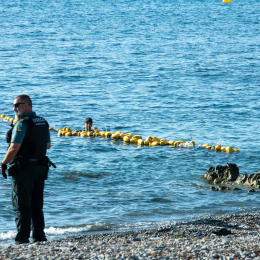
On July 30, the massive entry from Morocco began. Thousands of people reached Ceuta by sea and by the breakwaters while the Civil Guard, National Police, Maritime Rescue, and emergency services tried to rescue those in the water and contain new arrivals.
The first counts were necessarily provisional. As the days went by, Interior raised its estimate to approximately 72,000 entries.
The number equated to an extraordinary proportion relative to a city whose stable population hovers around 85,000 inhabitants.
The reception facilities were overwhelmed. Tens of thousands of people quickly returned to Morocco, while others remained on beaches, streets, improvised facilities, or began identification procedures.
The entry also caused fatalities at sea. The various reports published during August do not use the same territorial perimeter or methodology, so there is still no unique and definitively reconciled figure, although it likely exceeds a hundred victims.
July 31: Sánchez travels to Ceuta and the Army enters
Pedro Sánchez traveled to Ceuta on July 31 along with Fernando Grande-Marlaska.
The Executive mobilized the Armed Forces, reinforced the National Police and Civil Guard, accelerated return procedures, and began to install new physical elements of surveillance and containment at the border. The Government also announced the installation of a floating barrier of approximately 500 meters.
During the following hours, entries drastically decreased and tens of thousands of people returned to Morocco.
The speed of the returns prompted warnings from organizations such as Amnesty International, which demanded individual identification, effective access to asylum, and guarantees against possible collective returns.
The European dimension appeared almost immediately. Italy reinforced its border controls due to fears of secondary movements from Spain, a decision criticized by Sánchez.
August 2 and 3: Morocco builds its explanation
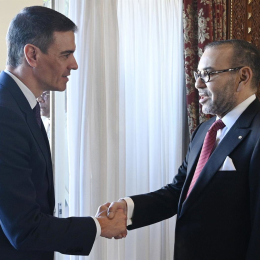
Morocco offered its first official explanations.
Rabat attributed the mobilization to trafficking networks, messages spread on social media, and a false reading of the Supreme Court ruling. It denied having deliberately lifted its controls.
A Moroccan official told Reuters that around 24,000 agents were deployed in the north of the country and reproached Spain for not anticipating the consequences of the court ruling.
There is currently no conclusive public evidence to assert that the Moroccan State directly organized the mobilization. There is also no independent public reconstruction that allows for a precise determination of what occurred in the Moroccan device during the hours immediately prior to the crossing.
This absence of a definitive response will fuel a growing distance throughout August between the version of the Spanish Government and a significant part of public opinion.
August 4: Interior raises the balance to 72,000 entries
Interior estimated that about 72,000 people had entered and assured that more than 70,000 had already returned to Morocco.
These are operational estimates, not a closed nominal census. During the first hours, simultaneous crossings, rapid returns, incomplete identifications, and possible repeated entries were mixed.
That same day, the interior ministers of the European Union held an extraordinary meeting.
The European partners demanded to strengthen the fight against trafficking networks, improve early warning systems and monitor the digital platforms used to organize mass movements.
Brussels also offered the possibility of expanding the actions of Frontex, Europol, and the Asylum Agency.
August 6: the crisis reaches Brussels
The Committee on Civil Liberties, Justice and Home Affairs of the European Parliament held an extraordinary meeting on Ceuta.
Representatives of the Spanish Government, the European Commission, and Juan Jesús Vivas participated.
The crisis thus ceased to be solely a Spanish problem: Ceuta is part of the external border of the Union and any alteration of that border affects the European system of migration, asylum, and free movement.
August 9: more than 10,000 Ceutíes take to the streets
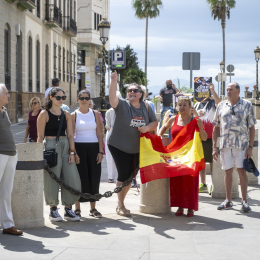
The first major social thermometer arrived on August 9. Thousands of people filled the Constitution Square in a demonstration called by representatives of the Christian, Muslim, Jewish, and Hindu communities and by neighborhood associations.
The organization raised the attendance above 10,000 people and Europa Press reported more than 15,000; the National Police placed it slightly above 5,000. Despite the differences, it is one of the largest recent mobilizations in the city.
The demonstration was born with a cross-cutting message of unity and demands for answers from Spain and Europe. But the first signs of political deterioration also appeared. A part of the attendees prevented a minute of silence for the deceased and later some protesters marched towards the Government Delegation amid shouts of support for Vivas and calls for Sánchez's resignation.
There was still no widespread violence. However, a citizen discontent was beginning to emerge that would eventually shift from institutional demands to rejection of certain reception facilities.
August 10: 1,342 minors and 25 million euros
The Government reported that 1,342 children and adolescents had been registered during the crisis.
Youth and Childhood announced an extraordinary allocation of 25 million euros and opened the process to seek individualized solutions and possible transfers.
The challenge had changed. Stopping the entry was only the first phase. Thousands of immigration files, international protection requests, age determinations, minors under guardianship, and people without stable accommodation remained.
August 13: about 5,000 people remain in Ceuta
Interior estimated that around 5,000 people were still in the city. 1,898 minors had already been identified and hundreds of international protection requests had begun to be resolved.
The figure of 5,000 posed an evident statistical problem against the 72,000 entries and more than 70,000 returns announced earlier.
August 14: neighborhood rejection reaches the reception centers
Tension began to localize in the neighborhoods. In Otero, neighbors and families of military personnel showed their rejection of the possibility of using a decommissioned military warehouse to house migrants. Lthe pressure ended up cooling that location while the administrations sought alternatives.
It was an important change compared to August 9: the protest was no longer directed solely against the general management of the crisis. A concrete opposition was beginning to appear to the installation of temporary devices next to certain residential areas.
August 15: Morocco prevents a second entry
A new call on social media put Ceuta on alert again. Moroccan authorities reinforced surveillance around Castillejos and blocked groups trying to approach the border. The massive entry did not repeat.
This movement represents a short-term breath of fresh air for the government of Pedro Sánchez, because the device allowed for verifying the weight that cooperation from the neighboring country had in preventing large concentrations from reaching the border line. Nevertheless, there were also problems here: Morocco expelled journalists from RTVE and Efe who were covering the deployment.
August 16 and 17: the crisis moves from the border to daily management
The health pressure accumulated thousands of assistances. The State began to enable temporary facilities and the Red Cross took on an increasing part of the food, basic care, and accommodation.
The problem was beginning to take another form. The border was contained, but thousands of people continued in the city and the solution now depended on administrative procedures that could not be executed collectively.
August 18: Sánchez's digital blackout begins
On August 18, another indicator appears, this time political and communicative.
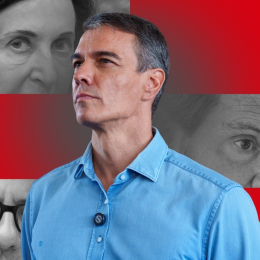
On that day, Pedro Sánchez published his last personal message on X until the closure of this timeline. It was dedicated to the 90th anniversary of the assassination of Federico García Lorca. Since then until now, nothing. At a time when, moreover, pressure is growing within his own party regarding the management of the migration crisis.
The silence stood out because it coincided with a phase in which the crisis continued to occupy the public agenda and the Government continued making decisions.
August 19: Feijóo takes the political battle to Ceuta
Alberto Núñez Feijóo traveled to the city and presented a series of measures, for the second time since the crisis began.
The PP demanded permanent reinforcements at the border, legal changes, more police, health, and technological resources, and a tougher consideration of Morocco's role.
The opposition began to use the expression responsibility "by action or omission" to refer to Rabat, a formula that would later also appear in statements from members of the Government itself.
August 21 and 22: Morocco introduces sovereignty into the crisis
The Moroccan Minister of Justice, Abdellatif Ouahbi, stated that Morocco maintained a supposed "historical and geographical right" over Ceuta and Melilla.
Foreign Affairs rejected the statements and reiterated that Spanish sovereignty over both cities is not subject to negotiation.
On August 22, social discontent even penetrated football. AD Ceuta and UD Las Palmas took to the Alfonso Murube with shirts bearing the slogan "Ceuta is not for sale, Ceuta is defended," while the stands displayed numerous Spanish flags and chants against the Government were heard.
On that same 22nd, the Ministry of Economy announced that Vice President Carlos Cuerpo would travel to Ceuta two days later to hold working meetings with the city government, business associations, and social agents of the city and announce economic measures.
August 23: suddenly, the succession
Óscar Puente, Minister of Transport, enters the debate on the succession of Pedro Sánchez. In an interview granted to Europa Press, Puente does not shy away from the question of whether he sees himself as a candidate and says that, if given the opportunity to lead the PSOE, he would not let it pass.
August 24: Loma Colmenar anticipates the outbreak
The neighborhood escalation took another step in Loma Colmenar, where one of the temporary camps was operating. A protest ended up provoking clashes between neighbors and forced the Police to intervene.
That day Spain requested also more than 32 million euros of extraordinary European funding to face the costs of reception, identification, surveillance, and care for minors.
Twenty-five days after the massive entry, the Government decided to modify the architecture of its response and move towards centralized coordination.
August 25: National Security, clash within the Government and protests in front of the Delegation
The Council of Ministers declared Ceuta in a situation of interest for National Security.
Ángel Víctor Torres was put in charge of the state coordination of a structure in which the involved ministries, the Autonomous City, the Government Delegation, the CNI, and the Department of National Security participate.
That same day, the disagreement about the warnings prior to July 30 openly appeared. Robles stated in Congress that the CNI had transmitted information about a call to swim in.
Marlaska responded that there was no report capable of anticipating an arrival of the dimensions ultimately recorded.
Featured story
The CNI and Schrödinger's cat: the PSOE claims that it warned and did not warn about Ceuta
4 minutes
While that debate was taking place in Madrid, hundreds of Ceutíes first gathered in front of the Coronel Fischer barracks for fear that it would be used as accommodation and then in front of the Government Delegation.
The Delegation itself denied one of the messages that had helped mobilize the neighbors and expressly labeled it as a hoax.
The protest already showed an element that would be repeated in the following days: real discontent mixed with information not always verified that circulated with enormous speed through social networks and WhatsApp.
August 26: more than 2,000 people and an attempt to evict El Trampolín
More than 2,000 people mobilized from O'Donnell and other areas to the Government Delegation to demand solutions and call for resignations.
During the night, sit-ins, overturned containers, and confrontations appeared. Some journalists were shouted at. A group moved towards the Trampolín beach and attempted to evict on their own people migrants who were sleeping there, which forced the Police to intervene.
The crisis thus entered its most dangerous social phase. It was no longer just protests in front of institutions. Some groups were beginning to head directly towards the settlements.
On August 26, simultaneous calls began to become visible for September 2, Ceuta Day, in dozens of Spanish localities: Europa Press counted 72 cities at that time, while the initiative quickly spread with the support of municipalities and the call from the Spanish Federation of Municipalities and Provinces.
The majority of the gatherings were set for 8:00 PM in front of city halls or main squares and were framed as acts of support for Ceuta and a demand for a response to the crisis. The map continued to grow in the following days, reaching several hundred calls according to the compilations of the promoters and ended up being supported and converted into institutional mobilization by the FEMP and backed by the PP.
Featured story
Map of the demonstrations for Ceuta: cities, times, and who will attend on September 2
5 minutes
August 27: fire in the camps and police charges
August 27 was the point of maximum neighborhood tension of the entire month. During a new protest, demonstrators broke the police cordon and entered the settlements on the beaches of Benítez and El Trampolín.
Refuges and belongings were destroyed and fires occurred. The National Police carried out charges to contain the disturbances.
The demonstrators also blocked for a time the access of Red Cross vehicles that were supposed to distribute food.
The disturbances came after another violent episode recorded in the opposite direction: twelve Moroccan citizens were arrested after a stone attack against a military vehicle. Eleven would end up being expelled.
There were also reports of assaults and intimidation against journalists.
August 27: systematic triage begins
While the streets reached their moment of greatest tension, the Interior Ministry reorganized the Temporary Attention Center for Foreigners.
Eight processing lines were established, with plans to reach fourteen, and the teams responsible for asylum and identification were reinforced.
Each person had to undergo a medical examination, vulnerability analysis, biometric identification, document consultation, and determination of the corresponding procedure.
Only after that could it be decided whether a return, an expulsion, an asylum request, incorporation into the minors' system, or any other legally planned action was appropriate.
August 28: Marlaska, Albares, and Saiz appear in Congress
The crisis returned to Congress on August 28 with the appearances of Fernando Grande-Marlaska, José Manuel Albares, and Elma Saiz. Interior defended that there was no alert capable of anticipating an entry of the dimensions finally recorded and focused the response on accelerating identifications, returns, and European reinforcement; Foreign Affairs insisted on the cooperation maintained with Morocco and that Spanish sovereignty over Ceuta and Melilla is not in discussion; and Inclusion detailed the extraordinary resources allocated for reception and humanitarian assistance
The interventions completed a week of parliamentary explanations marked by the differences over what the State knew before July 30 and to what extent responsibilities could be attributed to Rabat.
Hundreds of Ceutans demonstrated again on Friday the 28th. The Ceuta United platform called for a new march that went through different points of the city until approaching again the areas of Benítez and El Trampolín.
The protest maintained a very harsh tone and slogans demanding the expulsion of migrants were heard, but violence comparable to that of the previous day was not reproduced.
August 28: Spain requests more help from Frontex
On that same day, the Government formally requested to expand the support of Frontex, Europol, and the European Union Asylum Agency.
The request included ten additional agents from the permanent Frontex body to assist in triage, identification, and possible return procedures. Spain also requested to extend Operation Minerva beyond its initially planned end.
The Asylum Agency would provide interviewers, interpreters, and technical assistance. Europol would reinforce investigations into human trafficking and the digital networks used to organize movements.
Spain also demanded to maintain satellite surveillance services and extend certain maritime capabilities.
Frontex was not arriving for the first time in Ceuta. Operation Minerva had been active since before the crisis. The decision on August 28 consisted of expanding and prolonging its participation.
What the polls say: there is still no clean "Ceuta effect" electoral
The crisis has had a strong impact on public opinion, although converting that impact directly into voting intention would be premature.
The electoral polls conducted during August do not show a unidirectional movement attributable exclusively to Ceuta.
NC Report placed the PSOE slightly above its previous measurement, with an increase of two tenths, while SocioMétrica also recorded a rise of three tenths. In both cases, PP and Vox maintained a wide majority. The average of August polls barely registered movements compared to July.

Featured story
Crisis in Ceuta: Has the Government of Pedro Sánchez reached the point of no return?
10 minutes
Therefore, it cannot yet be stated that Ceuta has caused an electoral collapse of the PSOE by itself or an immediate turnaround of the board. The picture changes when specifically asking about the crisis.
A Sigma Dos poll, with fieldwork from August 5, recorded that 47.6% pointed to the pressure from the Moroccan government as the main cause. 68.7% considered that the Spanish government had ignored warnings from intelligence services and 82.4% supported reinforcing the border militarily.
Another poll by NC Report published at the beginning of August found that 69.3% believed that Morocco was using migration flows to exert political pressure on Sánchez. And the trend seems to have hardened during the month.
A new poll released by El Mundo today places around 90% of those who believe that Morocco was behind what happened in one way or another and above 80% of those who think that Pedro Sánchez is not doing enough in the face of the crisis.