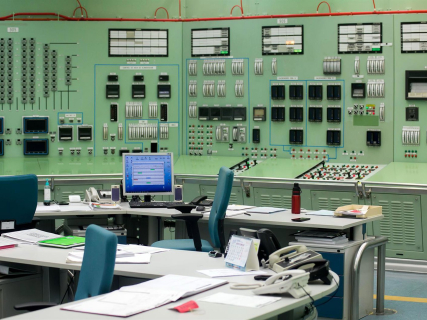

Turning off a reactor permanently does not mean closing a nuclear power plant and leaving. The cessation of production opens another much longer process: removing the fuel, decontaminating facilities, dismantling radioactive components, demolishing buildings, and restoring the site. And the bill is measured in hundreds of millions of euros per facility.
Spain entrusts these tasks to Enresa, the public company responsible for the management of radioactive waste and the dismantling of nuclear facilities.
The seventh General Plan for Radioactive Waste estimates that only the future actions encompassed under the concept of closure will amount to 4,764.97 million euros between 2024 and 2100.
The figure does not include the entire future nuclear bill, because storing and managing spent fuel and high-activity waste constitutes another distinct and considerably larger item.
First, the fuel must be removed
When a power plant permanently stops producing electricity, it still retains spent nuclear fuel and radioactive materials in its facilities.
Before undertaking a good part of the dismantling, that fuel must be extracted from the reactor and managed safely. Depending on the facility, it may first go through storage pools and subsequently through containers located in individualized temporary warehouses.
Then the progressive dismantling of equipment, pipes, and structures begins, with different procedures depending on whether there is radiological contamination or not.
Not everything that comes out of a closed power plant is radioactive waste. Part of the materials can be decontaminated, classified, and, when it meets the corresponding requirements, recycled or managed as conventional waste.
Garoña: 475 million euros
Santa María de Garoña gives an idea of the economic dimension.
Enresa currently estimates the cost of its dismantling at 475 million euros. The project is divided into two major phases and includes the management of spent fuel, decontamination of circuits, dismantling of components, demolition of buildings, and final restoration of the site.
Only the second phase has an estimated duration of about seven years.
Enresa estimates that during the process, between 200 and 300 people will typically work, with peaks exceeding 300 employees at the beginning of certain tasks.
Therefore, the end of electricity production does not mean the immediate end of industrial activity at the site.
Who pays?
The financing is based on a simple principle: the costs must fundamentally fall on those who generate the waste.
There is a specific Fund to finance the activities of the General Plan for Radioactive Waste, managed by Enresa. The companies owning the nuclear power plants in operation make contributions through a property payment linked to the nuclear electricity generated.
The rate set in 2024 for that payment is 10.36 euros per MWh produced by the plants in operation. The Government justified its update precisely due to the increase in future cost estimates reflected in the seventh General Plan for Radioactive Waste.
That money is incorporated into the Fund, which then finances the activities of Enresa.
A bill of more than 28 billion until 2100
The dismantling is only part of the bill.
The General Plan for Radioactive Waste estimates the total cost of the system at 28.155 billion euros for the entire period from 1985 to 2100.
For the future period from 2024 to 2100, around 20.220 billion is estimated.
The largest item does not correspond to dismantling plants, but to the management of spent fuel and high-level waste, which absorbs around 54% of the projected future costs. The closure of facilities represents nearly 4.765 billion.
The calculation also includes low and medium-level waste, research and development, and the structural costs necessary to maintain the system for decades.
The problem continues after dismantling
Completely dismantling the reactor does not eliminate the radioactive waste it produced during its lifetime.
Spain uses El Cabril, in Córdoba, for certain low and medium-level waste, while spent fuel and high-level waste require specific storage solutions for much longer periods.
The current General Plan for Radioactive Waste contemplates the future construction of a Deep Geological Repository, intended to provide a definitive solution for spent fuel and high-level waste.
That is the reason why the economic planning extends until the year 2100, long after the planned closure for the last Spanish reactor in 2035.
Closing a nuclear power plant, therefore, does not consist solely of deciding when it stops producing electricity. The State and companies must have previously financed decades of subsequent work and the management of waste that continues to exist long after the reactor disappears.