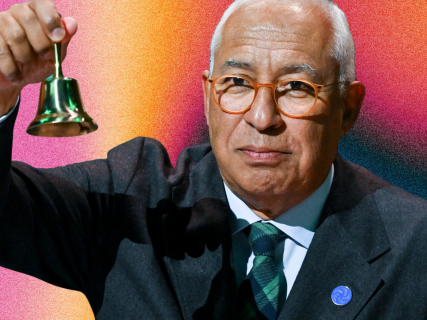

From Dublin, special correspondent.- The Irish capital is crossed by the River Liffey. On one side, the nerve center of major technology companies, with tall glass buildings whose lit offices invite you to imagine, even late at night, their employees working on the latest models of artificial intelligence. On the other, the pubs that make up Temple Bar, the other side of a city in which engineers can find the end of the working day in the form of a pint of Guinness.
European leaders have met this week for two days at the Dublin Convention Centre, in the city’s corporate heart. To reach the venue that has hosted the summit, one can imagine that officials, diplomats, journalists, police, and the rest of the pomp that accompanies this kind of gathering might liven up their morning stroll with songs by U2 as a soundtrack. Few cities have a group that has managed to become so recognizable a part of its identity.
The central theme of the meeting, for the first time at a summit of this kind, was the role that the European continent aspires to play in the development of artificial intelligence. Sources present in the discussions explained that, in the corridors of the press room adorned with long green carpets, the purpose was to open a dialogue with business representatives, such as the CEO of Mistral, and voices from the scientific field, such as the Nobel Prize in Physics winner.
Featured story
European dose of optimism in Dublin: "I hate the idea that we’ve lost the AI race"
5 minutes
Instead, the heads of Government, according to diplomats with knowledge of the content of the conversations, took the opportunity to ask Mensch about issues such as "the feasibility of data centers, the impact of energy costs, or the effect these tools have on minors". Inside the room, topics of current affairs were not discussed, despite the fact that outside it people talked about nothing else but the fall of Microsoft systems or the latest news related to Nvidia.
A certainly revealing sign of the need to strengthen European technological autonomy. A constant refrain that found competition only in Bono’s lyrics. Because if anything the Dublin summit has left behind, it is a collection of messages about the priorities, the contradictions and the ambitions of a Europe that wants to stop being a consumer of technology and also become a protagonist in its development. And what better way to understand that challenge than through a U2 playlist.
🗣️Baño de optimismo europeo en Dublín: "Detesto la idea de que hemos perdido la carrera de la IA"
— demócrata (@democrata_info) November 13, 2026
👉Nuestro enviado especial en Dublín, Álvaro Villarroel (@vilarroell) recoge las declaraciones de los líderes políticos
📲Tienes todos los detalles en Demócrata… pic.twitter.com/y6iAEEqcLw
1. With or Without You (The Joshua Tree, 1987): the dilemma between staying regular and innovating
In the eighties, the Irish band talked about that painful contradiction of being trapped in a complex relationship, where staying hurts, but leaving also. "With or without you". That is precisely the dilemma that Europeans are facing in their technological rearmament: competitiveness or regulation. After years of leading the processing of regulatory files to order the development of artificial intelligence, more and more voices are recognizing that the time has come to prioritize the flexibilities needed so that companies can grow, reach scale, and compete with their American and Chinese rivals.
Upon arriving at the venue that hosted the meeting, Estonia's prime minister, Kristen Michal, advanced that the debate on AI regulation will be reopened in future meetings, although she defended that this first meeting represented "a historic moment". "We will explore the balance between regulation and innovation," warned, for her part, Irish prime minister, Micheál Martin.
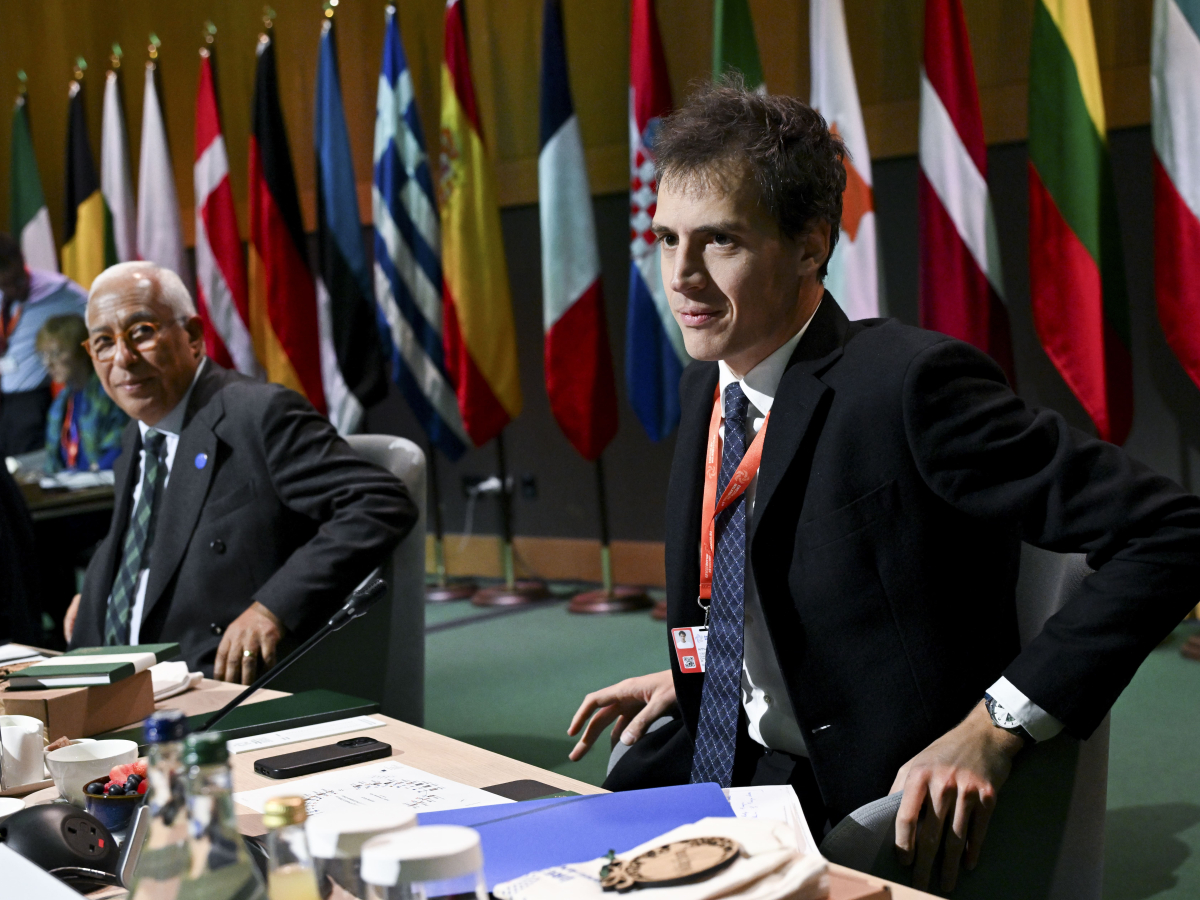
The message reflects one of the main tensions running through the Community digital agenda. The European Union has built much of its international leadership on its ability to set rules, from the Artificial Intelligence Regulation to rules on data protection and digital services. However, the geopolitical context and the speed at which technology evolves have shifted the focus to another question: how to prevent that regulatory effort from ending up becoming a competitive disadvantage for European companies.
For the moment, the priority of the European Commission in this regard is to simplify the legislative files currently in force. After the approval by the Member States of the amendment to the General Data Protection Regulation (GDPR) to allow the use of sensitive data in the training of artificial intelligence systems when there is "legitimate interest," Brussels is preparing new measures related to copyright and the legislative tools it will present in 2027, as reflected in its work program.
The question is no longer only how much Europe needs to regulate, but also what margin it needs to offer its companies in order to develop proprietary technology without giving up the guarantees that have defined its regulatory model. A complicated relationship, like the one Bono described, in which neither regulation nor innovation seems able to move forward separately.
2. Where the Streets Have No Name (The Joshua Tree, 1987): Europe still wants to get there in time
With this song, U2 explored the longing to escape social labels, borders, and the limitations of the environment in search of a place of unlimited potential. "I want to tear down the walls that hold me inside". A chorus chanted throughout the summit, in which Europeans were also looking to unleash a dose of optimism. "I hate the idea that we’ve lost the AI race", said the President of the European Parliament, Roberta Metsola.
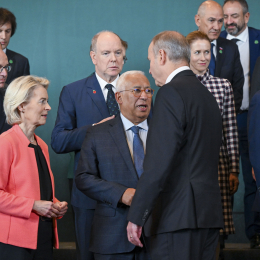
Along the same lines, days before the meeting, a source from the office of European Council President António Costa was assuring his skepticism about the possibility that Europeans would arrive late to these discussions. "Europe has everything to be in the race. We don’t have time to lose," the French president, Emmanuel Macron, concluded at the end of the session.
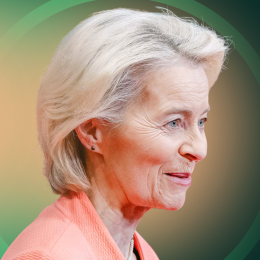
The underlying message is that the technological gap with the United States and China does not have to become a permanent sentence. The EU still has industrial capabilities, research talent, universities, and innovative companies that can serve as a foundation for building its own technological ecosystem. The problem is getting all those assets to find the necessary conditions to develop within the European market.
Just this week, the Eurochamber has given the green light to the next negotiations on the Cloud Development Act and AI. The text, for which Spanish MEP Diego Solier is the rapporteur, wants to promote research and innovation, while also achieving a "capacity across the entire cloud ecosystem". The proposal will also serve to define specific operational objectives, such as the development of optimized servers and the enabling of large-scale data collection for training these systems.
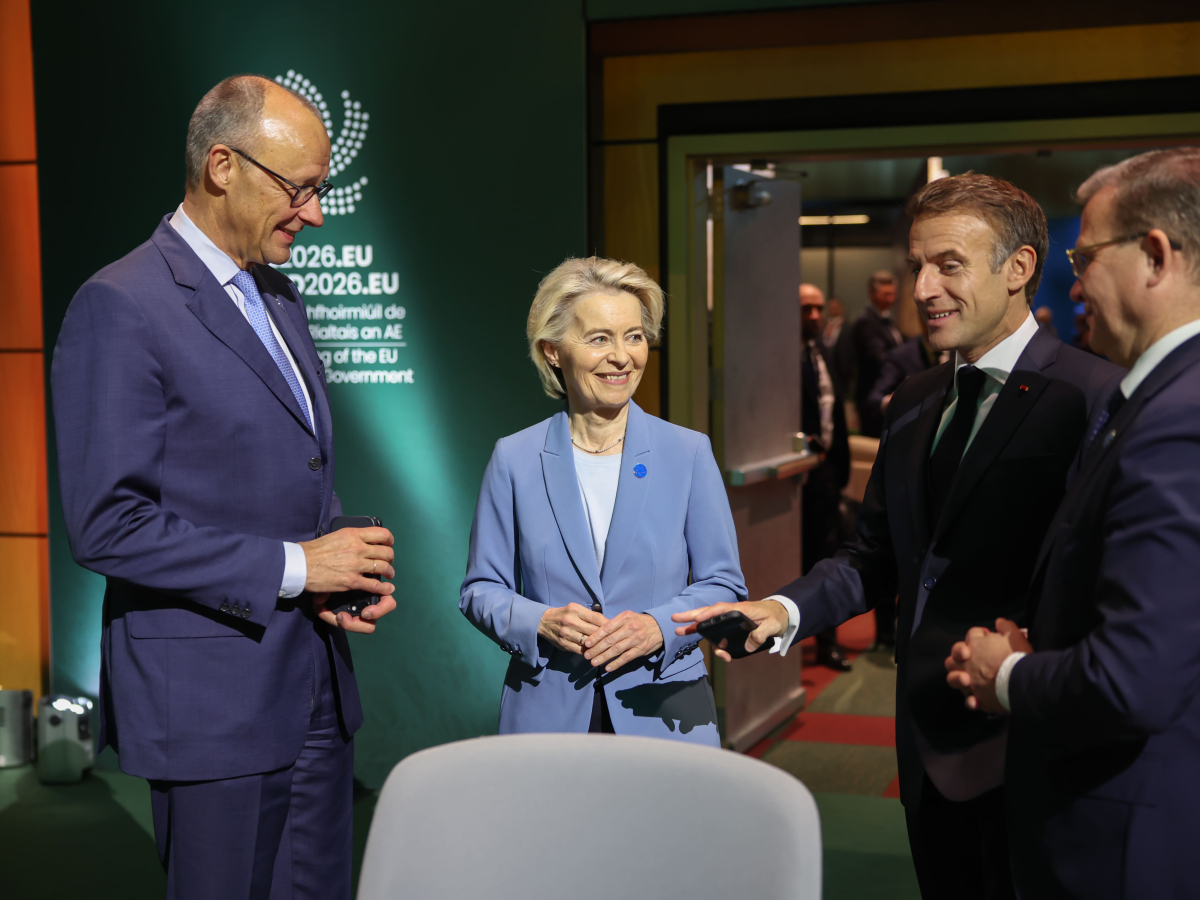
"We have the talent", Metsola has added, who was calling for the necessary investments to be carried out so that the ideas do not emigrate outside. The warning points to one of the continent's structural problems: Europe generates knowledge and trains highly qualified professionals, but it does not always manage to retain them or turn its scientific advances into companies capable of competing on a global scale.
The challenge, therefore, involves tearing down the barriers that still fragment the European market and making it easier for technological projects to grow without running into twenty-seven different administrative obstacles. The race is not necessarily lost, but the time to react is running out.
3. One (Achtung Baby, 1991): twenty-seven countries, a single ambition
Composed at a time of internal crisis for the band, during German reunification, Bono issued an appeal that, despite not being a peaceful or naive love song, serves as a forceful call to reality. "We're one, but we're not the same". Europeans feel addressed by lyrics that invite them to learn to collaborate to survive. In discussions about AI, too.
For example, the prime minister of Estonia, a country advanced in digitalization, said that community leadership in terms of services legitimizes him to take the lead in this area. "We can establish the rules for AI and the different services", he proposed. Something with which the president of the European Commission, Ursula von der Leyen, agrees, who has asked to deploy "industrial AI across the entire continent" to take advantage of its potential.

For its part, Spain places the emphasis on the fact that advanced AI models should extend to all areas of the economy: SMEs, industry and public administrations. The objective is to prevent the development of these tools from being limited to a small group of large technology companies and to ensure that their application reaches the entire fabric of production.
Paris focuses on the fact that Europe achieves sufficient power so that, when a company develops an AI model, it finds the necessary support to train it, the capital to grow, and the customers to deploy it. Macron has recalled that now it is necessary to "act all together".
If there is something the Twenty-Seven share, it is the need to step up the bet on public-private investment. For the leader of the Polish Executive, Donald Tusk, it is precisely the lack of joint forces, in the face of a so-called “unified scale,” that is leaving the EU behind. The fragmentation of investments, computing capabilities, and research projects makes it difficult for European initiatives to reach a sufficient scale to compete with major international players.
Collaboration, therefore, is not only a matter of political will. It also requires putting in place financial instruments, shared infrastructure, and market conditions that allow companies to operate in a truly European space. Community technological ambition needs to surpass the sum of twenty-seven national strategies if it wants to become a real alternative to the models of the United States and China.
4. Vertigo (How to Dismantle an Atomic Bomb, 2004): the energy that the technological revolution needs
A frantic, high-energy theme that portrays vertigo, loss of control, and sensory overload in the face of the speed of the modern world. "It's everything I wish I didn't know". The voltage for the European Union is another of the issues that has been on the table of the discussions. The leaders directly questioned their guests about the urgency of addressing high energy prices in order to be able to bet on the development of data centers, as well as on new technologies.
The energy issue has become one of the main constraints of the technological race. Training and operation of advanced artificial intelligence models requires an increasing computing capacity and, with it, abundant, stable, and competitive electricity supply. Data centers, essential infrastructure for sustaining this expansion, need to find an environment in which energy costs do not end up penalizing their rollout.
In this scenario, technological autonomy is also linked to the ability to ensure the energy supply needed to sustain the new digital infrastructures. It is not enough to develop our own models if Europe does not have the computing capacity and the energy needed to train and deploy them. Faced with superpowers such as the United States and China, the heads of government have called for "European independence". "You don’t outsource, you build it at home," said the tenant of the Élysée Palace. For her part, Von der Leyen has repeated the idea of managing to build a "AI made in Europe".
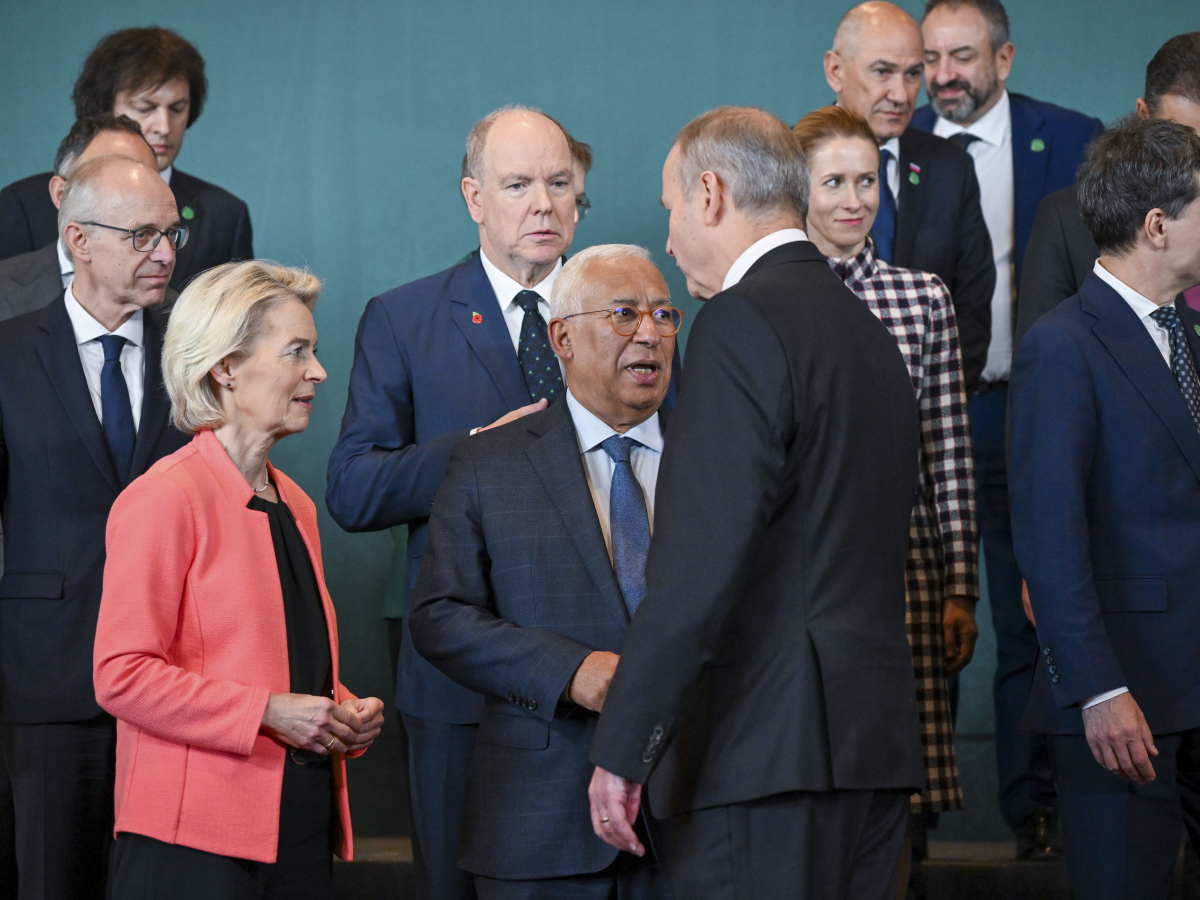
Tusk has proposed, for example, boosting leading research institutes in artificial intelligence, as well as applying Regulation 28 to this sector, through which a company that is established in a Member State can do so, at the same time, in the rest of the capitals. The goal is to facilitate the expansion of companies and eliminate regulatory obstacles that hinder their growth in the single market.
"Let’s stop funding our ambitions separately, let’s work together, and let’s secure Europe’s place in the AI revolution," he concluded. A call to abandon the dispersion of resources and to focus efforts on those capabilities that can determine the continent’s position in the coming years.
5. Beautiful Day (All That You Can't Leave Behind, 2000): a second chance for Europe
An anthem to resilience and rebirth. It talks about losing everything, accepting drastic changes, and finding beauty in a new beginning after a crisis. "Don't let it get away. It's a beautiful day". After noting the impact of technology on the daily lives of Europeans, Costa has raised how to "manage the risks and changes that it will bring", establishing global standards for a "responsible" governance and safe artificial intelligence.
For the Spanish delegation, the "European AI Regulation already provides sufficient instruments to supervise and control the most advanced models". A position that reflects the will to defend the Community regulatory framework as a protection tool, without turning its review into a renunciation of the guarantees that have accompanied the development of European digital policy. The discussion about the continent’s technological future therefore is not limited to a race to obtain more computing power, attract investments, or develop its own models. It also involves deciding what role Europe wants to play in defining international standards and how to ensure that the expansion of these tools takes place under rules compatible with its principles.
The president of the European Council has precisely placed one of the main challenges of the coming years within that balance. Artificial intelligence will transform entire sectors of the economy, alter labor relations, and modify the provision of public services. The question is how to anticipate these changes and manage their consequences without curbing the potential of technology. The Dublin summit has not closed any of these discussions. Nor did it intend to. Its main contribution has been to bring together political leaders with some of the leading figures from the technological and scientific ecosystem in order to share assessments and begin to identify priorities for action.
Between the green carpeting of the Convention Centre and the pubs of Temple Bar, Europe has again listened to a familiar melody: it needs to invest more, cooperate better, reduce its dependencies, and find the balance between innovation and regulation. Technological autonomy is not built with declarations, but with infrastructure, capital, talent, and industrial capacity. Perhaps that is why, when leaving the summit, the European soundtrack resembles more than ever a U2 song: a mix of urgency, contradictions, and optimism. Because, although the continent has not yet found its definitive place in the revolution of artificial intelligence, in Dublin the Twenty-Seven have wanted to make clear that they do not intend to abandon the race.