
In Brussels there are nights of passage and nights in which, for a few hours, it seems that everything happens around the same table. The VII Vinces Dinner in Brussels, held last Wednesday, 18 November, with Demócrata as a media partner, belonged to the latter. One of those appointments in which the Spanish community that works daily in building Europe’s political, economic and regulatory future puts aside the institutional agenda for a moment in order to meet, recognize one another, and share something more than business cards.
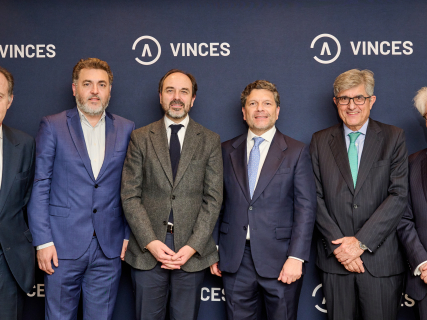
The photograph of attendees gave a good account of the scale of the gathering. Present were Marcos Alonso, deputy permanent representative ambassador of Spain to the European Union, and Federico Torres, Spain’s ambassador to NATO. But there was also a substantial political presence, with names that add up years of experience in the European institutions and who know the ins and outs of community politics well.
Among those present were the MEPs Nicolás González Casares, Juan Fernando López Aguilar, Borja Giménez, Susana Solís, Jonas Fernández, Pilar del Castillo, Pablo Arias and Nacho Sánchez Amor, as well as Tono López-Istúriz and Nicolás Pascual de la Parte. To them were added profiles at the very top of the EU administration, such as Cristina Lobillo and Miguel Gil Tertre, along with other representatives of the European Commission.
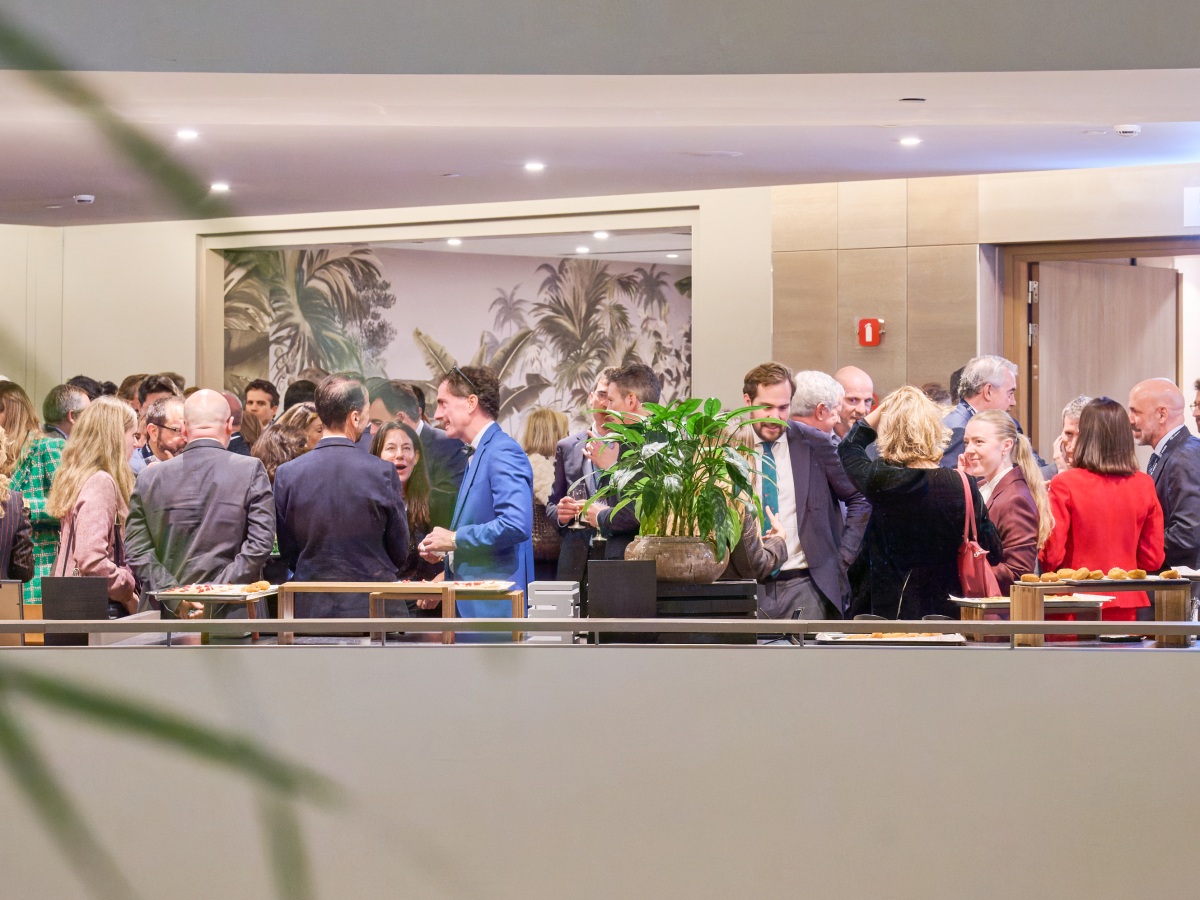
The business representation also had a prominent weight, with companies from different sectors and strategic verticals. Among them, CCP and Petronor, in the energy and industrial sphere; Meta and Amazon, in the technological and digital sphere; as well as companies linked to the healthcare sector, among others. A mix of generations, responsibilities and paths that reflects to what extent the Spanish community in Brussels has been gaining weight and presence across the different European decision-making centers. Because, beyond positions and acronyms, dinner made it possible to bring together in a single space those who participate, from different positions, in the everyday construction of European policies.
Under the slogan "Europe facing the mirror: market, integration and global power", the meeting also had a particularly recognizable backdrop. Geopolitical uncertainty, the transformation of transatlantic relations and growing international competition force the continent to rethink some of the certainties on which it has built its integration. In that setting, the assertion of dialogue and cooperation ran through both the interventions and the conversations of the evening.
Forty years of Spain in Europe
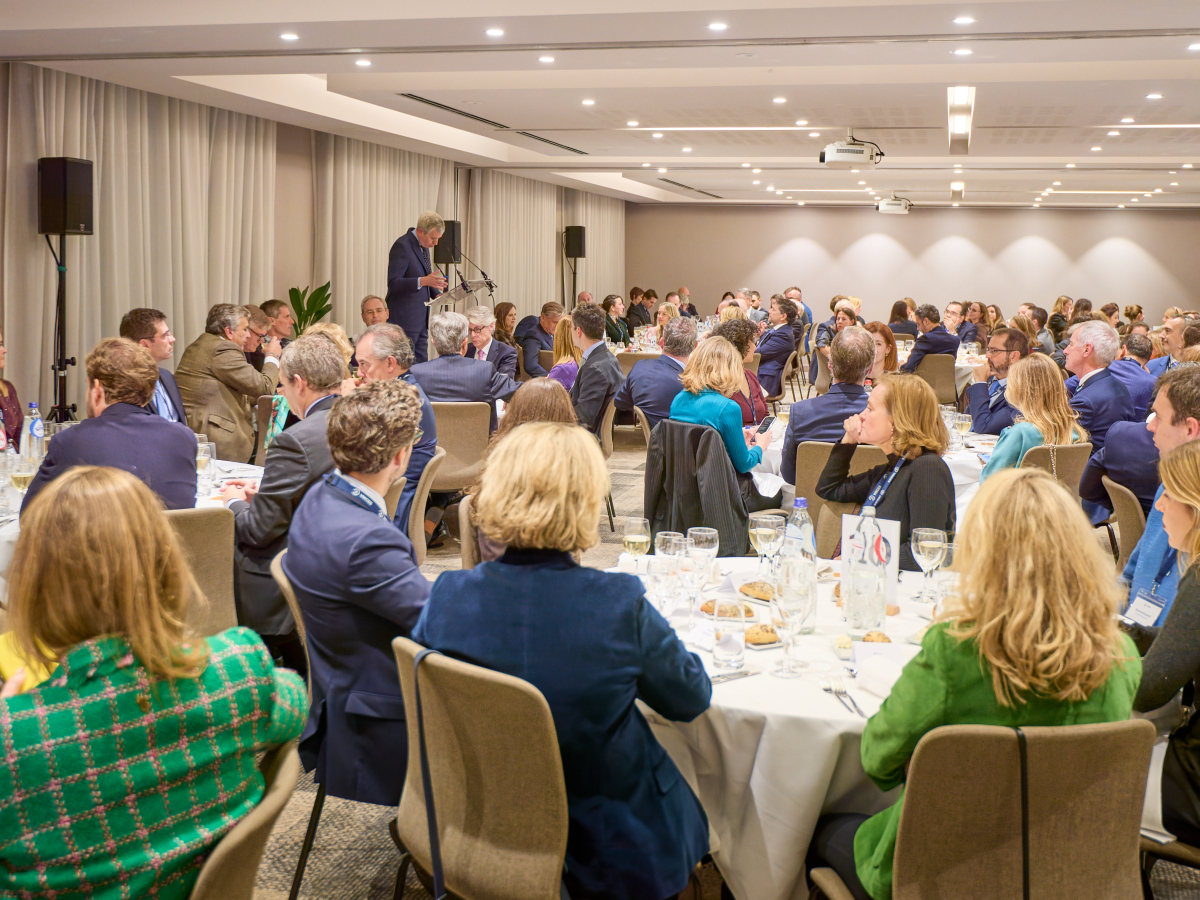
The institutional dimension had one of its central moments in the address by Marcos Alonso. The Permanent Representative Deputy Ambassador of Spain to the European Union highlighted the Spanish contribution to the community project during the forty years that have passed since the country’s accession. Four decades in which Spain has gone from joining the European institutions to actively taking part in defining their priorities, in building the internal market and in the political and economic transformation of the Union. His address made it possible to place Spain’s trajectory in perspective, as well as to remember the path taken since entry into the then European Communities. A contribution that takes on special relevance at a time when the continent is once again debating its position in the world, its strategic dependencies and the need to strengthen its capacity for action.
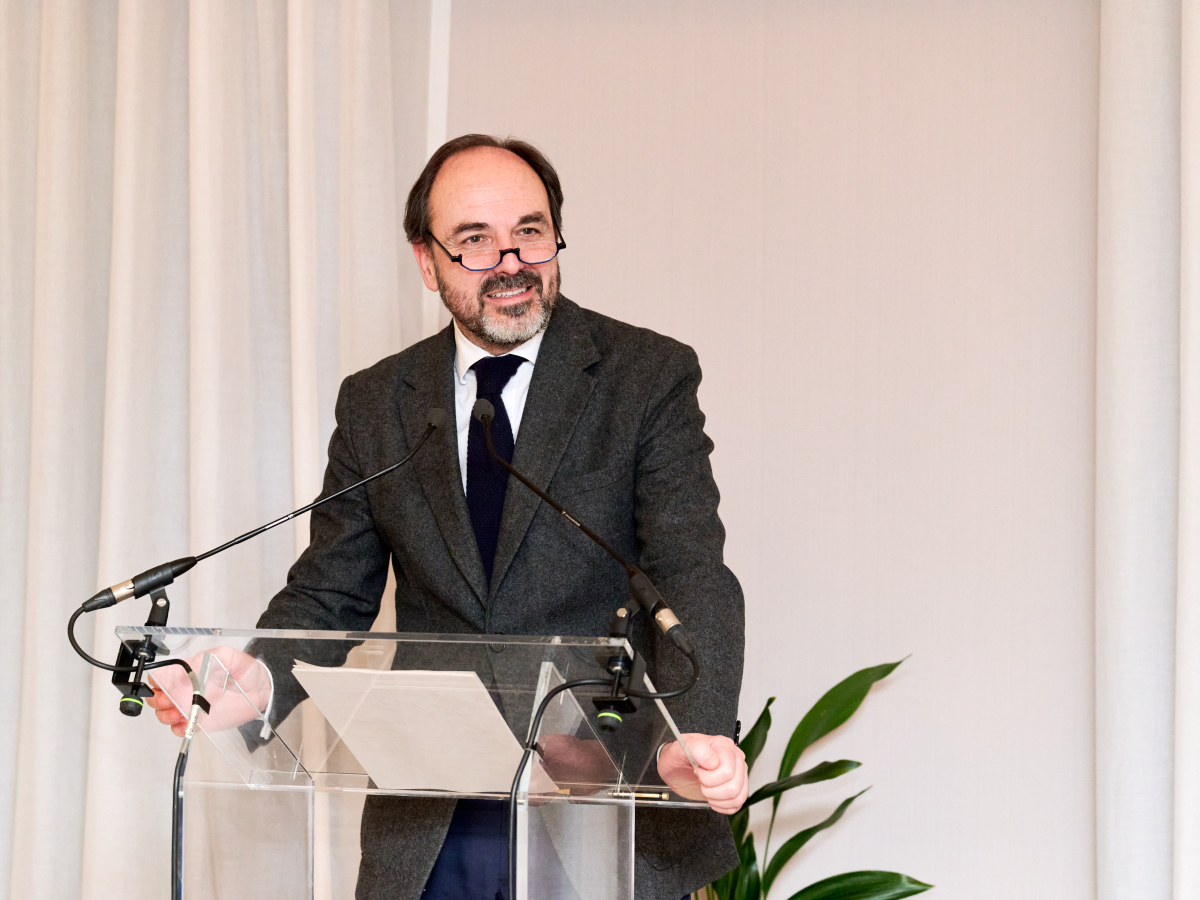
The first to take the floor was Carlos Romero, director of the Vinces office in Brussels, who used the appointment to review a particularly demanding year for the community project and for the firm itself, which this year has also inaugurated its offices in País Vasco and Aragón.
The transformation of transatlantic relations, international economic and technological competition and the war in Ukraine, in his view, outline a scenario in which Europe can no longer take for granted many of the certainties on which it built its integration over the last few decades. Security, competitiveness and strategic autonomy are no longer complementary debates to become indispensable conditions for Europe’s position in the world.
However, Romero also wanted to leave room for optimism. The European Commission’s work programme for 2027, under the leadership of Ursula von der Leyen, once again places regulatory simplification, strengthening the industrial base, and reducing strategic dependencies among its priorities.
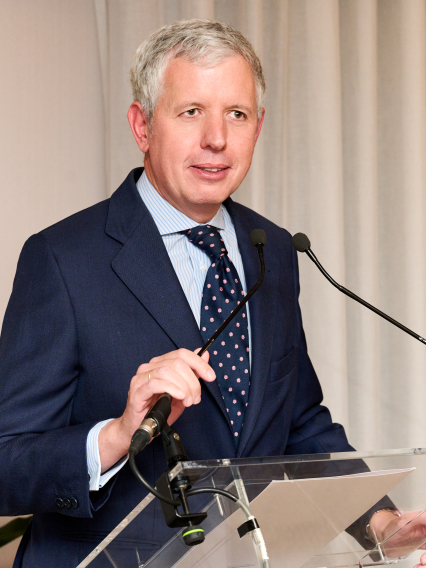
In that process, he argued that the strength of the continent necessarily depends on having companies capable of competing, innovating, and participating in the construction of public policies. "Europe needs strong companies to be a strong Europe," he summed up. Participation, in his view, should not be understood as a defense of particular interests over the general interest, but as a legitimate contribution to defining it. Romero thus asserted the social legitimacy of companies, both for their ability to generate wealth, jobs, and innovation and for the knowledge and experience they can bring to the decisions of institutions. A philosophy that, as he explained, constitutes one of the pillars of Vinces’s work: facilitating dialogue between the private sector and public authorities with rigor, transparency, and responsibility.
Security, industry, and European sovereignty
The president of Vinces, David Córdova, picked up the baton to raise the debate toward a broader reflection on the moment the continent is going through. His intervention was marked by an idea that ran through much of the evening: Europe has sufficient capabilities to face the challenges ahead, but needs to turn them into political and strategic decisions. "Europe has more strengths than it recognizes; what we lack is not capability, it is decision," Córdova argued. A reflection that accompanied a review of the priorities, in his view, that must set the course for Europe.
The first is security. "It has stopped being something that was taken for granted. Today it is a European public good and a condition for everything else," he said. The second, industrial and energy sovereignty, at a time when external dependence can condition the continent’s capacity to act. "A Europe that does not produce what it needs and does not control the energy it consumes is a Europe that negotiates on its knees," he warned.
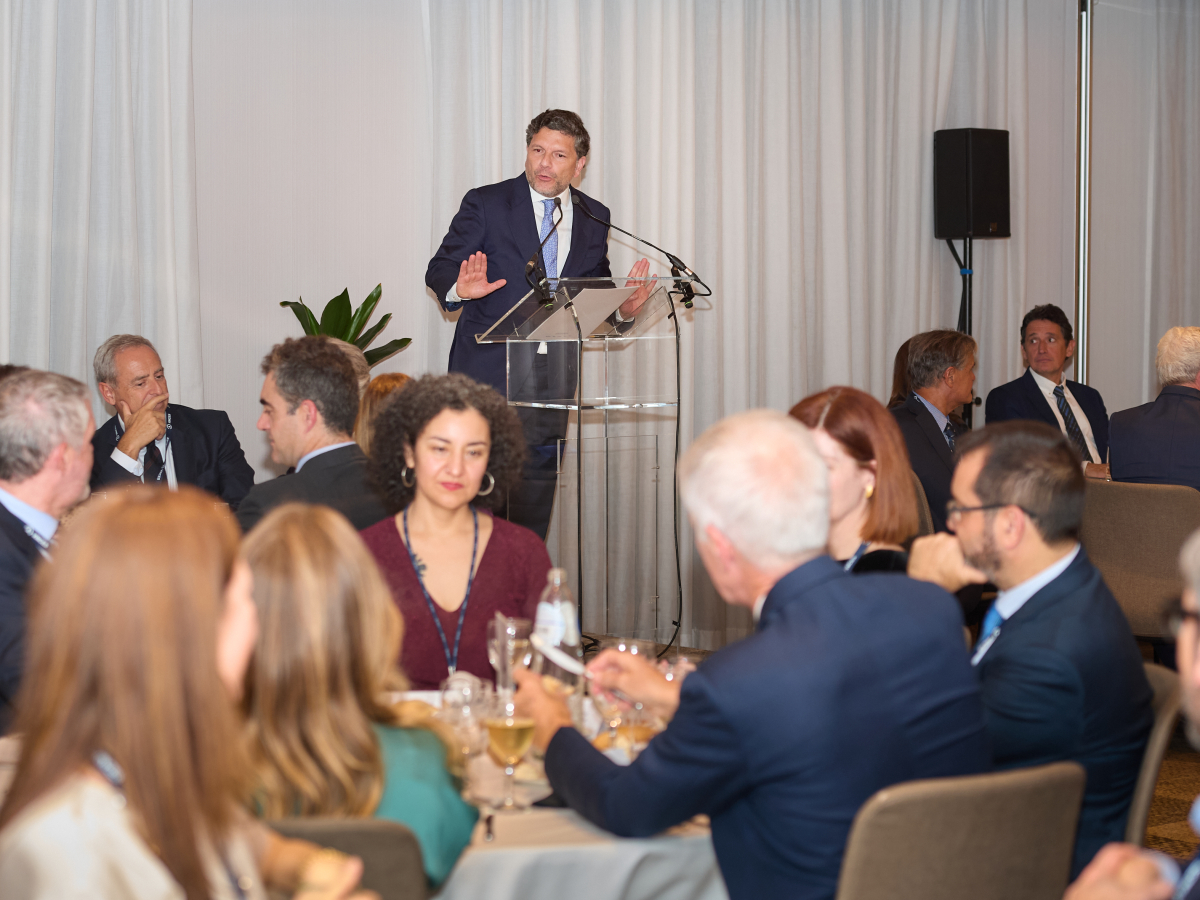
To these two dimensions, he added telecommunications infrastructures and technological capabilities, with special attention to artificial intelligence, data, and digital networks. He also placed citizens’ health among the strategic fields, recalling the lessons that the pandemic left about the importance of having solid and autonomous healthcare systems. Security, industrial and energy sovereignty, telecommunications, technological capabilities, and health were therefore some of the areas that centered his reflection on Europe’s strategic needs and the continent’s ability to face an increasingly demanding international scenario.
A table in front of polarization
Beyond the diagnoses about the European position in the world, there was an idea that ended up working as the thread running through the evening: the need to restore dialogue at a time of growing polarization. Both Córdova and Romero defended a political culture based on institutional respect, the ability to listen, and the construction of agreements between different positions."Too often it seems that confrontation replaces dialogue and that the search for consensus is interpreted as a weakness," Romero lamented. Faced with that dynamic, he called for understanding as one of the greatest contributions that can be made from the sphere of public affairs.
The claim was no small thing in a room where representatives from different political families, institutions, generations, and economic sectors were brought together. Precisely, that diversity gave meaning to the message of the night: Europe needs spaces in which differences do not prevent conversation and in which common interest can make its way among the different positions.
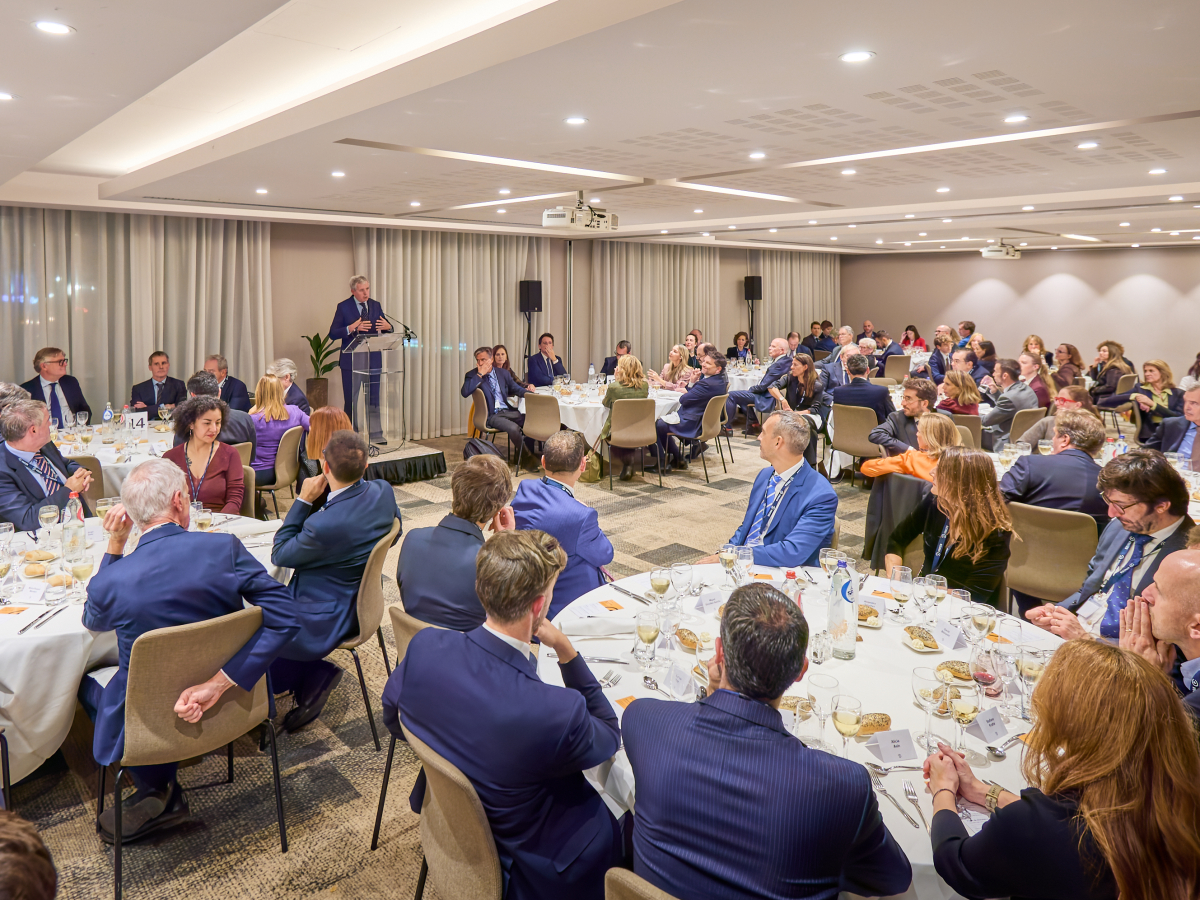
Vinces’ seventh dinner thus turned a November evening into something more than just an appointment on the community’s calendar of the Spanish community in Brussels. It was a snapshot of those who, from politics, diplomacy, institutions, and business, take part in building the European project. A pause in the community agenda to recognize one another, exchange diagnoses, and strengthen relationships in a city where a large part of the most important decisions are negotiated precisely through those contacts.
Because Europe is built in offices, in negotiations, and in major agreements. But it also needs places where those who make it possible can sit at the same table. And, at least for one night, Brussels had one of them.