









The first community-scale Summit on Artificial Intelligence (AI) left among the Twenty-Seven a shared diagnosis: the European Union is running with a funding and capacity deficit that is holding back its ability to attract investment and is weighing down its prospects for competing in the development of the most advanced technologies. In fact, the President of the European Commission, Ursula von der Leyen, put the investment needs to strengthen the bloc’s position in this area at 5,000 million euros.
In this context, this Wednesday the Community Executive, as part of its Quantum Law proposal, presented the creation of a sovereign technology fund with a budget of up to 50,000 million euros. The instrument aims to facilitate access to financing for European technology companies and to support them in the industrial scaling process, both in the field of quantum computing and in the development of other technologies considered strategic, including artificial intelligence.

Featured story
Von der Leyen asks for million-euro investments for AI in the next European budget
5 minutes
The initiative responds to one of the main structural problems identified by Brussels: the gap between European scientific capacity and its ability to turn that research excellence into competitive companies on a global scale. The EU has a strong position in research and development, but it faces difficulties in transforming its scientific advances into industrial projects capable of competing with the major international players.
The financing gap versus the United States and China
Despite the fact that the European Union currently has high levels of scientific excellence and houses close to one third of all emerging companies in the quantum sector worldwide, Community sources point to the fact that its industrial ecosystem faces significant difficulties in growing. In Brussels, the main obstacle identified is the lack of access to growth private capital, especially compared with the United States and China.
The data handled by the Commission reflects the scale of this gap. EU quantum startups attract only around 5% of the sector’s global private financing, compared with the 50% captured by American companies. A difference that limits the ability of European companies to expand their operations, develop their products, and take their innovations from the laboratories to the market.

This shortage of strategic capital also has consequences for the bloc’s industrial autonomy. Without sufficient funding to tackle the different growth phases, many European companies end up depending on investors from third countries. This situation increases the risk that they are acquired by foreign companies or that they shift their operations to markets offering better financial conditions to develop their projects.
Up to 500 billion euros in mobilized investment
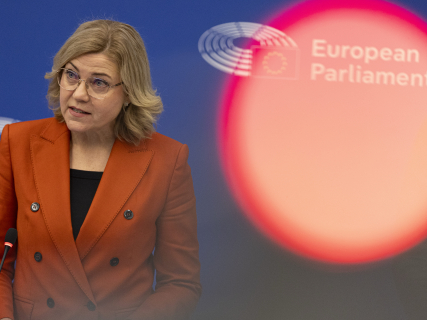
The executive vice-president of the European Commission for Technological Sovereignty, Security and Democracy, Henna Virkkunen, has clarified that the fund’s initial target is set at 50 billion euros. However, its design is intended for that endowment to act as a catalyst for larger-scale investments, enabling between an additional 400 billion and 500 billion euros to be mobilized through the combination of private capital and contributions from the member states.
That is the size of the resources that Brussels considers necessary to “ensure European technological sovereignty in the coming years”. The intention is to use public participation to attract additional funding and facilitate operations at greater volume, especially in sectors where capital needs exceed the financing capacity of traditional instruments. The fund will guarantee, as Virkkunen has explained, “access to innovative financing instruments not only for quantum technologies, but, more generally, for all the critical technologies needed for our technological sovereignty and economic security”.

The vice-president has confirmed that the instrument will focus on “large-scale direct equity investments in strategic technologies”. Its purpose will be “to fill a significant gap in the set of financing tools and complement the existing instruments”. In this way, the Commission intends to intervene in a stage of business development in which companies need large amounts of funding to expand their production capabilities and consolidate their presence in the market.
The fund will operate through direct investments in equity, quasi-equity instruments or other forms of reimbursable financial support. The European Union will participate as a shareholder together with the Member States, the European Investment Bank and other public and private investors. The approach therefore consists in using public participation to share risks with private capital and to facilitate investments that, due to their size or profile, may be difficult to finance exclusively through the market.
The expectation is that the instrument will be deployed within the coming Multiannual Financial Framework (MFF), currently under negotiation, and that it will complete the financial architecture envisaged by the Commission through the future European Competitiveness Fund. Its launch will therefore be linked to the Community budgetary design for the period after 2027.
A cross-cutting tool beyond quantum computing
Brussels insists that the new fund will not operate in isolation or limit its activity to the sector that gives rise to the legislative initiative. Although its creation falls within the Quantum Law, its scope of action will cover the scaling of critical technologies considered essential for the technological sovereignty and economic security of the European Union.
The proposal seeks to complement the financing instruments already in place and to cover those capital needs that currently do not find a sufficient response in the European ecosystem. The Commission intends, in this way, to strengthen continuity between research, technological development and industrialisation, preventing innovations generated in Europe from ending up depending on funding or production capabilities located outside the bloc.
This week, the Commission has presented the new Quantum Law with the aim of consolidating European excellence in research and development, eliminating technological bottlenecks and making it easier for innovations to scale industrially. The regulation is structured around the European Quantum Framework Initiative, to which the Member States will have to align. The proposal seeks to establish a common framework to coordinate national efforts and to strengthen Community capacities in a sector in which the fragmentation of initiatives and difficulties accessing infrastructure and funding can limit the growth of companies.
In the industrialization chapter, the Commission proposes to boost a European platform for quantum services so that companies, researchers, and public administrations can access quantum computing and emulation resources. The objective is to facilitate access to these capabilities and encourage their use by the various actors in the ecosystem, without each company or research center having to individually develop all the infrastructures needed.
The proposal also incorporates a territorial dimension. Each Member State will have at least one Competence and Acceleration Center, conceived as a local point of contact for small and medium-sized enterprises (SMEs) and startups. These centers must provide technical and business advice, as well as promote access to specialized infrastructures and resources.
With this structure, Brussels intends for the push for quantum technologies not to be limited to large research centers or companies with greater financial capacity. The initiative seeks to extend development opportunities to the entirety of the European business fabric and to make it easier for emerging companies to overcome the technical, financial, and industrial barriers that arise when they attempt to expand their operations.
The new architecture therefore combines regulatory instruments, shared infrastructures, and public and private funding. The challenge for the Commission will be to ensure that this combination allows it to close the gap between European scientific excellence and its ability to compete industrially with the United States and China. The technological sovereign fund aims precisely to cover that capital deficit which, according to the Community diagnosis, threatens to leave out of the European market part of the innovations developed within its own borders.