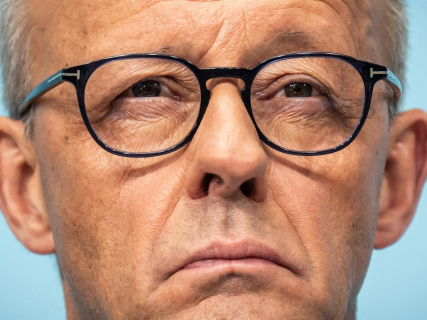

Two elections, two defeats of different nature and one same problem for Friedrich Merz. The CDU is out of the Parliament of Mecklenburg-Western Pomerania with 4.9% of the votes and falls back to 18.8% in Berlin, where it loses the first position. The provisional results replace the initial estimates from Sunday night with an even more adverse balance for the conservatives.
The blow does not have a single territorial explanation. In the northeast, the chancellor's party is overwhelmed by the struggle between AfD and the SPD. In the capital, the victory goes to Die Linke. Discontent does not benefit the same party in both places, but punishes the CDU in both.
Berlin: loses almost ten points and the coalition stops adding
The CDU obtains 18.8% in Berlin, compared to 28.2% in the previous elections of 2023: a loss of 9.4 points.
Die Linke wins with 25.7%, while AfD reaches 16.3% and the SPD stands at 12.1%. The alliance between conservatives and social democrats loses the necessary majority to continue.
The candidate of Die Linke, Elif Eralp, aims to lead the next Government and proposes talks with the Greens and the SPD. The counting opens that negotiation, but it does not yet equate to a closed agreement or an investiture. ARD.
Mecklenburg: the sinking also affects its economic credibility
The absence of the CDU from the next regional Parliament is the most striking image of the day. However, the electoral polls detect a wear that goes beyond the percentage of votes.
According to Infratest dimap, only 13% of those surveyed in Mecklenburg-Western Pomerania believe that the CDU offers the best economic solutions. ARD identifies that data as the worst recorded for the party in this matter in its electoral comparisons.
81% state that it is no longer clear what the CDU represents and 58% declare themselves disappointed with Merz. These are opinions collected in a regional survey, not percentages automatically extrapolable to the whole of Germany. Analysis by ARD on the causes of the result.
The political reading is especially uncomfortable for the conservatives: the wear affects both their leader and the economic competition with which they traditionally seek to differentiate themselves.
Merz acknowledges the disaster, but does not announce a withdrawal
The chancellor described the result of Mecklenburg-Western Pomerania as a "disaster" and acknowledged that federal policy had not provided momentum to his candidates. His response, however, was to defend the continuity of the reforms.
Merz maintained that the pending work requires firmness and patience, and reaffirmed his responsibility at the head of the Government and the party. For Berlin, he used a less negative assessment, alluding to the difficulties with which the conservative candidacy had started. Reactions collected by ARD.
A crisis that is not explained only by the advance of AfD
The estimated transfers in Mecklenburg help to understand the scope of the problem: the CDU loses support both to AfD and to the SPD. Therefore, there is not a single direction of flight of its electorate. Infratest dimap, through ARD.
That is the challenge posed by the double electoral appointment. Merz must recover voters attracted by very different options while defending reforms that generate resistance. The regional ballots do not decide his continuity as chancellor, but they do show the depth of the wear of his party.