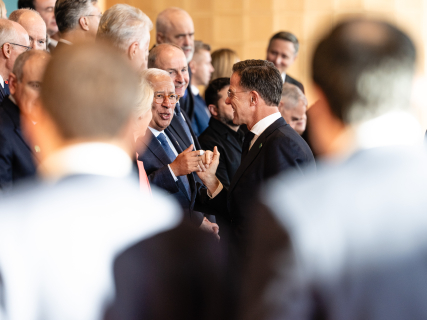

From Dublin, special envoy - The Secretary General of NATO, Mark Rutte, has lowered the tone of his criticisms of Spain and Portugal over his perception of the Russian threat, although his explanations have not convinced the Portuguese Government. The Prime Minister, Luis Montenegro, accuses the Dutch leader of having a "complete lack of knowledge" of Portugal’s political and social reality and considers that his statements show a lack of knowledge about the country’s commitment to the Atlantic Alliance.
On his arrival at the summit of the European Political Community (EPC), which brings together on Thursday in Dublin leaders from across the continent, Rutte has revised his words and tried to put an end to the controversy. "I have no criticisms. They are doing exactly what we should be doing", the Secretary General of the Alliance has stated, referring to the contribution of both countries to collective security. However, the gesture has not served to close the diplomatic standoff with Lisbon. Montenegro responded harshly to the NATO official’s statements, reproaching him for having made an assessment that was "unfortunate, superficial, and lacking in knowledge" of a reality that, in his view, should be known in greater depth.
Portugal reproaches Rutte for his lack of knowledge
The Portuguese Prime Minister has not found the explanations of the NATO Secretary General to be sufficient. Montenegro has accused Rutte of showing a "complete lack of knowledge" of Portugal’s political and social reality and has defended that the country has maintained a constant commitment to European security and support for Ukraine. Lisbon asserts its role at the front line of backing Kyiv in the event that Russia continues to expand its occupation of territory and violate the principles of sovereignty and independence of the States. The Portuguese Executive considers that its position within the Alliance cannot be measured exclusively by its distance from the main scenarios of tension with Moscow.
"It was unfortunate, light and unaware of a reality that it should know with greater proximity", Montenegro has criticized, adding that the statements by the secretary general are "completely out of date". The head of the Portuguese Government has also defended that his country is increasing defense investment and expanding its contribution to solidarity within the Atlantic space. An effort that, in his view, should have been taken into account before Rutte made a public assessment of the commitment of the allies in southern Europe.

"I regret that the secretary general of NATO does not have the care to deepen his knowledge of Portuguese reality so as not to say these things", Montenegro has pointed out. The leader has insisted that, despite the geographical distance that separates Portugal from countries such as Poland, Ukraine or Russia, the threat and pressure that the allies are facing are not issues alien to Lisbon. The Portuguese, he has defended, are very close to the partners who are experiencing an increase in Russian pressure and in threats to European security.
Rutte rules out a bilateral meeting with Montenegro
The secretary general's public correction has also not been accompanied by an attempt to bring direct contact with the Portuguese Executive. Asked about the possibility of holding a bilateral meeting with Montenegro on the margins of the Dublin summit, Rutte has ruled out that option by considering that he has "nothing to explain". The Dutch leader has tried to clarify the meaning of his original statements and has maintained that his intention was not to question Spain's or Portugal's commitment to the Atlantic Alliance, but to point out the differences in the perception of the threat from Russia among the different European societies.
Rutte has placed the problem in the distance that exists between the perception of citizens in the countries of the eastern flank and that of the rest of the continent. A difference that, as he explained, is especially apparent when comparing the situation of countries such as Estonia or Poland with that of other Alliance partners. "There is a difference between the countries of the eastern flank, such as Estonia, Poland and others, and the rest", he has sentenced to the media from the convention center in Dublin.
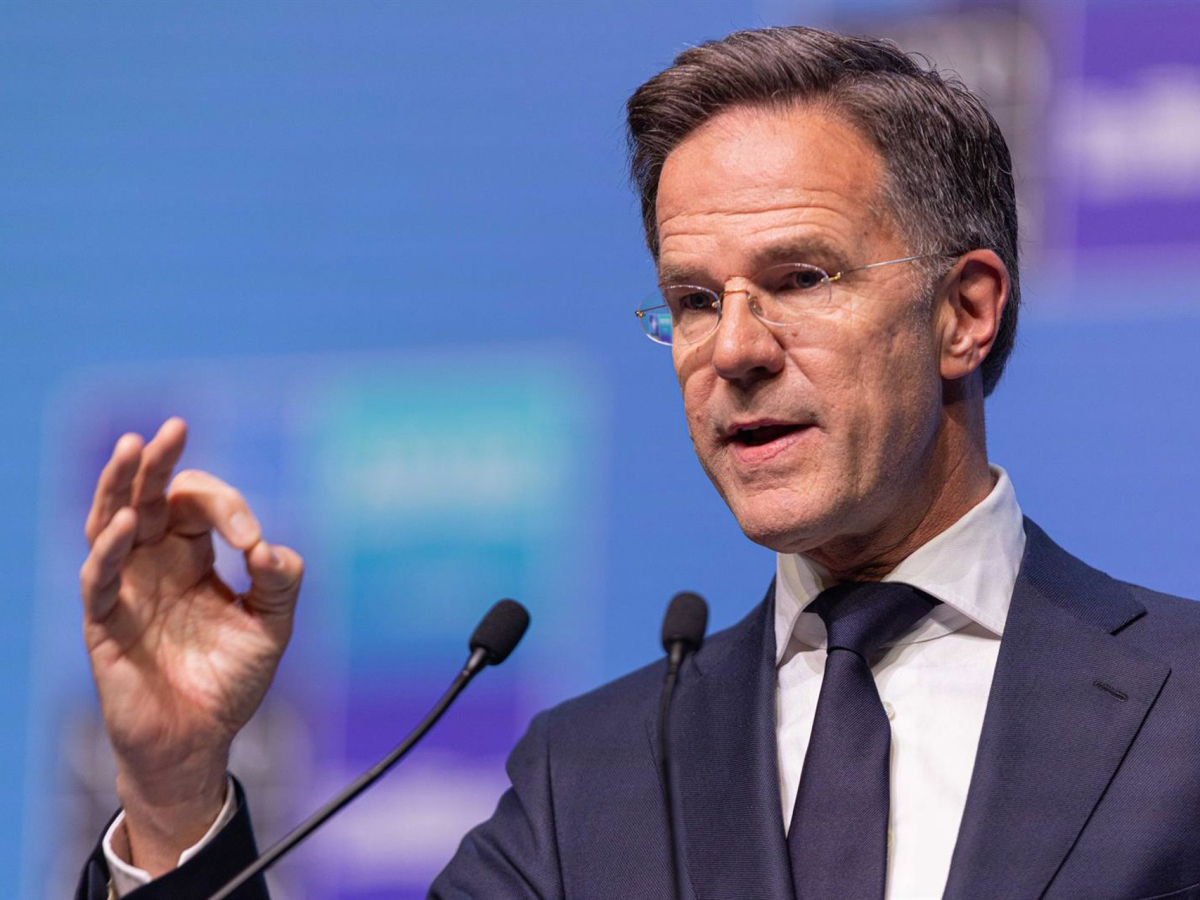
Unlike Portugal, for the moment no official response has been issued from Spain to the words of the NATO Secretary General. The President of the Government, Pedro Sánchez, did not attend the European Political Community summit held this Thursday in Dublin and will also not take part in the informal meeting of the European Council scheduled for this Friday. His absence is due to the start of the election campaign, which shapes the agenda of the head of the Executive during these two days of meetings between European leaders.
The statements of the Secretary General also come at a particularly sensitive moment for European security. The allies are seeking to maintain a common front of support for the countries on the eastern flank, while concerns are increasing about hybrid warfare operations, cyberattacks, sabotage, and other forms of pressure attributed to Russia. The Dublin meeting is therefore taking place against the backdrop of the need to strengthen coordination between European and Atlantic partners. A task in which the perception of the threat, the distribution of responsibilities, and the commitment to collective defense are once again at the center of the debate.