
From Dublin, special correspondent.– The leaders of the European continent are discussing this Thursday and Friday in Dublin who should represent Europe’s voice in the peace negotiations between Russia and Ukraine. The goal is to unify positions in order to give legitimacy to the European presence in the process, as what has already been called a “new European security architecture” begins to be drawn up. The latest contacts held in Abu Dhabi and the push from the U.S. delegation after the midterm elections are driving European capitals to reach consensus on a strategy and to prevent decisions about the continent’s future from being adopted without their participation.
However, finding a “clear voice” does not seem, at first, to be an easy task. The idea was brought to the table this time by Italian Prime Minister Giorgia Meloni, who, in a letter sent to her counterpart in the European Council, António Costa, called for agreeing who should represent the European Union in the conversations that are beginning to take place one after another. A proposal that is not new within Community institutions and that has hovered over virtually all summits since Donald Trump returned to the White House. In fact, the leaders have already agreed that the Union’s external representation should fall to the Community institutions themselves.
Therefore, the debate is not limited to determining who should sit at the negotiating table, but also what format European representation should take and what room for maneuver it will have to defend the interests of the Twenty-Seven. An issue especially relevant when the talks begin to address matters that directly affect the security of the continent and the guarantees that will have to accompany any eventual agreement between Moscow and Kyiv.
Kallas asserts the institutional division of responsibilities
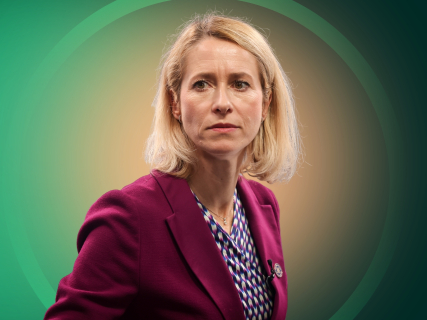
Against this backdrop, some of the key figures have already claimed their status as representatives of European interests. The head of Community diplomacy, Kaja Kallas, recalled upon her arrival at the Dublin convention center that the division of responsibilities was set in 2024, when the heads of State and Government negotiated the so-called “top jobs”, the package of appointments for the main institutions of the Union. “It was clear when we chose the people who represent Europe,” she said, the former Estonian prime minister.
The high representative argues that the European treaties "are very specific" regarding the competences of external representation in this kind of matter. "It is António Costa and the high representative who represent Europe in matters of security," he said, in asserting the role that corresponds both to the presidency of the European Council and to the European External Action Service (SEAE).
The fact is that in Brussels there is some skepticism about whether Kallas fits as an interlocutor in a possible negotiation process with the Kremlin. Her especially belligerent stance toward Moscow, which helped propel her political career to the current position, raises doubts among some diplomats about her ability to act as an interlocutor in a scenario that could require direct interlocution with Russian authorities. European diplomatic sources place her in "the toughest wing of Atlanticism".
Kallas herself has rejected the idea that criticism coming from Russia should condition the choice of European representatives. "Why would it be our problem what the Russians say about our representatives? Do we say something about their representatives?" she defended.
Costa gains weight in a negotiation that goes beyond the EU
However, those same diplomatic sources warn that the future European security architecture exceeds the scope of the Union's foreign policy, since its consequences will directly affect the defense and security of the member states. A distinction that again places the president of the European Council, António Costa, at the center of the discussion, as a representative of the heads of state and government.
His office confirmed during the summer that there had been an initial contact with diplomatic teams from Moscow, with the aim of keeping channels of communication open. A move that gained special relevance at a time when European capitals were trying to prevent interlocution between Washington and Moscow from monopolizing any possible negotiation about the future of Ukraine.
The President of the European Council is responsible for representing the Union in the area of its common foreign and security policy at the level corresponding to him, in accordance with the competences established in the treaties. His role takes on special importance when decisions affect the strategic interests of the Twenty-Seven and require a political position backed by the heads of State and of Government.
In that line, during the talks held this same week in Abu Dhabi, technical representatives of the European Council defended European positions together with their counterparts from Germany, Italy, the United Kingdom and France. A participation that shows that the European presence in the conversations does not have to be articulated exclusively through a single institutional figure, but that it can combine Community representation with the direct involvement of the main capitals.
That is precisely the model that Berlin and Paris are advocating: that the so-called E3, made up of Germany, France and the United Kingdom, should assume a leadership role in the negotiations for peace. The formula would make it possible to incorporate London, despite its departure from the European Union, into a format of interlocution that brings together three of the main European powers in diplomatic, military and security matters.
The approach, however, raises a fundamental issue for the Twenty-Seven: how to reconcile the leadership of the major capitals with a representation that makes it possible to defend a common position of the Union. The participation of the United Kingdom in that scheme adds, in addition, an external dimension to the debate, by placing the negotiations within a framework of cooperation that is not limited to the Community institutional structures.
Ireland calls for a common voice, even if not necessarily a single person
For his part, the host of the meeting, the Irish prime minister, Micheál Martin, has called for a "single coherent voice" that represents Europeans in any future negotiations. A representation, in his view, that does not necessarily have to focus on a single person. The Irish leader did acknowledge that "there are some obvious candidates" to assume that responsibility. His proposal points to a formula for coordinated representation that would allow a recognizable European position to be conveyed without needing to resolve all the institutional and political differences that separate the capitals. The challenge is to prevent the plurality of interlocutors from ending up weakening Europe's negotiating capacity vis-à-vis Washington and Moscow.
The discussion also unfolds, in parallel, with the diplomatic moves of the US Administration. Donald Trump's envoys for Ukraine, Steve Witkoff and Jared Kushner, travel as far as Moscow to try to convince their Russian counterparts of the convenience of bringing Europe into the peace discussion formats. The time coincidence between the meeting of European leaders in Dublin and the relocation of the American representatives reflects the pressure that exists to define the role of the continent in the process as soon as possible.
"Europe will want to have a voice at that table, especially with regard to the issues that affect Europe," Martin said. The Irish claim sums up one of the main concerns of the capitals: that any agreement on Ukraine incorporates security guarantees whose compliance and consequences will directly affect European states.
Zelenski calls for a permanent European presence
In parallel, Ukrainian President Volodímir Zelenski will be informed in the Irish capital during the afternoon of this Thursday about progress in diplomatic contacts. His participation in the summit once again places Kyiv at the center of European discussions, at a time when international talks are beginning to take on greater intensity. "We have to make sure that Europe becomes a regular part of these negotiations," Zelenski said at the start of his meeting with European leaders. The Ukrainian president thus insists that the continent’s involvement must not be limited to one-off consultations, but must be consolidated as a permanent element of any negotiating format that addresses the future of his country.
Regarding the contacts held in Abu Dhabi, the Ukrainian leader said the talks "were serious, not empty." This assessment points to the existence of advances in diplomatic exchanges, although it still does not allow for anticipating the scope of a possible understanding or the conditions that could be raised for an agreement.
The Dublin meeting, therefore, must serve to translate the demand for a greater European presence into a specific formula for representation. The Twenty-Seven have various options on the table: strengthening the institutional role of António Costa and Kaja Kallas, backing the leadership of the E3, or putting together a format that combines both approaches. The difficulty lies in the fact that the security architecture being negotiated affects not only the EU’s foreign policy, but also the defense guarantees of the Member States. And while Washington intensifies its contacts with Moscow, Europe is trying to determine who will speak on its behalf when the time comes to negotiate.