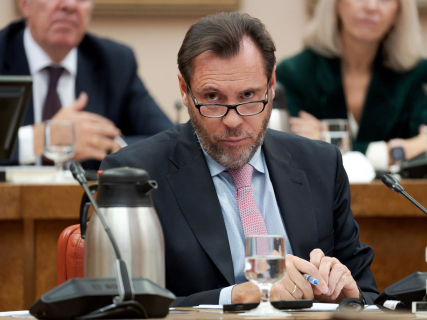

Óscar Puente prepared a message to communicate a decision, not to ask for permission. According to a conversation spread by laSexta, the former Transport minister had already informed Pedro Sánchez that he was announcing his resignation and asked him not to interpret it as a betrayal. The president responded trying to prevent it. By then, the minister had already decided to press on.
The resignation of Óscar Puente closed his time at the head of the Ministry and came accompanied by his rejection of leading the socialist candidacy for Valladolid on November 29. It did not, however, involve relinquishing all of his positions. He retains the PSOE general secretariat in the province and his position on the Federal Executive, according to information published by ABC and The Objective.
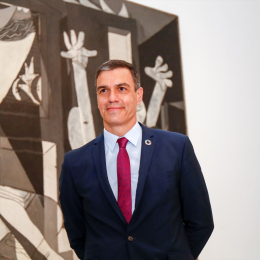
The first outlet attributes to sources close to the former minister the possibility of competing in some primaries if there is a handover from Sánchez. The information from the second includes other continuity routes and a deeper internal disagreement: some leaders consider him recoverable; others believe that the rail tragedies have closed his options of reaching the highest leadership.
According to information from laSexta, Puente announced his decision minutes before making it public to the Permanent Delegation of Congress. The reconstruction reported by Antena 3 adds that he left the phone face down so as not to read Sánchez’s response, which was asking him not to do it.
In El Español a resignation prepared in a small circle was described, which Puente did not want to share in advance in order to prevent them from convincing him to continue. His information holds that Sánchez wanted to keep him until the elections and that Moncloa continued guaranteeing his stay during Tuesday.
El Confidencial, however, introduces another variable, since it publishes that socialist sources attribute to data known by Sánchez by the weekend a forecast of between 93 and 95 seats for the PSOE and a loss of around 600,000 votes. The newspaper links those figures to polling information received unofficially and states that they caused tensions over Puente’s continued stay.

Featured story
Sánchez’s new cards: how Ferraz redirects the campaign after Puente’s resignation and the 'midterms'
6 minutes
Puente could still be loyal to Sánchez and, at the same time, consider that he had to do something that Sánchez rejected. The specific disagreement was about how to respond to the crisis: continuing to manage it or leaving the post after presenting measures and appearing before Congress.
The exit allows its defenders to claim that it put the match before his post. But it contains another reading: at that time, Puente put forward his own criterion about what was convenient for the PSOE, different from that of his general secretary.
Leaving the ministry and keeping a position within the PSOE
The information from ABC introduces the element that expands the scope of the resignation: sources from Puente’s circle consider that he could present himself in primaries if the succession of Sánchez were to be proposed.
What Puente does maintain is an organizational position. Staying at the head of the PSOE in Valladolid allows him to keep lines of communication, participate in decisions, and have his own political base. His departure from Transportes and from the candidacy for Congress does not turn him into an affiliated member removed from leadership.
The succession issue also does not appear for the first time after Urda. In August, an interview already gave rise to reports about his willingness to assume leadership in certain circumstances. Puente later clarified the interpretation of those statements and denounced that they had been distorted.
The sacrifice can preserve a career, but also close it
Assuming responsibilities and keeping future aspirations are not necessarily incompatible purposes. A leader may consider that he must leave a post and, at the same time, not understand that step as a definitive withdrawal.
The disagreement is whether Puente will be able to do that. The Objective collects testimonies that consider that railway accidents disqualify him from leading the PSOE and others that interpret his resignation as a reason to recover him.

Featured story
The most viral politician of the day | Rufián overwhelms with his intervention before Óscar Puente
4 minutes
Both positions are based on the same fact, but they give it a different meaning. For some, his exit fixes the political cost of his management. For others, it shows that he was willing to assume a responsibility that not everyone accepts.
The resignation does not resolve that dispute. It also does not erase questions about how the railway system worked during his time in office. The investigations and the evolution of the crisis will continue to affect the assessment of his management, regardless of whether he holds an institutional position or not.
El Cuerpo manages the handover; the PSOE debates what to do with Puente
Sánchez has assigned Transportes to Carlos Cuerpo. The change allows the Government to reorganize the response to the crisis with a person with a different profile, while it tries to recover space for the rest of its electoral agenda.
The exit of Puente had already caused relief among socialist leaders consulted by The Objective, who feared a campaign concentrated on his figure. This relief coexists with recognition that the party is losing one of its most visible leaders.
Meanwhile, the general secretary of the PSOE in Castilla y León, Carlos Martínez, has defended that Puente should continue to have a role in the organization. According to statements collected by ABC and The Objective, he considers that taking on political responsibility does not equate to admitting guilt and holds that the party should continue counting on him. Puente retains his organizational posts in Valladolid and in the federal leadership.