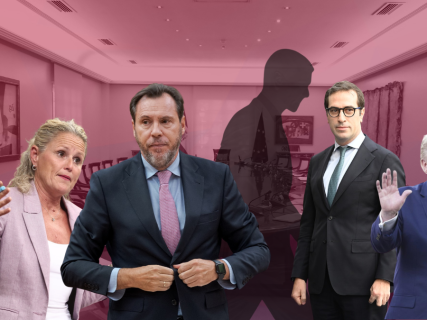

The railway tragedy in Urda completely shattered the script of the pre-election campaign. The strategy designed by Ferraz of an optimistic bent, with "the force of love" at its core and a discourse loaded with optimism cannot fit after a tragedy that has claimed the lives of 69 people. It must be reoriented and, after a few days of analysis and the surprise resignation of Óscar Puente, Pedro Sánchez is already shuffling new cards to face the final weeks before 29N: a demonstration of taking responsibility, management muscle, and a favorable international narrative after the Donald Trump setback in the midterms.
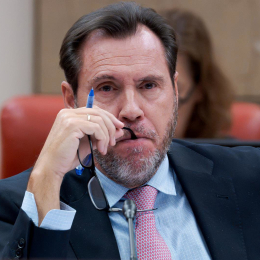
After more than four hours of appearing before the Permanent Commission, on the spot and with no notice other than a message to Sánchez, Puente resigned from the post and anticipated that he also leaves the 29N lists, which opens a new phase. Although Moncloa had conveyed that Puente had the backing of the president, his departure now allows the PSOE to build a discourse centered on taking responsibility.
"No, not all of us are equal"
Now, the message that Ferraz seeks to convey is that the resignation of the former minister responds to a way of doing politics that contrasts with that of the opposition, PP and Vox. Socialists sources consulted by DEMÓCRATA assess that "Puente is giving himself a lesson in dignity, integrity and transparency". And they add: "No, not all of us are equal. In the most difficult moments of the emergency, he has been at the forefront of management; he has given explanations to the public; he has worked to clarify the causes of the accident, and he has pushed measures to support the victims and correct the problems identified".
In line with what Puente himself has laid out, Ferraz emphasizes that "once those responsibilities had been faced, he took one more step by submitting his resignation," which, in his view, "shows that no, not all of us are equal".
The message that Ferraz seeks to convey is that the resignation of the former minister responds to a way of doing politics that contrasts with that of the opposition
The same voices also value his career as a minister: "It is a source of pride for Spain and for the PSOE. His dedication to public service, his integrity and his commitment to our political project deserve all of our recognition". "He has the respect, the gratitude and the affection of his colleagues. His track record and his contribution to socialism go far beyond any institutional responsibility," they stress.
Sánchez’s statements in this regard, Puente’s words, the sources consulted… Every finger points in one direction: the party wants to turn its resignation into a demonstration of dignity, transparency, and accountability, in the face of what it considers a different attitude from other parties when they face crisis situations. The public recognition of the minister and the assertion of his career, moreover, seek to prevent the resignation from being interpreted exclusively as an acknowledgment of errors in management.
Turning the tables
The one from the man from Valladolid is not the first unplanned exit that shakes up the Socialist ranks in the middle of the electoral run-up up to 29N. He did the same already with Montse Mínguez, then the party’s spokesperson and the head of the list for Lleida. In her case, after the real estate businesses of her husband were revealed. As with Puente, the PSOE backed Mínguez’s career, highlighting her position and votes in housing policies, regardless of what might impact her spouse’s assets.
Upon Mínguez resigning, Ferraz sources thanked her for her "dedication and commitment", as well as "her consistency when voting in accordance with her principles, which have marked an entire untarnished career as a Socialist".
It might be thought that Puente’s weighs more because he is a minister, but the truth is that Montse Mínguez was one of the most prominent people in Sánchez’s “petroriana” guard. A strong woman of Salvador Illa and the PSC, nothing moved in Ferraz and in Congress without her knowing. Accordingly, both are sensitive resignations that impact the floating line of Socialist ambitions. However, Ferraz wants to turn this around and present them as an example of taking responsibility and a commitment to citizens.
New focus: will it work?
So obvious is it that two sudden resignations—one brought about by a rail tragedy with 69 deaths—do not help any campaign, as it is that the PSOE wanted to use the trump card of illusion more than that of management. But the dances are no longer possible, and Ferraz will redirect its interventions to highlight social progress and Spain’s macroeconomic situation.
His response to the crisis will be key. At DEMÓCRATA we have already analyzed, with studies in hand, what happens when a tragedy breaks into an election campaign. Punishment for the Government or an opportunity to demonstrate leadership? Studies on crisis and electoral behavior rule out an automatic response from voters. The perception of responsibility, the credibility of communication, and the management of the emergency can alter the political cost for the Executive and the margin of maneuver of the opposition. Citizens will scrutinize both Moncloa’s reaction and the opposition’s behavior.

For now, in the DEMÓCRATA poll aggregator, no major shifts in voting intention are perceived. The PSOE blamed the massive entry into Ceuta in summer more than the train accident —for the moment—. It is also important to analyze how Puente’s resignation will land, but such effects will not be projected until the coming days.
It brings the body
To reinforce the perception of management, Sánchez has delegated the Transport portfolio to the vice president and Minister of Economy, Carlos Cuerpo, one of the most institutional profiles and, of course, calmer than Puente. He is independent, does not hold a party membership card, and does not run on the PSOE lists for 29N.
International narrative
The PSOE also seeks to reactivate the international narrative that Pedro Sánchez had used to feed expectations of a comeback. The Democratic victory in the United States elections offers the president a new argument to insist that the far-right wave is unstoppable and that there is a political alternative capable of halting its advance.
Sánchez has connected the results of United States with those of Brazil, where the president Luiz Inácio Lula da Silva defeated Jair Bolsonaro in 2022, in order to project a global reading favorable to the left. In a message published after the United States elections, the head of government said that voters had rejected policies that impoverish, hatred, machismo, climate denialism, and the privileges of elites. His conclusion was that that same change could reach Spain.
Ayer, la sociedad estadounidense votó contra las políticas que solo empobrecen. Contra el odio. Contra el machismo. Contra el negacionismo climático y contra los privilegios de las élites.
— Pedro Sánchez (@sanchezcastejon) November 4, 2026
Ocurrió en Brasil.
Acaba de ocurrir en EEUU.
Y ocurrirá pronto en España.
La ola ultra a…
International appeals allow the PSOE to place the campaign back on ideological ground, after a few days dominated by the railway emergency and demands for accountability. Sánchez is seeking to present election results in other countries as a sign that the advance of conservative and far-right forces can be reversed, and to set that outlook against the project of PP and Vox.
A campaign between crisis and the comeback
Ferraz thus faces the decisive stretch of 29N with a narrative that combines two levels. On the national level, the resignation of Puente and the assertion of management are intended to show that the PSOE is capable of responding to a crisis and taking responsibility. On the international level, the results of the US midterms and the Brazilian precedent serve to reinforce the idea that the right and the far right do not have the electoral advance guaranteed.
The difficulty for Sánchez will be to make both messages compatible: defending the management of the Government without minimizing the impact of the tragedy and turning political responsibility into a campaign argument without it seeming like a maneuver to close the crisis. Puente’s resignation marks a turning point in the socialist strategy, but the electoral effect will depend on how the explanations about the accident evolve and on whether Ferraz manages to regain political initiative in the weeks that remain.