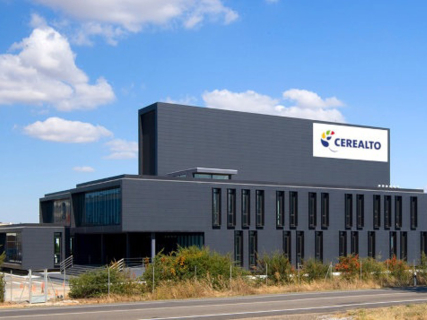

Cerealto, one of the main manufacturers of cookies, cereals and snacks for Mercadona, is preparing a new change of owners. The investment funds Davidson Kempner and Afendis, which took control of the former Siro group in 2022 after a deep financial crisis, are considering putting the company up for sale at the beginning of 2027 at an approximate valuation of 600 million euros, including debt, according to Cinco Días.
The transaction would mean a new stage for the food group based in Venta de Baños (Palencia), which over the last four years has transformed its corporate structure, reduced its indebtedness and strengthened its international presence. The preliminary valuation places the price of the equity at about 450 million euros, to which approximately 150 million in financial debt would be added. Although different investment banks have shown interest in participating in the process, Cerealto has still not formally hired an adviser to lead the sale nor has it officially launched the operation.
The move takes on special relevance because of the close business relationship that Cerealto maintains with Mercadona, the supermarket chain chaired by Juan Roig, which represents approximately 50% of its turnover. The manufacturer produces numerous food items marketed under private-label brands, especially cookies, breakfast cereals, crackers and other cereal-based products.
Who owns Cerealto and which funds are preparing its sale
Control of Cerealto is currently in the hands of Davidson Kempner Capital Management and Afendis Capital Management, two international firms that entered its shareholding in June 2022, when the company was going through serious financial difficulties. The transaction made it possible to restructure its debt and ensure the continuity of a company that maintained significant industrial activity in Castilla y León and other regions.
According to the financial information corresponding to the end of 2025, Davidson Kempner controls approximately 75% of the capital, while Afendis holds 1%. The remaining 24% remains in the hands of Juan Manuel González Serna, founder of Siro, who thus retains a minority stake in the food manufacturer. This structure makes the US fund the main shareholder and protagonist of any eventual sale operation.
Davidson Kempner is a specialized investment firm focused, among other activities, on operations related to companies facing financial difficulties or restructuring processes. For its part, Afendis, of Turkish origin, is specialized in investments linked to the food sector and participated in the recovery of Cerealto as an industrial partner. The entry of both firms also meant the arrival of Cem Karakaş to the executive chairmanship of the group, while Bosco Fonts currently holds the position of chief executive officer.
The owners consider that the company has reached a more favorable financial and industrial situation to face a new stage of growth. However, a buyer has still not been publicly identified nor does there exist a closed sale agreement, so the 600 million constitute a preliminary estimate and not a definitive price.
From the old Siro to Cerealto: the financial crisis that prompted the entry of the funds
To understand the operation, one has to go back to the trajectory of Grupo Siro, one of the historic companies in the Spanish biscuit industry. The company, linked for decades to Venta de Baños, became an important manufacturer of products for the large distribution chains, especially Mercadona, but the growth of the business was accompanied by heavy indebtedness that eventually put its continuity at risk.
In 2020, the group reached a refinancing agreement with its financial institutions for around 300 million euros. The difficulties in meeting its obligations later led to promoting divestments and industrial reorganizations, among them the sale of certain factories and business lines. One of the operations was the transfer in 2021 of its biscuit plant in Jaén to Family Biscuits, linked to businessman Félix Gullón.
The situation culminated in June 2022 with the arrival of Davidson Kempner and Afendis, which acquired the company's debt from the creditor institutions and capitalized part of that liability to take control of approximately 76% of the shares. The agreement made it possible to ease financial pressure and gave rise to a transformation process that has included organizational changes, industrial investments and a review of the main lines of activity.
Since then, Cerealto has allocated more than 153 million euros between 2022 and 2025 to modernize facilities, improve productive efficiency, develop new products and reinforce its international expansion. This recovery is one of the elements that explain why its current owners are now considering divesting their stakes.
Mercadona accounts for half of Cerealto’s sales: what products it manufactures
One of the most important aspects of the possible transaction is the commercial link between Cerealto and Mercadona. The supermarket chain represents approximately half of the manufacturer’s turnover, which makes it its main client and a fundamental piece of its business model.
Cerealto produces items intended for distribution brands, including cookies, breakfast cereals, rice and corn cakes, bars and different varieties of snacks. Its specialization in manufacturing for third parties allows major chains to market products under their own brands without needing to have their own industrial facilities for all categories.
The relationship between both companies dates back to the era of the former Grupo Siro, which for years has been one of the relevant suppliers of the food products sold at Mercadona. Until its recent reorganization, Cerealto also manufactured dry pasta for the Valencian chain, an activity it decided to transfer to the Portuguese Cerealis as part of its new business strategy.
The possible sale of Cerealto does not mean that Mercadona will automatically change supplier or that changes in the products it markets have been announced. The transaction would initially affect the ownership of the manufacturer and does not, by itself, imply a change in its commercial contracts. However, the continuity of that relationship will be one of the relevant elements for any interested investor, given the importance of the Valencian supermarket in the group’s accounts.
Cerealto billed 574 million in 2025, but closed the year with losses
The possible sale comes after an improvement in Cerealto’s main operating indicators. According to the results communicated by the company itself, the group closed 2025 with a turnover of 574 million euros, 9.3% higher than that of the previous year. The recurring gross operating profit, known as EBITDA, reached 53 million euros, which represents an increase of 12%.
However, the consolidated net result was still negative. Cerealto recorded losses of 5.4 million euros, mainly due to the increase in financial costs and certain tax effects. The difference between the improvement in the operating business and the final result reflects that, despite the recovery process, indebtedness continues to have consequences on its accounts.
Biscuits continue to be one of the main sources of income, with 249 million euros in turnover in 2025, which represents a little more than 43% of the total. For their part, cereals, rice and corn cakes and snacks contributed together 243 million euros, with growth of 19% compared to the previous fiscal year.
This last segment has become one of the company’s major strategic priorities, which is directing its investments toward breakfast foods, products for eating between meals and alternatives with higher protein or fiber content.
Cerealto sells its pasta business and bets on snacks and the international market
The business transformation has also meant the departure from certain activities in order to concentrate resources on businesses considered strategic. One of the most important moves took place in February 2026, when Cerealto announced an agreement to sell its pasta division to the Portuguese group Cerealis, including the Venta de Baños factory dedicated to that activity.
The decision made it possible to steer the strategy toward biscuits, breakfast cereals and snacks, categories in which management identifies greater opportunities for international growth. The group had previously reduced its presence in the pasta business by divesting much of its stake in the Italian Pastificio Mediterranea, carried out in 2024.
In parallel, Cerealto has strengthened its activity through acquisitions in other countries. In 2024 it incorporated Hill Biscuits, a British biscuit manufacturer based in Manchester, while in October 2025 it acquired 60% of the American Fresca Holding, linked to Fresca Foods, specialized in natural and organic snacks and with production facilities in Colorado.
These operations have made it possible to expand the company’s international reach, which currently has eleven production centers distributed across Spain, Portugal, the United Kingdom, the United States and Mexico, in addition to a workforce of approximately 3,900 workers.
A €110 million refinancing lays the groundwork for the operation
The improvement in the financial structure is also essential to understand why the funds are now studying selling their stake. In March 2026, Cerealto completed a financing operation of 110 million euros with eight entities, which made it possible to reorganize part of its obligations and establish new maturities in 2031 and 2032.
The transaction, advised by Arcano Partners, made it possible to diversify financing sources and strengthen balance sheet stability. It also reduced Davidson Kempner’s exposure as a creditor of the company, a relevant circumstance in the face of a possible corporate transaction.
The current shareholders have supported over the last few years an industrial modernization and expansion program that includes an investment forecast of 75 million euros during 2026, with new projects in Spain and the United States. The goal is to expand production capacity and improve the efficiency of the facilities to compete in an international market marked by the growing demand for convenience products and cereal-based prepared foods.
The valuation proposed for Cerealto reflects that evolution. Compared with the approximately 100 million euros of equity value that were taken as a reference when the investors entered in 2022, the current estimate stands at around 450 million. However, that comparison does not directly equate to the profitability obtained by the funds, since the investments made, the debt and the acquisition conditions must be taken into account.
When will Cerealto be sold and what could happen to its factories
The plans being considered by Davidson Kempner and Afendis place the possible start of the operation at the beginning of 2027, although there is still no official timetable and the hiring of an entity to coordinate the process has not been confirmed.
The preliminary valuation of 600 million euros, including debt, could vary depending on the evolution of the accounts, the interest of potential buyers and market conditions. In addition, a possible sale would have to specify whether it affects all the holdings of the current shareholders or only certain share packages.
For the industrial plants and the workers, the operation opens up questions about the strategy that a new owner could follow. However, no factory closures, layoffs or changes in working conditions linked to this possible sale have been announced. Cerealto continues developing its investment plans and maintains its activity as a manufacturer for large international distributors.
The company thus finds itself facing a possible new change of stage: after the financial crisis that caused the departure of the former majority shareholding, the entry of the funds in 2022 and several years of industrial recovery, Davidson Kempner and Afendis are now studying selling one of Mercadona's relevant suppliers for a valuation close to 600 million euros. The next step will be to see whether investor interest translates into a formal sale process and who could assume control of the former Siro.