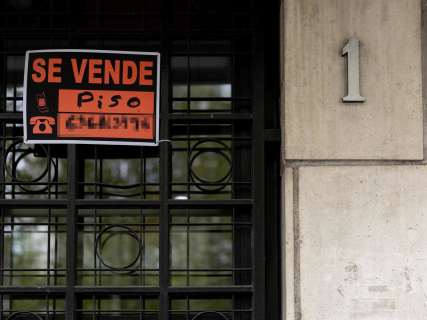

The housing price Spain continues to draw a profoundly unequal map. According to an analysis by the real estate portal pisos.com with data from the first quarter of 2026, the residential market shows an extreme polarization between municipalities, with differences that highlight two completely distinct economic realities within the country.
At the top of the ranking, the Balearic Islands clearly dominate. Formentera leads the classification with 10,027 euros per square meter, which places the average price of a home at around 902,000 euros. They are followed by Santa Eulària des Riu, in Ibiza, and Andratx, in Mallorca, consolidating the archipelago as the epicenter of real estate price increases in Spain.
Balearics and the Mediterranean arc lead prices
The weight of the Balearic Islands is overwhelming: twelve of the twenty most expensive municipalities in the country are concentrated on these islands. Added to them are enclaves such as Zarautz, in Gipuzkoa, the most expensive municipality on the peninsula, or areas of high demand such as Marbella and Benahavís, in Malaga.
Towns like Sitges (Barcelona) or Adeje (Tenerife) also appear in the ranking, reflecting a clear pattern: coast, tourism, and international demand continue to be the main drivers of the price increase.
According to Ferran Font, director of studies at pisos.com, the situation responds to a combination of structural factors: scarcity of land, restrictive regulation, and sustained international demand, which leaves little room for prices to correct downwards.
The interior, the other side of the market
On the opposite end, the map changes radically. The most affordable municipalities are concentrated in the interior of Spain, where the average price of many homes does not exceed 50,000 euros.
The most representative case is Albalate del Arzobispo (Teruel), with barely 275 €/m², followed by towns such as Pedro Muñoz, Tamarite de Litera or Mota del Cuervo, all below 450 €/m².
This gap reflects an increasingly marked reality: while some areas concentrate investment and demand, others suffer depopulation, lower economic activity, and scarce real estate pressure.
A growing inequality in housing access
The difference between territories is increasingly difficult to ignore. “That a home in Formentera is equivalent to the price of more than thirty in a municipality in the interior raises a key question: if access to housing remains a universal right or is becoming a geographic privilege”, points out Font.
The phenomenon not only has economic implications, but also social ones, by reinforcing territorial inequality in Spain.
Increases also in less tense Spain
One of the most striking elements of the report is that the price increase is not limited to tense areas. Some municipalities in the interior have registered year-on-year increases of over 30%.
Among them are Sóller and Andratx (Mallorca), but also towns such as Oñati (Guipúzcoa), Villena (Alicante) or Las Pedroñeras (Cuenca), which indicates that real estate pressure is beginning to extend beyond traditional hotspots.
An increasingly fragmented market
The analysis confirms that the Spanish real estate market can no longer be understood as a homogeneous block. There are two parallel dynamics: one Spain where prices are skyrocketing driven by investment and tourism, and another where housing remains accessible, but with fewer economic opportunities.
In that context, the housing price Spain becomes one of the clearest indicators of the territorial and social fracture that the country is going through.