
The European Commission has made public this Tuesday a new package of recommendations so that the population can fend for itself during the first 72 hours of an emergency. Among the measures are the already usual backpacks with basic supplies, the incorporation in schools of guidelines on how to act in the event of disasters, and the adaptation of alert systems and evacuation plans to people with disabilities, in the face of possible wars, blackouts or natural disasters.
The announcement was made by the European Commissioner for Preparedness and Crisis Management, Hadja Lahbib, during the opening of the ninth European Civil Protection Forum in Brussels, where she presented four new guides aimed at helping national authorities better prepare citizens to deal with critical situations, especially during the first three days, while assistance services are being organized.
"When a disaster occurs, the first hours can be crucial. All Europeans should know what to do, how to protect their family and how to help others," Lahbib said, stressing that preparedness for emergencies must begin "in our homes, in our schools, in our communities."
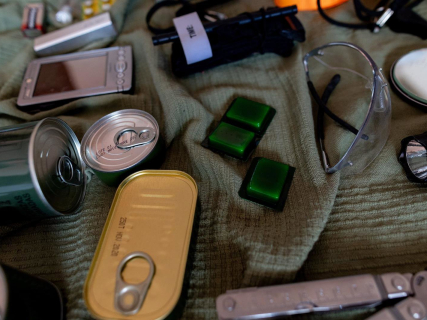
The first of the guides takes up a recommendation that the Commission already launched in 2025: that citizens be able to cover their basic needs during the first 72 hours of a crisis through the preparation of emergency kits and backpacks with essential supplies that allow families to get by during that period until help arrives.
That minimum autonomy of three days, the Community Executive recalls, must include reserves of drinking water, food, medication and other essential products. It is also advised to have backpacks ready for a rapid evacuation, to draw up family emergency plans and to acquire practical skills, such as providing first aid or cooking without electricity.
Training in schools without generating fear
The new guidelines also include the systematic introduction of emergency preparedness in educational centers, through specific training for teachers and activities that teach minors how to behave in risky situations. "Knowing what to do when sirens sound should be as natural as learning to swim," the commissioner said, advocating teaching children to be "prepared and not frightened."
For this, Brussels proposes training teachers and integrating this content into regular school routines, through practical exercises and materials adapted to each age group, without the need to create a new subject and seeking to ensure that preparation for disasters does not generate fear or anxiety among students.
Another of the new features of the guides is the obligation to adapt preparedness to people with disabilities, through accessible alert systems, specific evacuation protocols and shelters and means of transport that take their needs into account.
The Commission suggests, moreover, encouraging individual emergency plans that include possible needs for support, medication or assistance devices, as well as strengthening the training of first-response teams to ensure that no one is left out of the response to a disaster.
Clear communication and fight against hoaxes
The fourth guide focuses on improving risk communication, with recommendations for authorities to offer "clear, comprehensible and accessible information before, during and after emergencies", using various channels and combating the spread of false information that may hinder the population's reaction.
These guidelines, which are non-binding, are part of the European Emergency Preparedness Strategy, approved in March 2025, and incorporate examples of good practices from different member states and other countries, with the goal of consolidating a culture of prevention and preparedness throughout the Union.
"We want to be alert, not alarmed; prepared, not frightened," Lahbib summarized, who reiterated that preparedness for emergencies "begins in every European home" and that every citizen is "a link in the chain" of response to crises.
Europe facing growing threats
In her speech, the commissioner warned that the continent faces increasingly complex risks, from extreme weather phenomena to cyberattacks, sabotage and possible armed conflicts, which is why she defended the need to anticipate scenarios that only a few years ago seemed implausible.
"We are not at war, but we are not at peace either. We live in a dangerous gray zone, and that gray zone can turn red in the blink of an eye," Lahbib warned, insisting that the European Union must be prepared for "the worst, including an armed conflict in Europe".
In this context, she has recalled the blackout that left millions of people in Spain and Portugal without supply, which forced hospitals to resort to electric generators, as an example of how an emergency can spread quickly to different sectors. "A crisis can jump from one sector to another and a crisis can trigger another," she lamented.
The community official also pointed out that the EU Civil Protection Mechanism was activated more than 60 times during the last year, a figure ten times higher than that of its first years of operation, which, in her view, shows to what extent the risk map facing Europe has changed.
For this reason, she has called for "solid funding" in the next EU budget, arguing that European solidarity "is more than a promise" and "must be present when people need it". "That is what our citizens expect," she concluded.
Towards a European Preparedness Day
On the other hand, Lahbib has announced that she will propose to the member states and the European Parliament to establish October 23 as European Preparedness Day, with the idea of celebrating the first edition in 2027 and raising awareness among the population about the importance of anticipating emergencies.
"I am proud to announce that I will propose to the Council (the governments) and Parliament the creation of an EU Preparedness Day, which will be celebrated every October 23, the date on which our Civil Protection Mechanism was born (...) A birthday is also a good time to look ahead and write the next chapter together," she explained.
Lahbib closed her speech by drawing the image of a Europe "in 25 years" in which having an emergency bag next to the front door is "as normal as carrying a first aid kit in the car", in which "all children know what to do when the sirens sound" and town halls know "whom to call" in the face of a disaster, and where, when "the water rises or the forest burns, help crosses the border without a second of hesitation".