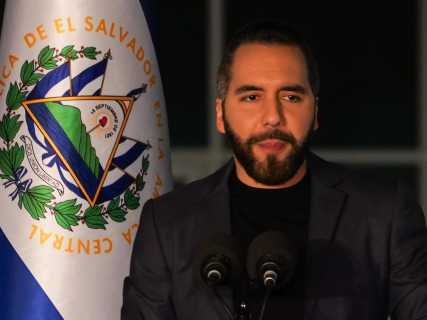

The president of El Salvador, Nayib Bukele, has denied that his country participated in the alleged bombings and attacks with armed helicopters in Haiti, emphasizing that the Salvadoran mission does not have bombs and lashing out at NGOs, whom he has accused of "liars".
According to what Bukele explained on his social media, the Salvadoran helicopters did not arrive in Haitian territory until October 29, an arrival that, he stressed, was "widely covered by the media, with numerous videos and posts on social media documenting it".
The leader has specified that the aircraft entered Haiti one day after the date mentioned in the letter from the UNA-Haití organization. In addition, he has lashed out at the NGOs, whom he has described as "lobbying firms for criminals and cartels, disguised as humanitarian organizations", since "they lie with total impunity" while exercising their "enormous influence in international organizations".
The text referred to by the president is an open letter from UNA-Haití, dated October 28 and addressed to the Secretary-General of the United Nations, António Guterres, according to the information published by the Salvadoran digital newspaper 'El Salvador'.
The founder of UNA-Haití, Harvey Dupiton, attributed to the Salvadoran forces alleged aerial bombings, the use of armed helicopters and operations with weapons on October 22 in several areas near the Haitian capital, in addition to calling for an investigation into possible civilian deaths. Bukele has flatly rejected all these accusations.
In parallel, El Salvador has deployed in recent days a broad security operation in Haiti, with more than 2,000 soldiers, with the objective of rescuing the four Salvadoran soldiers kidnapped after an ambush by the gangs.
The kidnapping took place in a context of growing tension, after an attack that left four international personnel wounded and several alleged gang members dead, and that led Bukele to issue an ultimatum to the armed gangs, threatening a total offensive if they do not release the hostages alive.