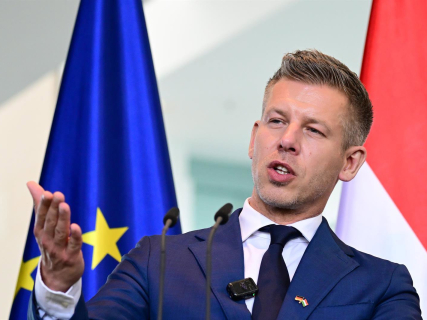

Hungarian authorities have released this Wednesday documentation relating to several thousand agents recruited by the secret services during the communist period, files that until now were classified and whose opening the new prime minister, Péter Magyar, has turned into a major political gesture.
This Wednesday, the head of government has defined the date as an “important day in the political transformation of Hungary,” by officially inaugurating the dissemination of these materials, accessible from 9:30 a.m. on a specific website where “names of 60,000 former informers recruited by the communist regime” can be consulted.
The publication of the files coincides with the 70th anniversary of the repression of the 1956 Revolution, when a spontaneous popular uprising rose up against the Government of the Hungarian People’s Republic and against the policies dictated from the Soviet Union.
With this measure, Magyar fulfills one of his main electoral promises, since he made the opening of the files of the communist-era services one of the cornerstones of his campaign to distance himself from the era of Viktor Orbán.
These files are known as “cards 6,” a name that comes from the number assigned to the documents that recorded the network of collaborators of the communist security apparatus. Before 1972, the cards themselves established differentiated categories among agents, informants, residents, or holders of K and T apartments, properties used for holding meetings.
The documents now accessible also include detailed information about each individual’s role within the network, the reasons why they were recruited, and the alias or code name they used.
Local press, however, has pointed out that no particularly unexpected revelations are expected in these files, which will be available for citizens to consult possible data about relatives. For now, the focus is on public figures and figures from the cultural world, while the suspicion has remained present in the Hungarian debate for years that Orbán may have been contacted as an informant—a claim he has always denied.
This same Tuesday, on the eve of the publication of the documents, Orbán explained that the secret services went after him with the aim of recruiting him during his military service, but that he refused to become an informant and, instead, was subjected to surveillance by agents during his youth because of his involvement in opposition to the regime.