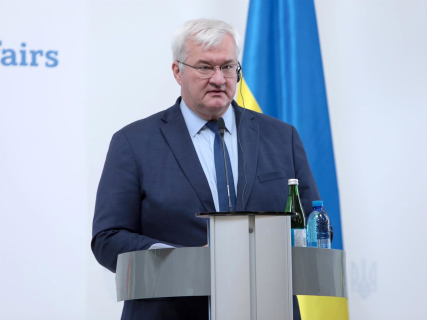

The Ukrainian Foreign Minister, Andri Sibiga, conveyed this Wednesday to his French counterpart, Jean-Noel Barrot, that Moscow is "intensifying" its military actions in the Black Sea, with a direct impact on the Ukrainian economy during the grain collection campaign.
"Russia is deliberately intensifying its attacks on ports and maritime routes during the harvest season, which poses a threat to the Ukrainian economy, freedom of navigation, and global food security," warned the head of Ukrainian diplomacy in a contact with his French colleague.
According to the statement from the Ukrainian Foreign Ministry, during the conversation Sibiga and Barrot discussed "practical measures to keep maritime routes open and safe" in light of the increase in Russian attacks in the area.
In parallel, Kiev has emphasized the urgency of strengthening its air defense systems in the face of the new wave of Russian bombings, an offensive that, according to Sibiga, could worsen in the cold months. "Russia will continue to try to use winter as a weapon and attack our energy infrastructure. Strengthening air defense remains an important component of defense," he added.
For this reason, the minister insisted that international pressure on Moscow must be "more systematic and predictable." "Every large-scale Russian attack must be followed by a response with sanctions," he demanded, particularly calling for measures aimed at the Russian ballistic system and the reactivation of the debate on the use of frozen Russian assets in Europe.
The EU prepares a new sanctions package
In this context, the High Representative of the European Union for Foreign Policy, Kaja Kallas, has committed to presenting after the summer the "harshest sanctions" ever applied against Russia, a new package that will be added to the 21 sets of restrictive measures already approved by the EU since the beginning of the Russian invasion of Ukraine in February 2022.
"We will further tighten the noose around Russia's phantom fleet to deprive Moscow of funds to finance the war," Kallas indicated, emphasizing that strengthening Ukraine's position is key to forcing Russia to agree to sit at the negotiating table.