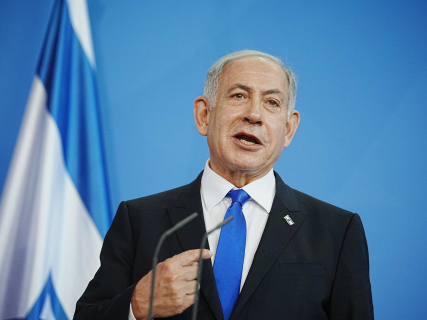

Three years after the Hamas attack on October 7, 2023, Israel is heading towards the first legislative elections held since a day that altered its domestic policy and the whole of the Middle East. On October 27, Israelis will elect a new Knesset with Benjamin Netanyahu again as a candidate and with the responsibilities for the failures that preceded the attack as one of the main issues of the campaign.
The proximity of both dates has reinforced that connection. While Israel remembered this Wednesday the approximately 1,200 people killed and the 251 hostages captured by Hamas and other armed groups, protesters gathered outside the Parliament in Jerusalem to demand accountability from the Government and an independent investigation. A survey from the Israel Democracy Institute also indicates that the attack will have quite a bit or a lot of importance in the electoral decision of 62% of those surveyed.
A political responsibility that Netanyahu does not assume
The failures that made the attack possible have led since 2023 to internal investigations in the Armed Forces and security services, but the debate about the responsibility of political power remains open. Netanyahu has not personally accepted responsibility for 7-O and has directed much of his criticism towards military and intelligence officials, while claiming Israel's subsequent actions against Hamas, Hezbollah, and Iran.
The opposition and part of the victims' families, on the contrary, argue that the responsibilities cannot be limited to operational errors. A group of victims and relatives presented in September a report prepared from public documentation in which they attribute to the policies developed over the years under Netanyahu's governments part of the conditions that allowed the strengthening of Hamas, an accusation that corresponds to its authors and that the prime minister rejects.
The controversy is especially concentrated on the creation of an independent state investigation commission. Netanyahu has opposed establishing it on the terms demanded by his opponents and has questioned whether its members should be appointed by the president of the Supreme Court, while his Government has defended an alternative formula with political intervention in the selection of the investigators.
The issue will reach the polls unresolved. The Government communicated to the Supreme Court that it would not initiate that commission before the elections and the Attorney General, Gali Baharav-Miara, has defended that the decision should be left in the hands of the next Executive.
Proportional elections and no direct election of the prime minister
Israelis will not vote directly between Netanyahu and his rivals to choose a prime minister. The elections serve to distribute the 120 seats of the Knesset through a proportional system in a single national constituency, in which each candidacy needs to surpass 3.25% of the votes to obtain representation.
Once the results are known, the president of Israel consults the parties and assigns a deputy the formation of Government. In a traditionally fragmented system, the decisive figure is the 61 seats necessary to form a majority, so being the most voted force does not guarantee the leadership of the Executive by itself.
For these elections, 38 candidacies have been registered, from the main parties to numerous parties with little chance of surpassing the electoral threshold. It will also be the first election since 1988 held after a Knesset has fully completed its four-year term.
Netanyahu, Eisenkot, and a fragmented opposition
Netanyahu again leads the Likud, around which the block that has supported his last Government alongside the ultra-Orthodox parties Shas and United Torah Judaism and the radical right formations Otzma Yehudit, led by Itamar Ben-Gvir, and Religious Zionism, led by Bezalel Smotrich, is articulated. The different forces run separately and will have to negotiate any eventual coalition afterwards.
One of his main adversaries is Gadi Eisenkot, former chief of staff and ex-member of the war cabinet formed after 7-O, who heads the new centrist formation Yashar. Eisenkot, whose son died fighting in Gaza in December 2023, has placed the creation of a state commission on the attacks and the expansion of military service to the ultra-Orthodox among his main commitments.
In the space opposite Netanyahu also competes B'Yachad, led by former Prime Minister Naftali Bennett and in which Yair Lapid has integrated, in addition to the Democrats of Yair Golan and Yisrael Beytenu, of Avigdor Liberman. The opposition thus brings together parties with different positions on security, religion, economy, or the relationship with the Arab parties, which makes the arithmetic after the elections especially relevant.
The forces that primarily represent the Israeli Arab minority also participate. Ra'am, led by Mansour Abbas, runs separately, while three other formations do so grouped in the Joint List.
The 7-O also enters the lists
The footprint of the attack reaches the candidacies themselves. At least nine candidates directly affected by October 7 are running on different lists, including relatives of those killed and kidnapped, survivors, and people who participated in the response to the incursion.
Yashar has incorporated relatives of victims, while B'Yachad includes retired General Noam Tibon, who went that day to the south of the country to rescue his family. Likud has also reserved positions for people directly affected by the attack.
Their presence in opposing blocs reflects that the 7-O does not lead to a single political reading. While a large part of the opposition demands a change of government and an independent investigation, Netanyahu focuses his campaign on the military response developed since then and claims the recovery of Israel's deterrent capacity.
Three decades around Netanyahu
Netanyahu faces these elections as the prime minister who has held the position the longest in the history of Israel. He first came to power in 1996, lost the elections in 1999, and returned in 2009, remaining at the head of the government until 2021. After a year and a half in the opposition, he returned to office in December 2022 at the head of a coalition formed by Likud, ultra-Orthodox parties, and forces of the religious and nationalist right.
The Hamas attack came less than ten months after that return and opened one of the most difficult stages of his prolonged political career. Since then, Netanyahu has led Israel during the Gaza war and the confrontations with Hezbollah and Iran, while domestic politics has remained affected by the consequences of the 7-O.
The elections of October 27 will move that debate to the polls. The distribution of the 120 seats will not automatically decide who will be prime minister, but it will determine whether Netanyahu has enough allies to reach 61 deputies and continue at the head of Israel after more than three years marked by the attack.