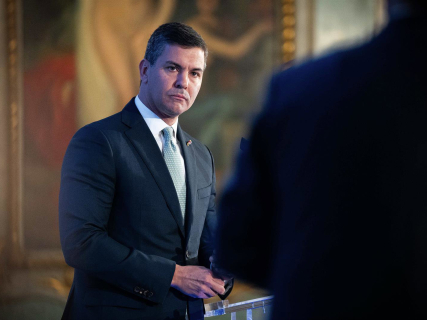

The outgoing president of Paraguay, Santiago Peña, has explained this Friday why he has chosen not to appear at the impeachment trial that is currently ongoing in the Senate, where two attorneys have taken the floor to argue for the validity of his resignation from office, formalized the day before after the financial scandal linked to Ueno Bank.
"I don't want my presence to be a reason for further division or instability. My responsibility is to put the country above my personal fate," he said in a brief message published on his social networks, in which he reiterated that the purpose of his resignation is "to avoid further harm to the country and help return calm to Paraguay."
The resigning head of state, who has again called for unity to "rebuild institutions and restore trust," has said farewell "with gratitude, without disregarding the anguish of those who today are waiting for answers."
At the same time, Peña has urged "to respond, with facts and responsibility, to those affected" by the collapse of Ueno Bank, a financial institution related to the president's former business partners, which ended up collapsing and was intervened by the Central Bank after its solvency fell below the required thresholds, leaving it unable to guarantee the deposits of millions of clients.