
In recent days, both Russian and Ukrainian forces have notably increased the use of drones, with almost 1,500 devices directed against areas controlled by Kiev and another 1,400 launched towards Moscow in just one week.
The Ukrainian president, Volodymyr Zelensky, has denounced that Russia seeks to "exhaust the Ukrainians" and consume their defense systems. "There are drone attacks constantly, many of them reactionary Shahed. Our soldiers shoot down a large part. There have been almost 1,500 drones of all kinds just in the last four days, of which about 800 were reactionary," Zelensky explained in a video shared on social media.
The leader emphasized that "the most difficult thing is to shoot down reactionary drones" and specified that "right now, fighter jets are the main ones responsible for protecting us against them. We are working to have interceptors available."
On the Russian side, the mayor of Moscow, Sergei Sobyanin, indicated that between August 22 and 30, 1,455 drones were detected against the capital region. According to his data, most were intercepted by air defense at a great distance and about 50 were destroyed when they were already near the city.
Zelensky has also released monthly data indicating that in August, Russian forces launched nearly 1,500 explosive Shahed drones against territory under Ukrainian control, while in the previous month, 2,500 devices of this type were recorded.
The president has also pointed out that "there are four companies that manufacture interception drones. One has the most effective ones. The Ministry of Defense and the military should do everything possible to ensure that we have as many opportunities as possible to shoot down each type of Russian drone."
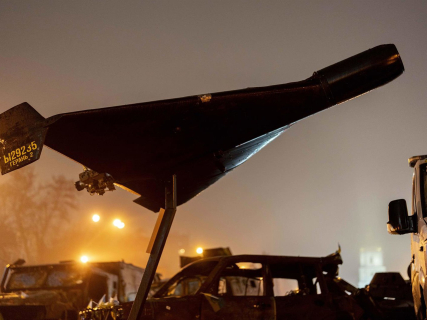
In this context of intensified attacks, Ukrainian presidential advisor Sergei Beskrestnov has highlighted that Russia is using the Shahed "almost directly from the factories," as many of these drones show production labels very close to the date they impact.
Beskrestnov has also warned that Ukrainian companies are receiving anonymous letters from "owners of Shahed" demanding payments to prevent their facilities from becoming targets of Russian drones.