This will be Harald V's funeral: from the Oslo Cathedral to the Akershus Royal Mausoleum

Norway prepares the farewell of its king after 35 years of reign, in a ceremony that is expected to gather in Oslo the main European royal houses.

4 minutes

Add DEMÓCRATA to Google

Ask FREN

Published

Last updated

4 minutes

Most read

The death of Harald V now opens the last chapter of a reign of more than three decades: his farewell. The king of Norway passed away this Friday at the age of 89 at the University Hospital of Oslo, and the Royal House is already preparing the ceremonies that will accompany the monarch in his final goodbye.

The date and the definitive program have not yet been officially communicated, but the precedent of the last Norwegian monarchs allows us to anticipate a good part of the scenario. The farewell will reference the Cathedral of Oslo, where the funerals of the members of the royal family are traditionally held, and will continue afterwards to the Akershus fortress, where the Royal Mausoleum is located.

This was the route followed by his father, Olav V, in 1991. After the ceremony at the Cathedral of Oslo, the coffin was transported to Akershus for burial. The mausoleum also houses the remains of Haakon VII and Queen Maud, the first monarchs of independent Norway, as well as those of Olav V and Princess Marta. The site has thus become the resting place of the dynasty that has reigned in Norway since the beginning of the 20th century.

The choice of Akershus therefore has a significance that goes beyond the ceremonial. Harald will be buried alongside the family members who built contemporary Norwegian monarchy. There, a reign that began in January 1991, when Harald succeeded his father, will physically come to an end.
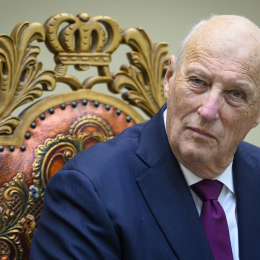
A farewell with the European royal houses

The funeral of Harald is expected to have an important international dimension. The official guest list has not yet been made public, but the precedent of Olav V's funeral offers a reference regarding the representation that may gather in Oslo.

On that occasion, the kings of Spain, Sweden, Denmark, the Netherlands, and Luxembourg attended, in addition to Constantine II of Greece and representatives of other European and Asian royal houses. The ceremony brought together a good part of the reigning families of the continent, in a demonstration of the weight that the relationships between the different monarchies still held at that time.

In the case of Harald, the presence of the Spanish royal family would also have a personal and historical dimension. The relationship between both houses dates back to the generation of the monarch himself and contains a particularly singular episode: when Harald was still the crown prince, Sofia of Greece, future queen of Spain, was among the young princesses who were considered as a possible wife for him.

Sofia herself recalled years later that episode and explained that in 1959 an attempt was made to promote a possible rapprochement between the two. The attempt did not succeed. Harald had then been romantically linked to Sonja Haraldsen for several years, a woman who did not belong to any royal house and whose marriage to the heir would initially be rejected by his father, Olav V.

That story ended up having a decisive importance for the Norwegian monarchy. Harald refused to renounce Sonja and, finally, his father authorized the marriage. They married in 1968. When Harald ascended to the throne in 1991, Sonja became queen.

Now it will be she who bids farewell to the king with whom she shared 58 years of marriage.
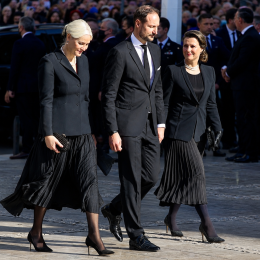
Haakon, at the forefront of the mourning

The institutional prominence will inevitably pass to the new king. Haakon, until now crown prince, becomes monarch after the death of his father and will be the one to lead the official farewell events.

Haakon had already assumed regent functions on numerous occasions due to Harald's health problems. The Norwegian Royal Palace had been progressively increasing his responsibilities as the age and illnesses of the monarch reduced his public activity. But the funeral will be the first major act of Haakon as king.

Alongside him will be Queen Sonja and the rest of the royal family. The ceremony will allow for the first time to publicly showcase the new configuration of the Norwegian Crown and will place the new sovereign at the center of an institution that his father led for more than 35 years.

The transition occurs, moreover, at a particularly delicate moment for the family. Haakon's wife, Mette-Marit, is going through her own health problems and the royal family has had to face different controversies in recent years that have subjected the institution to greater pressure.

The last goodbye in Oslo

While the protocol is finalized, Oslo prepares to bid farewell to one of the longest-reigning monarchs in Europe. Harald died at 89 years old after a life marked by war, exile, sport, and more than three decades at the helm of the Crown.

His funeral will likely have a solemn character, but it will also serve to close an era. Harald belonged to a generation of European monarchs who ascended to the throne when the continent was still deeply marked by World War II. During his reign, he witnessed the disappearance of several monarchies, attended the abdication of other sovereigns, and kept the Norwegian Crown linked to a society that changed profoundly.

The Oslo Cathedral will likely be the venue for the public farewell. Akershus, that of the definitive farewell.

There, in the Royal Mausoleum, Harald will rest alongside the kings who preceded him.

And while Norway bids farewell to the monarch who occupied the throne for more than three decades, Haakon will officially begin a new stage for the Crown.

More key points, information and questions with FREN

AI-GENERATED CONTENT

What institutional procedures must the Norwegian monarchy follow after the death of a monarch to formalize the succession?

I do not have structured and specialized access to the regulations and institutional practices of Norway; my area of work is the institutions and procedures of the Spanish political system. Therefore, I cannot describe in a technical and authoritative manner the specific procedures that the Norwegian monarchy follows after the death of a monarch. However, I can, with due caution, explain the general framework of how these processes are usually articulated in a parliamentary constitutional monarchy, so you have an orientative reference and know what types of steps usually exist.

1. Principle of automatic succession

In modern constitutional monarchies, the basic rule is that succession is automatic: the heir becomes monarch at the very moment of the death or abdication of their predecessor. This idea is often expressed with phrases like “the king is dead, long live the king.” Legally:

  • The head of State position does not remain vacant: it immediately passes to the heir established by the Constitution and succession laws.
  • The death of the monarch triggers the start of a series of formal acts (proclamations, oaths, registrations, etc.), but these are for confirmation and solemnization, not for creating the right to reign.

2. Official communication and proclamation

After the death of the monarch, there is usually a basic sequence of institutional acts:

  • Public announcement of the death by the Royal House or the Government, with an official statement and often a declaration of national mourning.
  • Meeting of State authorities (Government, Presidency of Parliament, high military and civil officials) to formally recognize that, according to the law, the heir has already become the new monarch.
  • Official proclamation of the new king or queen, usually through a solemn act where their name and title are made public and it is declared that they have acceded to the throne.

Legally, this proclamation acts as certification and publicity of a succession fact that has already fully occurred with the death of the previous monarch.

3. Oaths and constitutional commitments

Another very common element in parliamentary monarchies is the existence of one or more solemn oaths or promises by the new monarch before democratic institutions:

  • The king or queen usually takes an oath of loyalty to the Constitution and the country's laws.
  • Sometimes, they also swear to respect the independence of Parliament and guarantee the functioning of the democratic system.
  • These acts may take place before one or several authorities: the Parliament in joint session, the president of the chamber, the Government, or a mixed body.

From an institutional point of view, this oath is the explicit link between the Crown and the current constitutional order, and it is considered a requirement for the full exercise of functions as head of State.

4. Administrative and protocol actions

In parallel with the solemn acts, numerous administrative procedures are carried out:

  • Registration of the death of the monarch in the corresponding civil and State registries.
  • Updating all official records where the head of State appears (legislative documents, orders, treaties, official seals, coats of arms, etc.).
  • Issuance of new oath formulas and references for the administration, armed forces, and judiciary, now under the name of the new monarch.
  • Official opening of the mourning period, with flags at half-mast and other symbols, which coexists with the preparation of the coronation or the main enthronement ceremony.

5. Coronation or enthronement ceremony

Finally, many monarchies contemplate a coronation or enthronement ceremony which, although it may have a strong religious or symbolic content, also has an institutional character:

  • Official invitations are extended to representatives of Parliament, Government, other States, and international organizations.
  • In some systems, during this ceremony the monarch reaffirms their commitment to the Constitution and citizens' rights.
  • From then on, the succession is considered socially and politically fully consolidated.

In summary, in a parliamentary monarchy like Norway's, the key is that the succession to the throne is legally and automatically immediate, while the institutional procedures (proclamation, oaths, registrations, ceremonies) serve to formalize, publicize, and ritualize that succession within the constitutional framework. To know precisely the specific normative details of Norway (specific articles of its Constitution, succession laws, exact body before which the oath is taken, deadlines, etc.) it would be necessary to consult directly its constitutional texts and the most recent Norwegian parliamentary practice.

What are the constitutional powers of the new King Haakon and how do they differ from those of his father?

I do not have tools or databases to work rigorously on the Norwegian monarchy or on the “new King Haakon,” and my specialization is focused on the Spanish political and institutional system. Therefore, I cannot offer you a reliable and updated comparison between the constitutional powers of that monarch and those of his father.

My working framework revolves around:

  • Spanish institutions: Crown, General Courts, Government, Constitutional Court, regional bodies, etc.
  • Regulations and initiatives: laws, royal decree-laws, legislative projects and proposals, parliamentary regulations, and provisions of the various Spanish public administrations.
  • Parliamentary and political activity: processing of initiatives, composition and functioning of chambers, debates, votes, and positioning of parties and political actors in Spain.

I can, if you find it useful, help you in a more comparative field but always taking the Spanish system as the axis. For example:

  • Explain what constitutional functions the Crown has in Spain (according to the 1978 Constitution) and how they differ from those exercised by Juan Carlos I or Felipe VI, always within the Spanish framework.
  • Generally analyze the figure of the parliamentary head of State (as occurs in many European monarchies), describing typical features: representative functions, arbitral or moderating role, sanctioning laws, power to dissolve Parliament at the Government's proposal, appointment of the prime minister, etc., and how this is articulated in Spain.
  • Comment on how, in parliamentary monarchical systems, formal powers are usually very limited by the Constitution and the principle of political responsibility of the Government, so that the monarch almost always acts following the Executive's countersignature.

If you want to continue exploring the topic from a perspective I can address precisely, I propose several question options:

  • That I explain in detail what the constitutional functions of the King of Spain are and to what extent they are symbolic, representative, or effectively decision-making.
  • That we analyze the evolution of the political role of the Spanish Crown between Juan Carlos I and Felipe VI, based on the Constitution and political practice.
  • That we see, with examples, how the King's powers are materialized in practice in Spain: sanctioning laws, calling elections, proposing a candidate for the Presidency of the Government, etc.

If you reformulate the question in a Spanish key (for example, comparing the powers of two Spanish kings or asking for a general explanation about the constitutional role of the Crown), I will be able to give you a detailed and well-founded answer.

What legal requirements and protocols does the Norwegian Constitution regulate for the funerals of monarchs?

The Constitution of the Kingdom of Norway (Grunnloven) practically does not go into details about monarchs' funerals. It regulates the figure of the King, succession, regency, and certain formal acts, but does not establish a specific “constitutional protocol” for royal funerals. State funerals for Norwegian sovereigns are organized based on customary practice, decisions of the Government, the Royal House, and the rules of the Church of Norway, rather than detailed mandates from the constitutional text.

1. What the Constitution does regulate: death of the King and succession

What the Constitution does address directly is the legal effect of the monarch's death and the transfer of power:

  • Continuity of the Crown: upon the King's death, the Crown automatically passes to the heir designated by the succession rules (currently, absolute primogeniture within the Royal House). This principle of continuity is recognized at the constitutional level, although the text does not enter into rites or ceremonies.
  • Oath and proclamation: the Constitution provides that the new King takes an oath before the Storting (Parliament) and that his accession to the throne is proclaimed. These ceremonies may be coordinated in time with the mourning period and the state funeral, but the Constitution only establishes the obligation of the oath and the relation with Parliament, not the funeral format.
  • Regency and government: if the death or incapacity of the King raises situations of minority or vacancy, the Constitution regulates the figure of the regent and ensures the institutional continuity of the Government. Again, this has political and legal relevance, but not protocol relevance in a funerary sense.

2. What it DOES NOT regulate: rituals, liturgy, and symbolic protocol

On the other hand, there are a number of aspects that, in practice, form part of a state funeral for a Norwegian monarch and that are not constitutionalized:

  • Religious rites: although the Constitution mentions the historical relationship between the State and the Church of Norway, it does not impose the liturgical structure of a royal funeral. The specific form of the religious service, prayers, readings, and clergy participation are decided according to ecclesiastical norms and practical agreements between the Royal House and the Church.
  • Ceremony of the coffin, escorts, and parades: the use of funeral carriages, honor guards, military formations, gun salutes, or processions through the streets of Oslo is governed by the protocol rules of the Royal House, the Armed Forces, and the competent Ministry, not by constitutional precepts.
  • Place of the ceremony and burial: the choice of cathedral, royal chapel, or mausoleum, as well as the burial regime of the royal family, is also not fixed in the constitutional text, but in historical decisions and administrative agreements.

3. Role of the Government and Parliament in the funeral

Although the Constitution is silent on funeral details, it does determine who holds political authority in that context:

  • The Government declares official mourning, sets the use of flags at half-mast on public buildings, coordinates the participation of the Armed Forces, and manages the international dimension (invitation of foreign heads of State and Government, representatives of international organizations, etc.). These decisions are based on general norms and governmental prerogative, not on specific articles about funerals.
  • The Storting participates in solemn acts, pays tribute in parliamentary session, and witnesses the proclamation and oath of the new monarch. Its role is supported by constitutional provisions related to the Crown and Parliament, but the specific forms (minutes of silence, speeches, official delegations) are based on parliamentary customs and internal decisions.

4. Legal nature of the royal protocol in Norway

In summary, the Norwegian regime combines:

  • A very concise constitutional core (succession, oath, King–Parliament relationship).
  • Subconstitutional law and regulations on flags, military honors, mourning days, and organization of state ceremonies, which the Government can adapt to each case.
  • Custom and precedents of the Royal House and the Norwegian State, which provide stability and symbolic continuity to monarchs' funerals, without being detailed in the Constitution.

Therefore, from a strictly constitutional perspective, the “legal requirements and protocols” for Norwegian monarchs' funerals basically reduce to guaranteeing the continuity of power and the formal acts of succession. The rest of the ceremony is supported by ordinary norms, institutional practice, and tradition, rather than by express mandates of the Grunnloven.

Play

Test your knowledge with FREN!

How much do you know about this topic? Answer the following 3 questions.

Where will King Harald V of Norway be buried?

Question 1 of 3

Who will take on the institutional prominence and lead the official farewell ceremonies after the death of Harald V?

Question 2 of 3

What personal and historical relationship connects the Norwegian royal family with the Spanish one according to the article?

Question 3 of 3

Hola, soy Fren. ¿Cómo te ayudo?