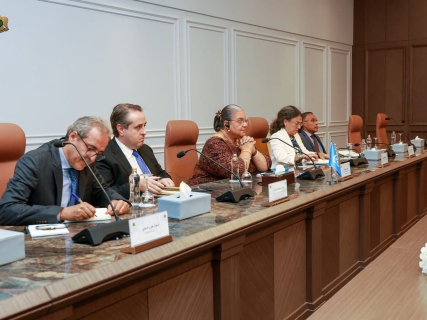

The different Libyan factions have signed this Sunday in Tripoli a new understanding to advance in the 'roadmap' that should lead to the expected elections, called to inaugurate a different stage in the country after decades of conflict. The agreed document establishes the procedure to elect the head of the Electoral Commission and details the development of the legal framework for the elections, for which a maximum horizon of 24 months is initially set.
The text also contemplates the possibility that citizens with dual nationality can run for public office, on the condition that the winner renounces that second citizenship before taking office. Likewise, it opens the door to the participation of military personnel under formulas that ensure their neutrality, eliminates the need for a second round in the presidential elections if the first is resolved by simple majority, and breaks the link between the results of these and the legislative elections.
According to the draft circulated by Libyan media, the elections will be held in a "period not exceeding 24 months, under a single executive power and unified national institutions" and, in case this unification is not possible, "the parties will work with the UN mission to find the best mechanism to achieve this electoral milestone," the text states.
The so-called 4+4 committee includes representatives from the Tripoli Government, recognized by the international community, and from the parallel authorities based in the east of the country, which have been in conflict since the civil war that erupted after the death in 2011 of Libyan leader Muammar Gaddafi. Since then, Libya's political trajectory has been marked by institutional fragmentation and a series of episodes of strong instability.
In the signing ceremony, the absence of the High Council of State, the main advisory body of the internationally recognized Executive, has been notable, which for months has accused the UN of having hijacked the electoral process.
Its president, Mohammed Takala, has expressed in a recent letter to the representative of the UN Secretary-General, Hanna Tetteh, his support for holding elections, but has emphasized that they must be based on national consensus and solid institutional legitimacy. At the same time, several Libyan political formations have shown their rejection of the electoral formats being discussed.
The very Takala has emphasized that the absence of the High State Council in the signing this Sunday constitutes a gesture of protest and not a definitive rejection of the process.
Who has shown a frontal opposition to the course of these conversations has been the head of the Presidential Council, Mohamed Menfi, who this week has denounced on social media the lack of transparency of the negotiations, although his signature is not necessary for the agreement to come into effect.
"It is unacceptable that certain international parties are granted Libyan documents and agreements related to the future of the country before they are presented transparently to the Libyans, their official institutions, and their national forces," he has argued.
"The United Nations Mission must continue to be a facilitator of a process that belongs to the Libyans, not that its procedures become a subject of questioning regarding the neutrality and transparency of the process," he added before insisting that "those who are responsible for the crisis cannot be part of the solution," an indirect allusion to the growing weight in the conversations of the high commander of the Libyan National Army, Sadam Haftar, son of Marshal Khalifa Haftar, a dominant figure in the east of the country.