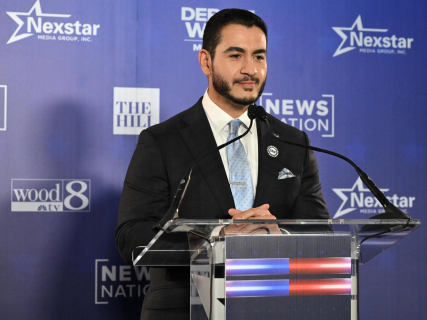

Haley Stevens has turned the internal differences of the Democrats in Michigan into support for the opponent. The congresswoman announced this Sunday her support for the Republican Mike Rogers over Abdul El-Sayed, the candidate who defeated her in the August primaries. Stevens communicated her decision in a video when there are barely two days left for the midterm elections of November 3.
The decision comes after Stevens appeared alongside Rogers in a church in Detroit. The gesture offers the Republican candidate an opportunity to attract voters dissatisfied with El-Sayed, although it still does not allow measuring how many voters will follow the congresswoman.
A break with El-Sayed, without leaving the Democratic Party
Stevens explained that her former rival had told her that she was no longer welcome in his campaign. She also criticized his relationship with commentator Hasan Piker. Despite supporting the Republican candidate, she has claimed that she remains a Democrat: the announcement means a break with El-Sayed’s candidacy, not a communication of party change. This is reported by The Washington Post.
The disagreement has frustrated an attempt at unity in the final stretch of the campaign. Stevens had planned to participate in a religious event alongside El-Sayed and congressman Jim Clyburn. Debbie Dingell, who collaborated in its organization, explained to Associated Press that she asked Stevens not to attend because the controversy was diverting attention from the meeting.
Israel and an outside announcement, at the origin of the conflict
The dispute worsened over an announcement by a group outside the campaign that linked Israel with the rise in food prices in the United States. Stevens demanded a more forceful condemnation.
El-Sayed distanced himself from the announcement and expressed his disagreement with its content. That clarification matters: it was not a piece of his campaign. The conflict reflects differences over Israel that had already marked the primaries and that have resurfaced on the eve of the vote.
The Democratic candidate has accused Stevens of going back over that internal contest and has defended that his priority remains defeating Rogers and demanding political accountability from Donald Trump.
Why Michigan matters for the Senate majority
El-Sayed and Rogers are competing for the seat left by Democrat Gary Peters. Keeping it constitutes an important piece of the Democrats' aspirations to regain the Senate majority. Rogers, a former Republican congressman, has Trump's support.
The controversy also affects territories relevant to Democratic mobilization. Stevens beat El-Sayed in the primaries in Wayne County, where Detroit is located, and Oakland, with support among Black and Jewish voters. Other party leaders maintain their support for El-Sayed and have participated with him in campaign events.
For that reason it would be exaggerated to describe what happened as a break with the entire Michigan Democratic Party. It does amount to a public disavowal of their candidate by a congresswoman who contested the nomination.
The immediate benefit for Rogers is political: he can display support from the rival party while his opponents devote part of the final stretch of the campaign to explaining their differences. Its electoral translation will remain an unknown until the votes are known.