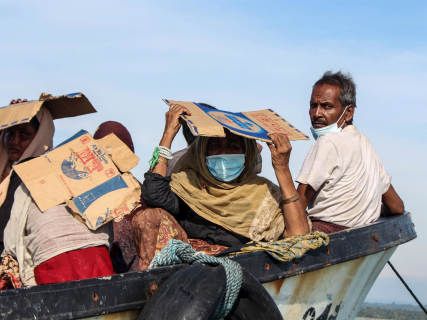

The European Commission has announced this Friday the approval of a new allocation of 16 million euros in humanitarian aid for people affected by the conflict in Myanmar and for Rohingya refugees established in Bangladesh, in view of the worsening of the food crisis and the increase in forced displacement due to violence in the Asian country.
As detailed by the Community Executive in an official note, these additional resources will be used above all for the provision of food, healthcare, and nutritional support to "the most vulnerable communities", in a context marked by "the deterioration of humanitarian conditions" as a result of "armed clashes, the recent floods, and the global rise in fuel prices".
In the case of Myanmar, European funds will be directed to strengthening food assistance, health services, and nutrition to address "the worsening of the food crisis stemming from the conflict" and the expected effects of the phenomenon of "extreme El Niño", as well as the impact of the global increase in fuel prices and the latest floods recorded in the country.
Meanwhile, assistance allocated by the EU to Bangladesh will give priority to food security, medical care, and other protection services aimed at refugees, who continue to depend on humanitarian aid in order to survive and whose situation is deteriorating due to the added pressure of the constant arrival of more people coming from Myanmar.
This new item is added to the more than 50 million euros already mobilized in humanitarian aid for the crisis in Myanmar and its repercussions in the region, in countries such as Thailand, Malaysia, Indonesia, and India since January 2026, as the Commission has emphasized in its statement. It also adds to the more than 23 million euros allocated this year in humanitarian aid to Bangladesh.
Brussels has stressed that Myanmar continues to be one of the countries with "the world’s biggest displacement crises", with more than 4 million people forced to leave their homes within its borders. It has also highlighted that around 1.2 million refugees in Bangladesh continue to live "in precarious conditions".