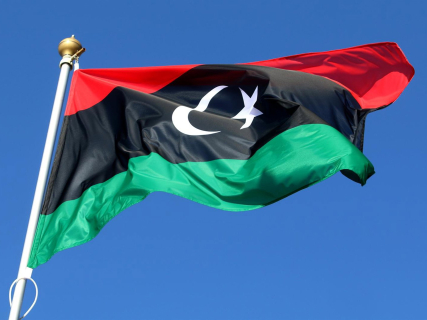

The office of the United Nations High Commissioner for Human Rights, led by Volker Turk, made public a statement this Wednesday condemning the execution of 11 people in eastern Libya without due process guarantees, emphasizing that this act represents a "serious setback" after 15 years without applying such penalties.
"We are dismayed by the mass execution of 11 men in eastern Libya last week, without a fair trial before a military court," the office stated in a communiqué disseminated on social media.
The executions, of a judicial nature, "represent a serious setback." "There must be no more. The death penalty is incompatible with the right to life and also increases the risk of executing innocent people," the agency added, demanding that such actions not be repeated.
From the side of the Tripoli authorities, recognized by the international community, the office of the Ministry of State for Displaced Persons and Human Rights has warned that executions based on military court rulings constitute "an extremely dangerous evolution" that jeopardizes the right to life and the rule of law itself.
After insisting that the severity of crimes cannot serve as an excuse to deny a fair trial, the right to defense, or appearance before a competent civil judge, this department has reminded that the Libyan Supreme Court, in 2024, declared unconstitutional the referral of civilians to military jurisdiction in terrorism cases and rejected expanding military jurisdiction when it affects the guarantees of the civilian population.
"Applying irreversible maximum penalties under the current circumstances in Libya could deepen polarization, undermine trust in judicial institutions, and hinder national reconciliation and efforts to build sustainable peace," it added, demanding the immediate suspension of any further steps aimed at executing the sentences.
PARALLEL AUTHORITIES IN LIBYA
In parallel, and at the proposal of the United States, the forces based in eastern Libya have shown willingness to engage in negotiations to advance towards administrative reunification, arguing that it is a "unique" initiative distinct from previous attempts to channel the crisis, close the prolonged transition period, and unify "national" institutions.
Libya has been suffering for years from a situation of dual power in a context of instability following the fall of the then leader, Muammar Gaddafi, worsened by the postponement of the elections scheduled for 2021, with parallel authorities established in the east of the country and without the various dialogue processes for institutional reintegration having yielded, for now, concrete results.