MotoGP schedule today: what time is the Indonesia race and where to watch it

The MotoGP race in Mandalika starts this Sunday, October 11 at 09:00, Spanish peninsular time. Moto2 has its start scheduled for 07:15 and the day can be followed on DAZN.

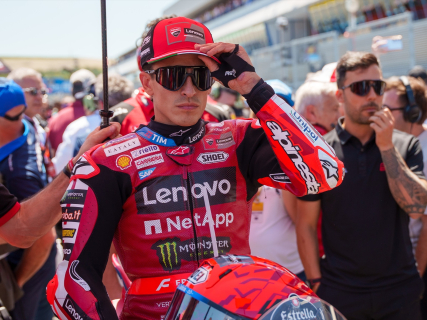
EuropaPress 7474124 piloto espanol motos marc marquez parrilla salida moto gp gran premio

EuropaPress 7474124 piloto espanol motos marc marquez parrilla salida moto gp gran premio

Add DEMÓCRATA to Google

Ask FREN

Published

Last updated

1 minute

Most read

Elecciones 29N · Encuestas

La media de las encuestas

Media a 12 de noviembre de 2026 · 15 institutos

  • PP31,5 %
  • PSOE26,7 %
  • Vox19,1 %
  • Frente Amplio6,2 %
  • ERC2,4 %
01020304050ene 2024jul 2024ene 2025jul 2025ene 2026jul 2026

Media del último estudio de cada instituto en 30 días y su evolución semanal desde el 23J. Partidos con al menos un 2 %.

Todas las encuestas

Elecciones generales del 29 de noviembre · Demócrata

The MotoGP race today, Sunday, October 11, 2026, starts at 09:00 in mainland Spain and at 08:00 in the Canary Islands. The Indonesian Grand Prix takes place at the Mandalika circuit, on the island of Lombok.

The main race is scheduled for 27 laps. Before, the Moto2 race is held, with a planned start at 07:15, mainland time.

Schedules for MotoGP, Moto2, and Moto3 today

These are the scheduled start times for the races on Sunday, not the start times for the television broadcast:

  • Moto3 06:00 05:00
  • Moto2 07:15 06:15
  • MotoGP 09:00 08:00

The official program places MotoGP at 14:00 in the Indonesian WIB time zone, equivalent to 15:00 in Lombok and 09:00 in mainland Spain. The difference between the time zones in Indonesia explains part of the confusion when checking local times.

Where to watch the MotoGP race on television

The Indonesian Grand Prix can be followed in Spain through DAZN and the DAZN MotoGP channel in television offers that include it.

The Movistar Plus+ programming places the start of the segment dedicated to the MotoGP race at 08:35. The start is scheduled for 09:00: the broadcast begins earlier to offer the preview.

In Moto2, the television segment starts at 07:05, ten minutes before the scheduled start.

Where the Indonesian Grand Prix takes place

Mandalika hosts the seventeenth event of the 2026 MotoGP calendar. The race is part of the Asian tour and comes after the Japanese Grand Prix. The next race of the championship is scheduled for October 25 in Phillip Island, Australia. After that, the calendar continues in Malaysia on November 1.

More key points, information and questions with FREN

AI-GENERATED CONTENT

What are the necessary procedures for the international homologation of a circuit like Mandalika for the MotoGP World Championship?

I do not have the specialized and detailed information you need about the technical and sporting procedures for the international homologation of a circuit like Mandalika for the MotoGP World Championship. I am specifically designed to work on Spanish politics and institutions (Congress, Senate, governments, public regulations, parties, political actors, etc.), not on technical procedures of international sports federations such as the FIM (International Motorcycling Federation) or on sporting regulations of championships like MotoGP.

Still, to guide your search, the homologation of a circuit for a world motorcycle championship is usually regulated by the technical and safety regulations of the FIM and the organizing company of the championship (Dorna, in the case of MotoGP). These processes usually combine:

  • Regulatory and safety requirements: minimum track dimensions, run-off areas, protective barriers, asphalt condition, drainage, medical infrastructure, pits, race direction, timing systems, etc.
  • Supervision by accredited inspectors: normally the FIM appoints commissioners or inspectors who conduct technical visits to the circuit, review plans, certify the work, and issue compliance reports or necessary reforms.
  • Compliance with international standards: the FIM classifies circuits by “grade” (grades or categories) according to their characteristics. To host MotoGP, the layout must reach a very high grade (for example, FIM Grade A or equivalent, depending on the regulation in force each season).
  • Preliminary tests and trials: besides documentary and physical inspection, it is usually required to hold official test sessions where the asphalt behavior, safety in critical corners, medical evacuation capacity, and the overall functioning of the facility during track activity are practically verified.

However, all these points are general considerations, not the formal, step-by-step procedure you are asking for (which forms, which official phases, deadlines, instances within the FIM, exact relationship with Dorna, types of reports issued, etc.). That information, by design, is not part of my scope of work, which focuses on:

  • Laws, decrees, regulations, and public policies in Spain (and, where applicable, relevant European or regional norms in the Spanish context).
  • Parliamentary and governmental processing: how norms are approved, the steps they follow in Congress and Senate, what a royal decree-law is, how a bill is processed, etc.
  • Political and institutional activity: parties, parliamentary groups, votes, hearings, debates, public actors, political strategies, regulatory context of economic sectors, etc.

If you are interested in delving into the homologation of a circuit for MotoGP with the technical-procedural detail you propose (for example, for a sports infrastructure project, academic work, or professional dossier), it will be more useful to consult:

  • Official FIM regulations (Regulations for Road Racing Circuits or similar denomination), usually available on the International Motorcycling Federation’s website.
  • Technical documents from Dorna and MotoGP, particularly those about circuit requirements, grand prix organization manuals, and safety protocols.
  • Engineering studies and circuit guides, prepared by specialized engineering firms or national motorcycling federations, explaining the phases of a project from design to final certification.

On the other hand, if at some point you are interested in the political or institutional angle linked to a grand prix (for example, public aid to build or remodel a circuit in Spain, budgetary impact, agreements between administrations and promoters, parliamentary debates on subsidies or investments, urban or environmental regulations affecting the layout), I could help: I could analyze applicable Spanish regulations, see what has been debated in the General Courts or a regional parliament, review party positions regarding those investments, or contextualize the regulatory impact of a major sporting event on a specific territory.

In summary, for the specific question you have posed —the necessary procedures for the international homologation of a circuit like Mandalika for MotoGP— I cannot provide the precise guide you seek, because it is a technical-sporting field outside my specialization. But if you want to explore the political, regulatory, or institutional side of motorcycle grand prix in Spain (subsidies, contracts, government decisions, debates on economic or social impact), I will be happy to help you in detail.

What role do Spanish public administrations play in the financing and authorization of motorcycle grand prix held at circuits located in Spain? What urban planning, environmental, or safety regulations usually affect the construction or remodeling of a speed circuit in Spain? Have there been parliamentary debates in Spain about the economic and social impact of hosting MotoGP World Championship races or other major sporting events?

What competencies does the International Motorcycling Federation (FIM) have regarding the management of calendars and venues of grand prix?

I am an assistant specialized in Spanish politics and public institutions, and I am not designed to offer detailed analysis about the internal organization or specific competencies of international sports federations such as the International Motorcycling Federation (FIM).

For that reason, I cannot provide you with a reliable and detailed explanation about the exact competencies the FIM has in managing calendars and venues of grand prix, how those functions are shared with private promoters, circuits, or the company that exploits the commercial rights of the championships, nor how their internal or contractual regulations are articulated.

However, I can help you with issues that have a clear link to the institutional or regulatory field, for example:

  • Spanish or European regulations applicable to motor sports (safety, environment, contracts, audiovisual rights, etc.).
  • Intervention of Spanish public administrations in grand prix held in Spain (agreements with public circuits, aid, budgetary or tourism impacts, related parliamentary debates).
  • Regulation or public control over Spanish sports federations, their statutes, or the role of the Higher Sports Council.
  • Political or regulatory debate in Spain around the holding of grand prix (mobility, noise, emissions, public aid, land use planning, etc.).

If you want, you can reformulate your question giving it that institutional or regulatory focus (for example, focusing on how it is decided that a grand prix is held at a Spanish circuit, what role administrations play, or what rules condition those agreements) and I will be happy to help you within that framework.

What Spanish legal framework regulates the holding of motorcycle grand prix at circuits located in Spain? What role does the Higher Sports Council have in supervising sports federations and their competitions in Spain? How have public aid and the economic impact of motorcycle grand prix been debated in the Spanish Parliament?

What results did the last MotoGP world champion achieve in the races previously held in Indonesia?

I cannot accurately answer your question about the results obtained by the last MotoGP world champion in races held in Indonesia, because I am exclusively specialized in Spanish politics and institutions and do not have structured access to sports databases or historical results of competitions like the MotoGP World Championship. My scope focuses on political, institutional, parliamentary, regulatory information and the activity of public actors and organizations linked to the public sphere, especially in Spain.

In other words, my design is oriented to follow and analyze laws, decrees, parliamentary initiatives, votes, debates in Congress and Senate, decisions of central and regional governments, public consultations, as well as positions and profiles of parties, parliamentary groups, and political leaders. I can also work with news and public debates related to these areas, for example, when they affect specific economic sectors (energy, transport, digital, taxation, health, housing, etc.) or companies and organizations in their regulatory or institutional dimension.

The type of information you ask about MotoGP —sports results in specific grand prix, statistics of a world champion rider at a particular circuit such as Indonesia (Mandalika or previous ones, if any), number of wins, podiums, retirements, or final positions in those races— belongs to the field of specialized sports data. To answer it rigorously, one would need to consult sources such as:

  • The official MotoGP or FIM databases with results of each Grand Prix.
  • Specialized motor and sports statistics websites that archive classification by race, rider, and season.
  • Journalistic chronicles of the Indonesian Grand Prix and historical summaries of world champions.

Since I do not have operational access to such sports repositories, I could not tell you without error margin how many times the current world champion has raced there, in what position they finished each edition, if they achieved pole position or fastest lap, or other similar data. Giving an approximate answer based only on assumptions or outdated memories would be misleading and not useful for you, so I prefer to be clear about this limitation.

If you need that specific information, I would recommend consulting:

  • The official MotoGP website, where complete results by season, race, and rider are usually accessible.
  • Sports statistics portals specialized in motorcycling, which allow filtering by circuit, year, or world champion.
  • Sports media that cover the MotoGP World Championship and often publish specials about champions’ performance on certain tracks.

Although in this case I cannot provide you with the specific data, I can help if at any time you want to approach the topic of motorcycling or professional sport from a political or regulatory perspective. For example:

  • Analyze what public policies, subsidies, or regulatory frameworks exist in Spain regarding high-performance sport or road safety related to motorcycles.
  • Review parliamentary initiatives about international sporting events organized in Spain and their economic, tourism, or infrastructure impact.
  • Explore how issues such as environmental sustainability of major events, regulation of fuel or tire advertising, or working conditions of motor professionals are treated in Congress or political media.

I can also help with a more general context if, for example, you are interested in how the organization of motor grand prix is regulated in Spain from an administrative point of view (competences between the State and autonomous communities, types of public contracts, institutional aid or sponsorship) or how investments in circuits and high-level sports facilities are debated in parliamentary sessions.

In summary, your specific question about the results of the last MotoGP world champion in Indonesia is outside my area of specialization, so I cannot offer you the sports data with guarantees. However, if you want to redirect the conversation towards any issue related to Spanish politics, institutions, legislation, regulation of economic sectors (including sports), or analysis of public actors, I will be happy to help you with the highest level of detail possible within that framework.

Play

Test your knowledge with FREN!

How much do you know about this topic? Answer the following 3 questions.

Where is the 2026 Indonesian MotoGP Grand Prix held?

Question 1 of 3

Through which channel can the Indonesian MotoGP race be watched in Spain?

Question 2 of 3

How many laps are scheduled for the main MotoGP race in Mandalika?

Question 3 of 3