Suspended the Rayo-Athletic: what consequences and sanctions it may have

The throwing of objects onto the playing field during the protests against Martín Presa may result in fines, the partial or total closure of Vallecas, and, in certain cases, sporting consequences for the Madrid club.

3 minutes

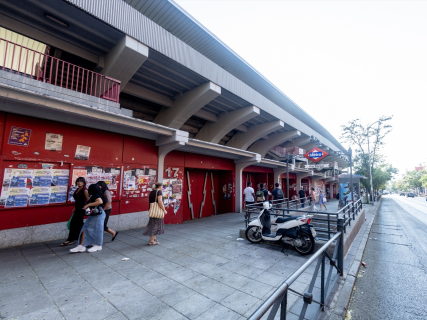
EuropaPress 7694397 fachada estadio vallecas 29 julio 2026 madrid espana comunidad madrid

EuropaPress 7694397 fachada estadio vallecas 29 julio 2026 madrid espana comunidad madrid

Add DEMÓCRATA to Google

Ask FREN

Published

3 minutes

Most read

The suspension of the match between Rayo Vallecano and Athletic Club this Saturday, October 10, opens a scenario of possible sanctions for the Madrid team, after the protests from part of the fans against their president, Raúl Martín Presa, led to the throwing of objects onto the field and forced the referee to interrupt the match.

Rayo is exposed to economic and disciplinary sanctions, although the severity of the measures will depend on what is recorded in the referee's report, the circumstances of the suspension, and the responsibility that the competent bodies attribute to the club.

Economic fines and possible closure of Vallecas

The Disciplinary Code of the Royal Spanish Football Federation includes sanctions for incidents involving spectators, including the throwing of objects onto the field. The severity of the infraction depends on factors such as the risk generated, the recurrence of the incidents, and their consequences on the development of the match.

The partial or total closure of the Vallecas stadium is one of the measures that could be considered, although its application is not automatic and requires a disciplinary resolution.

The situation is particularly delicate for Rayo after the problems that have affected their stadium in recent months. An eventual closure would pose a new difficulty for playing their home matches.

Can Rayo lose the match 0-3?

The possibility that Athletic obtains an administrative victory is one of the most serious consequences that could arise from a definitive suspension, but the throwing of objects does not, by itself, imply that Rayo loses the match.

To reach that scenario, it would have to be determined that the circumstances provided for in the disciplinary regulations exist to attribute to the home club the responsibility for a suspension that prevents the match from being played or completed.

Therefore, a result of 0-3 cannot be taken for granted without knowing the content of the referee's report and the resolution of the competent body.

Can the match be resumed on another date?

Another possibility is that the sports authorities agree to the continuation of the match on a later date, as long as the circumstances of the suspension and the applicable regulations allow for this solution.

The resumption and possible disciplinary sanctions are different issues, so the fact that the match ends up being played would not necessarily exclude a fine or a measure against the stadium.

The precedent of Atlético de Madrid-Real Madrid in September 2024 shows that the throwing of objects can cause interruptions and disciplinary proceedings without necessarily implying an administrative defeat.

The importance of the referee's report

The decision will largely depend on the referee's report, which must reflect the incidents, the objects thrown, the warnings made, and the circumstances that led to the interruption of the match.

Based on that documentation, the disciplinary bodies will be able to examine whether it is appropriate to impose sanctions on Rayo and what measures are proportionate.

For the moment, none of these consequences should be presented as a sanction already imposed. Its application will depend on the official resolution adopted regarding the incidents recorded in Vallecas.

The referee protocol in the event of object throwing

The RFEF establishes in its action protocol that the referee must assess the dangerousness of the objects, their number, the place where they fall, and whether they reach or cause damage to any of the participants. The regulations distinguish three levels of incidents, from low-danger objects that do not cause damage to those that endanger physical integrity.

In Vallecas, the throwing of paper airplanes and plastic balls began around the 13th minute and caused a first interruption of about ten minutes. Subsequently, new throws forced referee José María Sánchez Martínez to send the players to the locker rooms.

The precedent of Atlético-Real Madrid

One of the most recent precedents occurred in September 2024, when the derby between Atlético de Madrid and Real Madrid had to be interrupted due to the throwing of objects from the stands of the Metropolitano.

On that occasion, the RFEF Disciplinary Committee initially imposed a partial closure of the stadium for three matches, after examining the referee's report and the recorded incidents. The match was able to resume and was not resolved by an administrative defeat.

The difference with what happened in Vallecas will depend on whether the interruption ends up being definitive and on how the facts are qualified. The suspension of the match does not determine the sanction by itself, which must be resolved through the corresponding procedure.

More key points, information and questions with FREN

AI-GENERATED CONTENT

What is the process for handling and resolving disciplinary cases in the Royal Spanish Football Federation following incidents in matches?

In the Royal Spanish Football Federation (RFEF), incidents occurring during matches are processed through the disciplinary procedure established in its Disciplinary Code, complemented by the General Regulations, the rules of each competition, and the Sports Law. Based on this framework, a system of bodies, phases, deadlines, and appeals is structured to be very fast and compatible with the competitive calendar.

1. Framework and competent bodies

The disciplinary regime of the RFEF relies on four main levels:

  • Referee and referee report: the referee does not impose disciplinary sanctions outside the field of play, but their report is the basis for most cases. It can be supplemented with reports from the match delegate or the RFEF itself and with audiovisual evidence.
  • First instance disciplinary body: usually the Competition Committee or equivalent body of the competition. It handles infractions by players, coaches, clubs, crowd incidents, improper lineups, etc.
  • Appeals Committee: reviews in second instance the resolutions of the competition committee or other federative disciplinary bodies.
  • Administrative Sports Tribunal (TAD): comes into play only in cases assigned by the Sports Law (very serious infractions, certain matters of state scope, appeals against federative resolutions in regulated matters).

Additionally, the Code contemplates the possibility of adopting precautionary measures (for example, temporarily suspending a player or closing a stadium) while the case is processed.

2. Initiation of the case

After an incident in a match, the procedure can be initiated:

  • Ex officio, based on the referee report, federative reports, or video footage.
  • By complaint or claim from a club, affected person, or other legitimate party.
  • By request from a competent body or for facts known later.

In many cases, direct processing based on the report and allegations is sufficient. When the possible sanction is significant or the facts are complex, the disciplinary body may agree to the formal opening of a case with an instructor.

3. Phases of the procedure

3.1. Ordinary procedure (the most common)

  • Receipt of the report, reports, or complaint after the match.
  • Forwarding to the interested parties to submit allegations and, if applicable, evidence.
  • Joint evaluation of the report, reports, videos, and allegations by the disciplinary body.
  • Reasoned resolution identifying the infraction, the violated provision, and the sanction.
  • Notification indicating possible appeals and deadlines.

The Disciplinary Code sets very short deadlines. As a reference, certain club allegations must be submitted before 2:00 p.m. on the second business day following the match, with adjustments when the match is not played on a weekend. The RFEF may reduce them due to calendar demands but must respect the right to be heard.

3.2. Extraordinary procedure (with instructor)

Used for especially serious or complex infractions. Its typical phases are:

  • Appointment of an instructor and, if applicable, secretary.
  • Statement of charges detailing facts and alleged infractions.
  • Allegations from the accused and proposal of evidence.
  • Evidence gathering (viewing images, statements, technical reports, etc.).
  • Final hearing procedure.
  • Proposed resolution by the instructor and final resolution by the competent body.

The Code establishes, as a rule, that the resolution must be issued within a maximum of 10 business days from the day after the case is submitted by the instructor.

4. Resolution deadlines and effects of silence

For requests and claims before disciplinary or competition bodies, the Code generally sets a maximum period of 10 business days to expressly resolve. If there is no response within that period, the request is understood as rejected for the purposes of appeal. In these cases, the Code provides a period of 15 business days to file an appeal from when the request must be considered rejected.

It is advisable to differentiate:

  • Deadline to submit allegations in first instance.
  • Internal resolution deadline of the deciding body.
  • Deadline to appeal at each level.
  • Statute of limitations for infractions and sanctions, also regulated in the Code.
5. Appeals

Resolutions of the competition committee or equivalent disciplinary body are appealable, in the federative route, before the Appeals Committee, usually within 10 business days from notification. The appeal must identify the challenged resolution, the grounds, and the specific claim, and may be accompanied by new documents.

Once the federative route is exhausted, and depending on the matter and type of resolution, the following may be filed:

  • Appeals before the TAD, in cases assigned by the Sports Law.
  • Appeal before the contentious-administrative jurisdiction when the act has administrative nature.
  • Civil actions in strictly private disputes.

Filing an appeal does not automatically suspend the sanction: it is necessary that the competent body expressly agrees on the precautionary suspension when appropriate.

6. Summary scheme
  • Incident in match → report and reports.
  • Opening and processing of the case by the disciplinary body.
  • Allegations and, if applicable, instruction with evidence.
  • Reasoned resolution within a short deadline (generally up to 10 business days).
  • Appeal before the Appeals Committee and, if the law allows, before the TAD or courts.
Can you detail what types of infractions and specific sanctions the RFEF Disciplinary Code includes for incidents in matches? How is the RFEF disciplinary regime coordinated with UEFA and FIFA when an incident has an international dimension? What defense guarantees and what limits on evidence (for example, use of video) does the RFEF Disciplinary Code establish?

What powers and functions does the president of Rayo Vallecano have according to the club's statutes?

According to publicly available information, Rayo Vallecano de Madrid is organized as a Sports Public Limited Company (S.A.D.). This means that the figure of the president is not governed by “club statutes” in the style of a traditional sports association, but by the social statutes registered in the Mercantile Registry and by the Capital Companies Law and specific S.A.D. regulations. The club's own website lists the applicable regulations but does not currently publish the specific articles of its statutes, so it is not possible to literally reproduce what each article says about the president.

With that caution, and based on the general regime of S.A.D.s, it is possible to describe quite accurately what powers and functions the president of Rayo Vallecano usually has as president of its Board of Directors:

1. Body embodied by the president
  • In an S.A.D., administration corresponds to the Board of Directors, which acts collegially. The president is not a separate body but the chairman of that Board.
  • Their position derives from two elements: what the social statutes say and the powers that the Board itself delegates or agrees to assign.
  • Structural decisions (statute amendments, capital increases, appointment and dismissal of directors, approval of accounts, etc.) ultimately correspond to the General Shareholders' Meeting, not the president individually.
2. Internal powers within the Board of Directors

In the internal corporate governance sphere, the typical functions of the president, unless the Rayo statutes provide otherwise, are:

  • Calling Board meetings when appropriate, according to law and statutes.
  • Setting or proposing the agenda for Board sessions.
  • Presiding over, directing, and ordering debates in meetings, granting and withdrawing the floor and ensuring compliance with operating rules.
  • Proclaiming Board resolutions and, if applicable, drafting or supervising meeting minutes.
  • Executing or ensuring execution of resolutions adopted by the Board and, when appropriate, by the General Meeting.
  • In some corporate statutes, the president has a casting vote to resolve ties in Board votes; this only applies if expressly provided in the statutory text.
3. Representation of the company and executive management

In an S.A.D., representation and executive management are structured as follows:

  • Statutes usually assign the president institutional and often organic representation of the company before third parties (signing on its behalf, attending official events, relations with LaLiga, RFEF, CSD, public administrations, sponsors, etc.).
  • The Board may grant very broad management powers (for example, hiring, signing financial operations, negotiating agreements, etc.), or reserve part of that management to a CEO or the General Meeting itself.
  • In any case, the president must act within the limits of the Capital Companies Law and the agreements of the Board and General Meeting, and would be liable to the company, shareholders, and third parties if their actions were contrary to the law, statutes, or corporate interest.
4. Relationship with the General Meeting and other bodies
  • Although the General Meeting is a separate body, the Board president usually chairs shareholders' meetings, directing their development and proclaiming resolutions.
  • They normally present the corporate management of the fiscal year, explain accounts, major contracts, sports and economic policy, and answer shareholders' questions.
  • They are also the visible face in relations with majority shareholders, minority shareholders, and stakeholder groups (fans, supporters' clubs, suppliers, sponsors), although these relations may be channeled through other club bodies.
5. Limits and controls on the president

The functions of the Rayo president, like those of any S.A.D. director, are subject to several checks and balances:

  • The General Meeting can dismiss the president as a director (and thus as Board president) at any time, without cause, without prejudice to any liabilities.
  • The group of directors has a duty of oversight and loyalty; the president's management can be internally questioned and, if necessary, challenged in court.
  • Certain operations (sale of essential assets, certain guarantees, etc.) require General Meeting approval, so the president's sole decision would not suffice.
  • In professional football, the S.A.D. is also subject to economic and disciplinary controls by LaLiga, RFEF, and the Higher Sports Council, which may condition management decisions.
6. How to know the exact details

To know with millimetric precision what powers and functions the president of Rayo Vallecano has “according to the statutes” (whether they have a casting vote, what individual hiring powers they have, what powers are reserved to the Board, etc.) it is essential to consult:

  • The deed of incorporation and successive statutory amendments of Rayo Vallecano de Madrid, S.A.D., filed with the competent Mercantile Registry.
  • The current notarial powers, where the president's representative powers are usually exhaustively detailed.

The publicly accessible information (including the club's own website) confirms the S.A.D. framework and subjection to that regime but does not currently reproduce the full statutory text, so no specific article about its presidency can be literally cited.

Can you explain the practical differences between the president of an S.A.D. like Rayo and the president of a traditional sports club? What mechanisms do Rayo's shareholders or fans have to control or replace the president within the current legal framework? How do the president's decisions about the Vallecas stadium fit within the powers and limits you have described?

What requirements does the regulation establish for a club to lose a match 0-3 due to incidents with the fans?

I cannot rigorously answer your question because it is outside my scope: I specialize in Spanish public policy and institutions (General Courts, governments, public regulations, parties, political actors, etc.), and the issue you raise belongs to the specific sports/federative law of football competitions, which is governed by internal regulations of federations and leagues (for example, those of the RFEF or LaLiga), not by the institutional regulations I handle.

In particular, to know in which cases a club is sanctioned with a 0–3 loss due to incidents with the fans, one would have to refer to:

  • The disciplinary regulations of the corresponding competition (for example, the Disciplinary Code of the federation or league organizing the tournament).
  • The specific safety and conduct rules in stadiums approved by that same organization.
  • Possible official circulars or interpretations issued by disciplinary or competition committees.

These texts establish, case by case, which crowd incidents are considered so serious as to lead to match loss (field invasions, assaults on players or referees, throwing objects, violent or very serious conduct, etc.), what elements must concur (responsibility of the hosting club, degree of fault, repetition, failure to comply with prevention and security obligations, among others) and how the sanction is concretized (0–3 result, stadium closure, fines, etc.). But, since it is not institutional regulation of the Spanish political-administrative scope, I do not have direct and reliable access to those regulations to cite or interpret them.

Where I can help you is in everything related to:

  • Spanish public laws and regulations (state or regional), their content, processing, and effects.
  • Parliamentary activity: bills and legislative proposals, royal decree-laws, parliamentary questions, hearings, votes, etc.
  • Organization and functioning of institutions (Congress, Senate, governments, ministries, regional parliaments, regulatory agencies).
  • Analysis of the political and regulatory context in Spain in sectors such as energy, housing, transport, health, digital, consumer, etc.

If you want a precise answer about your specific question, I recommend:

  • Locating the disciplinary and competition regulations of the specific federation or league (for example, on the official website of the RFEF or LaLiga if it concerns professional football in Spain).
  • Searching for articles related to “crowd incidents,” “club responsibility,” and “sanction of match loss” or “0–3 result.”
  • Reviewing, if possible, resolutions of their Competition or Appeals Committee in previous cases, as they usually explain how those articles are interpreted.

If you reformulate the question towards the institutional or public regulatory level (for example, which Spanish laws regulate safety in sports events, what obligations clubs have towards authorities regarding security or violence in sport, or how the State Commission against Violence, Racism, Xenophobia, and Intolerance in Sport acts), I will be happy to help you in detail within my area of expertise.

Play

Test your knowledge with FREN!

How much do you know about this topic? Answer the following 3 questions.

Why was the match between Rayo Vallecano and Athletic Club suspended?

Question 1 of 3

What sanctions does the RFEF Disciplinary Code contemplate for incidents such as the throwing of objects by spectators?

Question 2 of 3

What factor is decisive to decide if Rayo loses the match 0-3 after the suspension?

Question 3 of 3