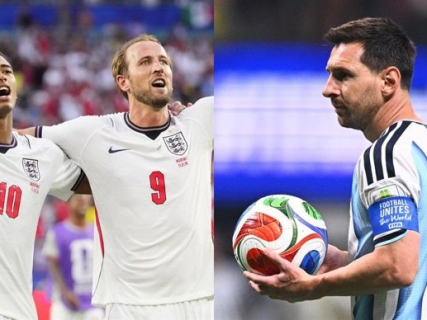
When is the Ballon d'Or awarded and who are its main candidates

London hosts this Monday the Ballon d'Or 2026 gala, with Lamine Yamal, Mbappé, Kane, Rodri, and Olise among the candidates.

Add DEMÓCRATA to Google

Ask FREN

Published

Last updated

6 minutes

Most read

Elecciones 29N · Encuestas

La media de las encuestas

Media a 26 de octubre de 2026 · 15 institutos

  • PP31,2 %
  • PSOE27,3 %
  • Vox18,9 %
  • Sumar6,5 %
  • Podemos2,9 %
  • ERC2,3 %
010203040ene 2024jul 2024ene 2025jul 2025ene 2026jul 2026

Media del último estudio de cada instituto en 30 días y su evolución semanal desde el 23J. Partidos con al menos un 2 %.

Todas las encuestas

Elecciones generales del 29 de noviembre · Demócrata

WhatsApp Image 2026 07 15 at 19.39.20

The Ballon d'Or 2026 will be awarded this Monday, October 26 starting at 21:00 hours in Spain, in a ceremony that will be held for the first time at the London Palladium in London and that will recognize the most outstanding footballers of the 2025-2026 season. Lamine Yamal, Kylian Mbappé, Harry Kane, Rodri, and Michael Olise are among the main candidates for the award, in an edition conditioned by the results of the World Cup and the major European competitions.

The award, organized by France Football together with UEFA, celebrates its 70th anniversary and once again faces two usual arguments in the voting: individual performance and collective titles. Among the candidates are players with extraordinary scoring statistics, such as Kane and Mbappé, and others who have conquered the main international tournaments, such as Lamine Yamal, Rodri, and Fabián Ruiz.

Footballer League Champions League World Cup
Lamine Yamal YES NO YES
Kylian Mbappé NO NO NO
Harry Kane YES NO NO
Rodri NO NO YES
Michael Olise YES NO NO
Fabián Ruiz YES YES YES
Ousmane Dembélé YES YES NO
Lionel Messi YES NO NO

Titles corresponding to the 2025-2026 season and the 2026 World Cup. The League column includes the 2025 MLS Cup won by Messi with Inter Miami.

Lamine Yamal and the weight of the World Cup in Spain

Lamine Yamal can become the youngest winner in the history of the Ballon d'Or for men, surpassing the record set by Ronaldo Nazário in 1997, when he received the award at 21 years old. The Barcelona winger is 19 and arrives at the ceremony after a season in which he has combined offensive prominence and collective titles.

His official statistics record 25 goals and 20 assists in 57 matches, numbers that accompany the conquest of LaLiga and the Supercopa de España. He was also part of the Spanish national team that won the 2026 World Cup, although his contribution in the tournament was conditioned by physical problems.

The candidacy of the Barcelona footballer is especially supported by his ability to generate chances, surpass defenders, and take on offensive responsibilities at an unusual age. His influence on Barcelona's play and the world title provide arguments for a vote in which not only statistics count.

Kylian Mbappé and his 58 goals with Real Madrid

Kylian Mbappé presents one of the best scoring figures of all the candidates, with 58 goals and 13 assists in 60 matches during the evaluated period. The French forward has been one of the main offensive references of Real Madrid, although he finished the season without winning collective titles.

This absence of trophies constitutes his main difference compared to other candidates, especially the Spanish internationals and the players from PSG and Bayern. However, his individual performance allows him to compete for a recognition that he has not yet achieved throughout his career.

With France, he also did not manage to add a new title to his record during the evaluated period. His candidacy depends, therefore, on the weight that voters give to his scoring production against the collective successes of other players.

Harry Kane, 73 goals and three titles with Bayern

The English forward Harry Kane arrives at the gala with 73 goals and eight assists in 65 matches, the highest scoring figure among the main candidates analyzed. His performance has been fundamental for Bayern Munich, which won the Bundesliga, the DFB-Pokal, and the German Supercup.

The season has allowed Kane to combine extraordinary offensive production with three national titles, after several years in which his individual statistics were not always accompanied by trophies.

With England, however, he did not manage to win the 2026 World Cup, an important difference compared to the Spanish candidates. In any case, he reached the semifinals of the tournament. His main argument is the scoring regularity, reinforced by the titles obtained with the German team.

Footballer Matches Goals Assists
Lamine Yamal 57 25 20
Kylian Mbappé 60 58 13
Harry Kane 65 73 8
Rodri 46 2 0
Michael Olise 69 27 35
Fabián Ruiz 45 3 6
Ousmane Dembélé 51 26 14
Lionel Messi 49 45 30

Statistics corresponding to the evaluated period for the Ballon d'Or 2026, including matches with clubs and national teams.

Rodri aims to repeat the Ballon d'Or of 2024

Rodri Hernández is once again among the nominees after winning the World Cup with Spain, a tournament in which he was recognized as the best player. The midfielder, winner of the Ballon d'Or in 2024, presents a very different candidacy from that of the great forwards due to his role in organizing the game and the balance of his teams.

During the evaluated period, he played 46 matches, with two goals and no assists, according to the official statistics of the award. In that time, he moved from Manchester City to Barcelona and added the FA Cup and the English League Cup to his trophy cabinet, in addition to the world championship.

His candidacy is especially supported by his tactical influence and the individual recognition obtained in the World Cup. If he were to win the award, he would add his second Ballon d'Or and reinforce the Spanish presence among recent winners.

Messi seeks his ninth Ballon d'Or

Lionel Messi is once again among the candidates for the Ballon d'Or at 39 years old, after a season in which he has recorded 45 goals and 30 assists in 49 matches, according to the official statistics of the award. The Argentine, who already has eight awards, aims to extend a record he has held since his last victory in 2023.

The forward won the 2025 MLS Cup with Inter Miami and reached the final of the 2026 World Cup with Argentina, where he scored eight goals and provided four assists. Although the Argentine national team could not defend the title won in Qatar, Messi stood out again in a competition where he extended several historical records, including that of World Cup participations.

His candidacy combines a high offensive production, a club title, and the world runner-up position, although he competes with footballers who have won the Champions League, the main European leagues, or the World Cup. A new victory would mean his ninth Ballon d'Or, three years after the last one.

Michael Olise, the footballer who provides the most assists

The Frenchman Michael Olise has established himself as one of the main offensive protagonists of Bayern Munich, with 27 goals and 35 assists in 69 matches. His figures reflect a particularly productive season in creating chances, in addition to his ability to finish plays.

Olise shares with Kane the three national titles won by Bayern, a circumstance that reinforces the presence of the German club among the contenders. His offensive contribution, however, presents a different profile than that of the English forward, with a greater role in the buildup and the final pass.

The French international also did not manage to win the World Cup with his national team -- another semifinalist -- so his main arguments come from his performance at Bayern and the collective successes achieved in Germany.

Fabián Ruiz and Dembélé, the arguments of PSG

The season of Paris Saint-Germain has also left two prominent candidacies. Fabián Ruiz and Ousmane Dembélé conquered the Champions League, Ligue 1, the French Supercup, the European Supercup, and the Intercontinental Cup, a collection of titles that makes the Parisian team one of the main protagonists of the voting.

Fabián Ruiz also adds the World Cup won with Spain. The midfielder played 45 matches, with three goals and six assists, and presents a candidacy based on his contribution to collective play and the successes achieved with his club and his national team.

Dembélé, winner of the Ballon d'Or in 2025, seeks to defend the award after registering 26 goals and 14 assists in 51 matches. The French forward has combined his participation in PSG's titles with an offensive production superior to that of his Spanish teammate, although without the world championship that is included in Fabián's record.

When the gala starts and how the winner is chosen

The Ballon d'Or ceremony will begin this Monday at 21:00 hours, according to Spanish peninsular time, and will take place at the London Palladium. Thierry Henry and Kate Scott will be in charge of presenting a gala that will also recognize the best female footballers, coaches, goalkeepers, and young talents of the year.

The voting corresponds to an international jury of journalists and takes into account individual performances, collective results, and fair play. The evaluated period includes the 2025-2026 season, including the World Cup held during the summer.

Spain will have several representatives among the nominees, led by Lamine Yamal, Rodri, and Fabián Ruiz. The result will determine whether the Ballon d'Or returns to the hands of a Spanish footballer, whether Dembélé manages to repeat the title of 2025, or whether any of the great scorers of the season wins the award for the first time.

More key points, information and questions with FREN

AI-GENERATED CONTENT

What process does the Ballon d'Or organization follow to select and vote for its winners?

The Ballon d'Or organization is a sports and international topic that lies outside the scope in which I specialize. I am FREN, an assistant specifically designed to work with information about Spanish political and institutional life: laws, decrees, parliamentary procedures, parties, government, public actors, and the regulatory impact on economic sectors. For that reason, I cannot provide you with a detailed, updated, and reliable explanation of the specific procedure that the Ballon d'Or organization follows to select and vote for its winners.

That said, I can explain in general terms—and without going into specific data about that organization—how these types of international awards are usually structured, which may serve you as a conceptual framework while you consult specialized sports sources for the specific details:

  • 1. Definition of the award and the evaluation period
    In most major sports awards, the organizing entity precisely defines what is being rewarded (for example, individual performance in clubs and national teams, consistency during the season, weight in titles won) and what time period is taken into account (a specific season, a calendar year, or a combination of competitions). This delimitation, although it may change over the years, is key to guiding the voting and the jurors' criteria.
  • 2. Establishment of the regulations and evaluation criteria
    There is usually an internal regulation of the award that sets:
    • Who can be a candidate (for example, players active in recognized leagues).
    • What aspects are evaluated: statistical performance, influence on the game, titles, leadership, fair play, etc.
    • How these aspects are weighted, although often the weighting is left to the voters' interpretation.
    This regulation is often complemented by circulars or guides sent to jury members.
  • 3. Composition of the jury or voting body
    Prestigious international awards usually use a panel of voters composed of profiles such as:
    • Sports journalists from different countries.
    • In some cases, national team coaches or captains.
    • Other recognized figures in the football world, when provided by the regulations.
    The central idea is to provide some international representation and avoid the result depending solely on a single league or country.
  • 4. Preselection phase and list of candidates
    There is usually a shortlist of candidacies, prepared by the organization itself or an internal committee. From that list:
    • Voters are invited to rank or score the players.
    • The number of names each voter can include is limited to standardize the ballots.
    Most awards of this type publish the preliminary list of candidates and later narrow it down further to finalists.
  • 5. Voting system
    Although details vary by award, typical systems are:
    • Weighted scoring: each voter awards points to several players (for example, 6 to the first, 4 to the second, 3 to the third, etc.).
    • Preference ranking: votes are then transformed into a global points tally.
    • Centralized counting: the organization sums all votes and obtains a final ranking.
    Occasionally, depending on the regulations, a tiebreak mechanism is established, either by most first-choice votes, participation in certain titles, or decision by a reduced committee.
  • 6. Public announcement and communication
    Once the count is closed, the organization usually:
    • Officially announces the winner and the complete or partial ranking.
    • Explains, at least in general terms, the voting method used.
    • Gives visibility to the jury (by countries or names) to reinforce transparency.
    Detailed information—such as how each specific member voted, changes in regulations over the years, etc.—is usually found in specialized sports media or on the award's official website.

To know precisely how the Ballon d'Or is currently organized (who composes the jury today, the exact voting rules, the prioritized criteria, or recent changes in the regulations), the most reliable approach is to go directly to:

  • The official award website and its published rules or regulations.
  • Documentation or interviews from the organization itself explaining the system.
  • Reference sports media that analyze the current format in detail.

On the other hand, if what interests you is how decision-making, voting, or selection processes are structured but in the Spanish political and institutional sphere (for example, how the President of the Government is chosen, how a law is voted on in Congress, or how certain public positions are appointed), I can help you in great detail, including formal steps, required majorities, and involved bodies.

Can you explain to me, with the same level of detail, how the President of the Government is chosen in Spain? What process does the Congress of Deputies follow to debate and vote on a law from registration to approval or rejection? How is the Permanent Deputation in the Spanish Cortes Generales appointed and what functions does it have?

What are the competencies and functions of the president of France Football in the organization of the award?

The figure of the president of France Football and, in general, the internal structure of that magazine and the Ballon d'Or organization are part of the professional football sphere and the internal management of a private sports communication company. I, on the other hand, specialize in Spanish politics and institutions: laws, parliaments, government, parties, elections, public sector organizations, and the regulatory environment. Therefore, I am not the appropriate tool to provide you with a precise and updated description of the specific competencies of the president of France Football in the organization of the award.

It is important to clarify two things:

  • I do not have specialized access or internal databases about the governance structure of international sports media nor about their internal operating rules.
  • My design is oriented to analyze legal norms, parliamentary processes, political and regulatory activity, as well as to identify public actors and their positions in Spain, not to describe in detail the governance of private sports organizations.

Consequently, if I tried to give you a detailed and categorical list of the “competencies and functions” of the president of France Football in the Ballon d'Or organization, I would be forcing a response beyond my domain, with a high risk of inaccuracies or outright fabricated data. That, especially when attributing formal functions to a specific position within a private entity, would be misleading and unreliable.

The most I could do in general terms—without specifically referring to France Football or its current president, because that would require precise sources I do not have in this context—is to remind you that, in many private organizations, a president usually has some typical functions, such as:

  • Institutionally representing the entity before third parties (media, sponsors, other institutions).
  • Presiding over meetings of internal decision-making bodies (board of directors, editorial committee, or equivalent bodies).
  • Having a relevant role in defining strategic lines: editorial policy, brand positioning, sponsorship agreements, and alliances.
  • In awards organized by a private entity, participating in the general supervision of the award's regulations, categories, and the public image of the accolade.

However, all this is a generic description of the type of competencies often associated with a presidency in a media outlet or an organization managing an award, not a specific profile of France Football nor a reliable enumeration of what its internal regulations or statutes contain, which may be very different or drafted in a very particular way.

If you need a rigorous and concrete answer about the functions of the president of France Football in the Ballon d'Or organization, the appropriate route would be to go directly to:

  • The official statements of the magazine itself or the business group to which it belongs.
  • The public regulations of the award, if they have been explicitly published.
  • Interviews or corporate documents detailing the organizational structure of the accolade.

What I can help you with, however, is anything clearly linked to the political and institutional sphere, for example:

  • Explaining how Spanish public institutions are organized and what competencies they have (Congress, Senate, regional governments, large municipalities, ministries, regulatory bodies, etc.).
  • Analyzing laws, decrees, legislative projects, or regulations related to professional sports or sports sponsorship, as long as they are public norms.
  • Providing context on public policies regarding sports, professional sports financing, federation regulation, sports betting, audiovisual rights, etc., when covered in legislation or parliamentary activity.

If you reformulate your interest toward any of these aspects—for example, how sports awards are regulated in Spain, what regulations affect the organization of professional competitions, or what role public institutions play in supporting sports—I can give you a detailed response with a clear legal and institutional basis.

In summary: I cannot reliably detail the competencies and functions of the president of France Football in the Ballon d'Or organization because that belongs to the internal sphere of a private entity in the sports field, which is outside my specialization. But I can help you with the political, legal, and institutional framework surrounding sports and other areas of public life, especially in Spain.

How is the organization of professional sports competitions regulated in Spain and what role do federations and LaLiga have? What Spanish regulations govern sports sponsorship and the exploitation of athletes' image rights? What competencies does the Higher Sports Council have and how does it relate to sports federations?

How many Ballon d'Or awards has Bayern Munich won throughout history?

I do not have reliable or updated data on how many Ballon d'Or awards have been won throughout history by players from Bayern Munich. My area of specialization is politics and public institutions in Spain (Congress, Senate, governments, parties, laws, etc.), not sports statistics or the history of European football, so I could not give you a figure without a very high risk of error.

For such a specific and quantitative question as the number of Ballon d'Or awards associated with a particular club, the most prudent is to refer you to sources specialized in football and this award in particular. The Ballon d'Or is an award historically given by the French magazine France Football, so the best references are usually:

  • The official website of France Football and the Ballon d'Or organization, where the complete list of winners by year usually appears, with the winning player, the club they played for, and sometimes the voting ranking.
  • The official Bayern Munich website (FC Bayern), which normally includes in its historical section the major individual awards won by its players, including the Ballon d'Or.
  • Internationally recognized football databases that aggregate player statistics and individual awards, allowing filtering by club, season, and competitions.

From there, the most robust way to answer your question would be:

  • Locate the chronological list of all Ballon d'Or awards since the prize's creation.
  • For each year, check which club the winning player belonged to at that time.
  • Count how many times Bayern Munich appears as the club of the awarded player (note: some players change teams in summer, so the club recognized in the corresponding edition counts, not their entire career).

It is also important to make a small conceptual clarification that often causes confusion. When people talk about “the Ballon d'Or awards Bayern Munich has won,” the prize is actually awarded to individual players, not the club itself. What is attributed to Bayern is that, at the time of receiving the award, a certain player was part of their squad. Therefore:

  • There may be players who won the Ballon d'Or while at Bayern and others who won it before or after at other clubs, even if they have passed through Munich.
  • The number of Ballon d'Or awards “linked” to Bayern is usually counted by editions in which the winner belonged to the club, not by nationality or the player's entire career.

Since my design is oriented to analyze laws, institutions, political actors, and public dynamics in Spain, I do not have an integrated sports repertoire that allows me to guarantee an exact figure on the number of awards associated with Bayern Munich. I could try to recall it approximately, but that would go against the goal of providing you with verified and reliable information.

If you need the data with historical precision, I would recommend:

  • Reviewing the Ballon d'Or winners year by year in an official or highly recognized source.
  • Verifying, in each case, the club linked to the player at the time of the award.
  • Counting how many of those editions correspond to players who played for Bayern Munich.

On the other hand, if at some point you are interested in relating sports and politics (for example, public policies on football financing, regulation of sports public limited companies, impact of major clubs on the local economy, or parliamentary debates related to sporting events), I could help you in detail: identifying norms, parliamentary debates, relevant political actors, and the positions of different parties on those issues.

I am sorry I cannot give you the specific figure you seek here, but I prefer to be transparent about my thematic limits rather than offer potentially inaccurate data.

Play

Test your knowledge with FREN!

How much do you know about this topic? Answer the following 3 questions.

On what date and place will the 2026 Ballon d'Or be awarded?

Question 1 of 3

Which footballer could become the youngest winner in the history of the men's Ballon d'Or?

Question 2 of 3

What achievement sets Fabián Ruiz's candidacy apart from other nominated players?

Question 3 of 3