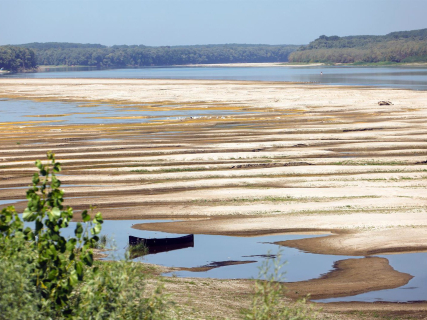
European farmers are calling for a more resilient CAP in the face of weather phenomena.

The heat waves of the past months have harmed European agriculture and livestock, which adds to the high prices that have been experienced for inputs and to the inflation of the shopping basket.

2 minutes

fotonoticia 20260807143738 1920

fotonoticia 20260807143738 1920

Add DEMÓCRATA to Google

Ask FREN

Published

Last updated

2 minutes

Most read

The representatives of COPA-Cogeca (organization that brings together European agricultural organizations and cooperatives) have met with the commissioner of the area, Christophe Hansen, to inform him about the damages that the European countryside has suffered due to weather phenomena

The high temperatures in July and August have negatively affected European crops. France has lost about 40% of its corn production, Slovenia between 50% and 70%, and Italy between 20% and 25% of the harvest of that cereal. 

In countries where irrigation is an nonexistent infrastructure because they rely on rainfall, the drought has considerably reduced the harvest of potatoes, beets, and vegetables. 

In permanent crops, such as fruits, vines, and olive groves, thermal stress has also damaged the quality of the fruits, causing losses in Slovenia, Croatia, Italy, and Spain.

For its part, livestock has also been affected due to the scarcity of pastures and forage for animals in Germany and Hungary. And in France, Slovenia, Italy, Spain, and Ireland, a significant shortage of feed has been detected. 


High prices for inputs

And to all these damages, we must add the high costs of fertilizers and energy that are jeopardizing the profitability of the European agri-food sector.
For all this, COPA-Cogeca has requested Commissioner Hansen that the European Union reconsider its support for the primary sector, with sufficient financial resources to help with the necessary investment to adapt, innovate, and invest in improving water management and climate risk management. 

An asset in geopolitics

With the start of the new political course in which the autumn will be marked by the debate on the Multiannual Financial Framework 2028-2034 and the future CAP, the presidents of COPA-Cogeca are asking "to recognize food production as a strategic objective intrinsically linked to the defense, security, and competitiveness of Europe." 


According to the leaders of this organization, "in the new geopolitical context we have entered, agriculture is increasingly seen as an asset, not a burden" and cites as an example the National Agricultural Security Action Plan of the US in 2025; China's policies to maintain the "bowl of rice" and the self-sufficiency that Russia has set for producing its basic foods. 

"There can be no secure Europe without a strong agricultural sector. And there can be no strong European agriculture without appropriate European policies for its purpose," they state from COPA-Cogeca, who announce that in October they will celebrate the Congress of European Farmers where they will discuss all these issues. 

More key points, information and questions with FREN

AI-GENERATED CONTENT

What is the parliamentary status of the CAP reform for the 2028-2034 period and what are the next steps planned for its approval?

As of September 1, 2026, the reform of the Common Agricultural Policy (CAP) for the 2028‑2034 period is in full processing at the European Union level, within the ordinary legislative procedure. The Commission has already presented its proposals, but the European Parliament and the Council are still building their positions and there is no final approved regulation. The next steps involve both institutions formally setting their stance, negotiating with each other (trilogues), and closing the package along with the new Multiannual Financial Framework (MFF) 2028‑2034.

1. What the European Commission has already done

In July 2025, the Commission presented the legislative package of the post-2027 CAP, covering the 2028‑2034 period. Among the key texts are:

  • The proposed regulation establishing the conditions for the execution of Union aid to the CAP 2028‑2034 (referred to in national documents as COM(2025) 560), which sets the new framework of payments and support tools.
  • The communication and explanatory document “The next chapter for the CAP”, where the Commission details its model of a more “simple, flexible and future-oriented” CAP, merging the two current funds (direct payments and rural development) into a single framework and maintaining a ring-fenced budget of at least 300 billion euros for income support and safety net.
  • The questions and answers document on the post-2027 CAP, which explains the philosophy of the reform, the fund merger, and the strengthening of young farmers, environmental measures, and crisis management.

Since then, the Commission has sent the package to the European Parliament and the Council and has continued politically defending its proposal in debates on the MFF 2028‑2034.

2. Status in the European Parliament

The Parliament is still in the phase of forming its position:

  • The Agriculture Committee (AGRI) approved in July 2025 a political report on “the future of agriculture and the post-2027 CAP,” which calls for a reinforced agricultural budget and opposes a “nationalization” of the CAP or its indiscriminate merger with other instruments (European Parliament press release of 7.7.2025).
  • That report was sent to the Plenary as a starting political position, with a vote scheduled for the September 2025 session (September 8-11), but it is a guidance report, not yet the final vote on the CAP 2028‑2034 regulation.
  • In March 2026, the Committees on Budgets, Regional Development, and Agriculture debated, together with several commissioners, the Commission’s proposal to group agricultural, regional, and other funds into national “envelopes” within the MFF 2028‑2034 (press dossier), showing that Parliament remains in the examination and debate phase.
  • Additionally, the EU Court of Auditors has sent a critical opinion to Parliament and the Council on the CAP 2028‑2034 proposal, warning of risks of complexity and uncertainty in aid delivery, which MEPs are using as technical input.

In summary, Parliament is at an intermediate stage: guidance reports approved and advanced debates, but without having yet finalized the adoption of its formal legislative position on the CAP 2028‑2034 implementing regulation.

3. Status in the Council of the EU

In parallel, the Council (Member States) is working on the package within the overall framework of the new MFF:

  • The Agriculture and Fisheries Council has held successive political discussions on the post-2027 CAP regulation proposal and the associated financial framework, with very critical positions from several States (in Spain, for example, Minister Planas has publicly reiterated his rejection of the initial proposal for cutting agricultural resources).
  • In June 2026, the Council approved partial negotiating mandates on the new Regulation for the National and Regional Partnership Plan (NRPP) and on cohesion rules for 2028‑2034, which are the budgetary “architecture” where the CAP will be inserted (Council note).
  • The specific proposal on the conditions for executing aid to the CAP 2028‑2034 is under technical and political discussion, with the Council not yet having closed a complete “general approach.”
4. Next steps until approval

According to available information, the foreseeable steps are:

  • Consolidate the European Parliament’s position, based on reports from the Agriculture Committee and other involved committees, and vote the legislative position in Plenary on the CAP 2028‑2034 implementing regulation.
  • Adopt the Council’s position (“general approach”) on the same regulation, within the negotiations of the MFF and the new national and regional partnership fund.
  • Open trilogues between Parliament, Council, and Commission to close a compromise text on the CAP regulation and the agricultural package within the MFF 2028‑2034.
  • Formal approval of the regulation by both institutions and publication in the Official Journal of the EU, likely with the political objective that the entire framework (MFF and new CAP) is ready to enter into force on January 1, 2028, although various sources consider this timeline very demanding.

Until this cycle is completed (Parliament’s position, Council’s general approach, trilogues, and final approval), the CAP 2028‑2034 reform will remain in processing phase, without a “parliamentary status” of definitive approval.

What are the functions and competences of the European Commissioner for Agriculture and Rural Development according to EU regulations?

The European Commissioner for Agriculture and Rural Development is one of the members of the European Commission and, as such, their functions and competences are mainly defined by the EU Treaties (Treaty on European Union and Treaty on the Functioning of the EU), by the Commission’s internal rules, and by the legislation regulating the Common Agricultural Policy (CAP) and rural development. They are not an “EU Agriculture Minister,” but the political head within the College of Commissioners for the entire agricultural and rural development policies.

General framework of competences

Like any commissioner, they act under the principle of collegiality: all formal decisions are adopted by the Commission as a whole. However, each commissioner leads a specific portfolio and the Commissioner for Agriculture and Rural Development:

  • Politically directs the Directorate-General for Agriculture and Rural Development (DG AGRI), which prepares legislative proposals and executes the CAP.
  • Presents to the College the legislative and non-legislative initiatives in agricultural and rural development matters.
  • Represents the Commission in the EU Agriculture Council of Ministers and its working groups, defending the Commission’s position vis-à-vis Member States.
  • Appears before the European Parliament (especially the Agriculture Committee –COMAGRI–) to present proposals, report on their implementation, and answer questions.
  • Coordinates, together with the Commission Presidency, relations with other portfolios (Environment, Climate, Trade, Budget, Health, Cohesion, etc.) when policies overlap.

Specific functions in the Common Agricultural Policy

The CAP is mainly regulated by the Treaty on the Functioning of the EU (articles on agriculture) and specific regulations. Within this framework, the Commissioner for Agriculture and Rural Development exercises, on behalf of the Commission, the following key functions:

  • Legislative initiative: drafting and proposing CAP reforms (direct payments, common market organization, crisis management measures, conditionality rules, etc.) and rural development policy.
  • Management of funds linked to the CAP (mainly the European Agricultural Guarantee Fund –EAGF– and the European Agricultural Fund for Rural Development –EAFRD–), within the EU budget and under applicable financial rules.
  • Adoption of implementing and delegated acts provided for in CAP regulations, for example on technical requirements, aid scheduling, information requirements, or control and sanction details.
  • Supervision and control of implementation: ensuring Member States correctly apply agricultural and rural legislation, through audit systems, financial corrections, and infringement procedures when necessary.
  • Strategic guidance of the CAP Strategic Plans of each Member State, checking their coherence with the Union’s common objectives and rules.

Rural development, sustainability, and territorial cohesion

Within the CAP umbrella, rural development is a specific pillar. According to EU regulations, the commissioner:

  • Proposes and manages rules for rural development programs co-financed by the EU, covering investments in farms, economic diversification, basic services in rural areas, innovation, and support for young farmers.
  • Promotes measures for the transition to more sustainable agriculture, aligned with climate, biodiversity, and soil and water quality objectives.
  • Coordinates, within their competences, the contribution of agricultural policy to the broader EU strategies (e.g., the Green Deal, the Farm to Fork strategy, or the biodiversity strategy), when applicable.
  • Promotes actions to combat rural depopulation and improve economic, social, and territorial cohesion, in cooperation with other directorates-general.

External relations and international representation

Although external competence belongs to the Union as a whole, the commissioner:

  • Participates in international trade negotiations related to agricultural products, in coordination with the Trade Commissioner.
  • Represents the EU in multilateral forums related to agriculture and food (e.g., FAO or in the context of climate and sustainability agreements).
  • Oversees, from the CAP perspective, the management of imports, exports, and safeguard measures affecting the Union’s agricultural markets.

In sum, according to EU regulations, the Commissioner for Agriculture and Rural Development is the main political responsible for designing, proposing, managing, and supervising the EU’s agricultural and rural development policy, always acting within the collegial framework of the Commission and under the political control of the European Parliament and the Council.

What legal requirements must Member States meet to access European aid aimed at adapting the agricultural sector to climate change?

For Member States to access and channel European aid aimed at adapting the agricultural sector to climate change, they must comply with a set of legal requirements that combine rules from the Common Agricultural Policy (CAP 2023‑2027), the Recovery Mechanism (Next Generation EU) regulations, the European Agricultural Fund for Rural Development (EAFRD), and State aid rules.

1. General framework of the CAP 2023‑2027 and strategic plans

The CAP 2023‑2027 is regulated, among other rules, by Regulation (EU) 2021/2115, which sets the rules for the CAP strategic plans, financed by the EAGF and the EAFRD. Each Member State must have a strategic plan approved by the Commission, defining:

  • The objectives pursued (including climate and environmental ones).
  • The interventions of direct payments, sectoral, and rural development that specify them.
  • The indicators and the monitoring and evaluation system of results.

Spain, for example, explains this framework in its informative sheet on the CAP 2023‑2027 (explanation of the CAP 2023‑2027), highlighting that the policy shifts from a “compliance with rules” approach to one based on results, with explicit climate and environmental objectives.

2. Reinforced conditionality and Good Agricultural and Environmental Conditions

For farmers to receive CAP aid that finances, among other purposes, adaptation to climate change, Member States must apply a system of reinforced conditionality. According to current rules and their recent revision:

  • Farmers must comply with a set of legal management requirements and Good Agricultural and Environmental Conditions (GAEC), related to soil, water, permanent pastures, etc.
  • These requirements are conditions to receive payment; non-compliance may lead to reductions or exclusions.
  • The revised regulations allow Member States some flexibility to adapt or temporarily exempt some GAEC in case of extreme weather events, while maintaining a minimum level of environmental requirement (CAP revision).

3. Eco-schemes and climate-beneficial practices

Article 31 of Regulation (EU) 2021/2115 provides that active farmers who voluntarily commit to climate and environmental beneficial practices receive additional aid through eco-schemes. This entails obligations for Member States:

  • Design in their strategic plans an offer of eco-schemes with clear benefits for climate and biodiversity (e.g., crop rotations, extensive grazing, carbon farming, or cover crops, as reflected in rules such as Royal Decree 1048/2022 cited in the Official State Gazette BOE-A-2025-25977).
  • Define eligibility criteria, concrete commitments, and aid levels proportional to costs and environmental service.
  • Inform and advise potential beneficiaries about these obligations and funding possibilities.

4. Management rules, “do no significant harm” principle, and controls

In the new architecture of the CAP and future financial frameworks, the Commission proposes “Farm Administration” systems that must be met to receive payments, including:

  • Legal management requirements and protective practices defined at the national level.
  • A social conditionality component linked to respect for labor rights.
  • Adherence to the “do no significant harm” principle to the environment, which obliges Member States to configure their aid schemes so as not to harm climate or biodiversity objectives, as reflected in proposals analyzed by the European Commission.

5. Next Generation EU and minimum climate contribution

When agricultural adaptation is financed with resources from the Recovery Plan (Next Generation EU), Member States must comply with:

  • The “climate tagging” methodology, which requires that a minimum part of the expenditure measurably contributes to climate objectives. In Spanish agro-food aid regulatory bases, for example, it is required that funded projects contribute at least 40 % to climate objectives, applying the methodology set out in the Council Implementing Decision of July 13, 2021.
  • Respect for the do no significant harm principle in all funded components, consistent with the requirements of the Recovery and Resilience Mechanism itself.

6. State aid rules for climate measures in agriculture

Additionally, when a Member State grants specific support for climate adaptation that constitutes State aid, it must comply with Article 107.3.c) of the TFEU and the 2022 Guidelines on State aid in the agricultural and forestry sectors. Cases such as the German plan to rewet agricultural peatlands or the Danish scheme to retire land from production, both approved by the Commission (German peatland plan, Danish land retirement plan), illustrate the requirements:

  • The measure must pursue an objective of common interest, such as emission reduction or ecosystem restoration.
  • The aid must be necessary and proportionate, limited to eligible costs (investments, income loss, advisory, etc.).
  • Undue distortion of competition and the internal market must be avoided.
  • The scheme must be notified and authorized by the Commission, unless covered by a block exemption regulation.

In summary, to access European climate adaptation aid in agriculture, Member States need an approved CAP strategic plan, a robust conditionality and eco-schemes system, compliance with Next Generation EU climate and environmental principles, and alignment of their specific schemes with the strict EU State aid rules.

Play

Test your knowledge with FREN!

How much do you know about this topic? Answer the following 3 questions.

Which European agricultural organization has requested more support from the EU due to damage caused by weather phenomena?

Question 1 of 3

What percentage of its corn production has France lost according to the news?

Question 2 of 3

What additional problem, besides weather damage, is affecting the profitability of the European agri-food sector?

Question 3 of 3

Hola, soy Fren. ¿Cómo te ayudo?