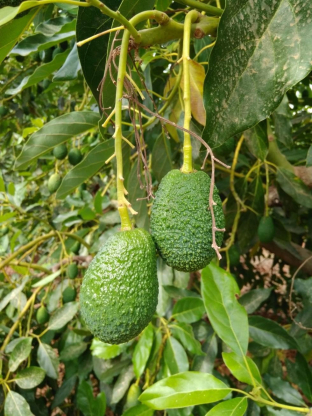

The Valencian Institute of Agricultural Research (IVIA) is currently developing six lines of work focused on avocado, with a dual purpose: to optimize the production and commercialization of this crop in the Valencian Community and, at the same time, to train a new generation of specialists in this fruit. These projects were made known to the sector at the recent sector roundtable on avocado held at the IVIA headquarters in Moncada.
One of these investigations, aimed at improving the genetics of avocado so that it adapts better to the conditions of the Valencian Community, is led by Ander Aguado, an agricultural engineer from UPM and a master’s in plant genetic improvement from UPV, as detailed by the Generalitat in a statement.
Among the objectives of this line are the creation of a collection of mutants through irradiation, the evaluation of tolerance to salinity in segregating populations of avocado rootstocks, and a transcriptomic study of the crop’s response mechanisms to salinity.
Another of the lines is developed by Rodrigo Martín, a graduate in Agricultural Engineering and Science and a master’s in Agricultural Engineering, in an experimental avocado Hass/Duke7 plot at the IVIA. His work focuses on analyzing the main organic residues that can be used as fertilizers, determining the specific nutritional needs of avocado under Valencian growing conditions, and designing sustainable strategies that improve soil health, increase nutrient-use efficiency, and offer practical recommendations for farmers.
To further investigate the crop’s agronomic management, Paula Peris studies the most suitable avocado fertilization guidelines for the eastern Iberian Peninsula, with the aim of increasing fruit production and quality. This research is integrated into a predoctoral contract linked to the National Institute of Agricultural and Food Research and Technology (INIA), now incorporated into the CSIC.
Her doctoral thesis addresses in a comprehensive way the nutrition of avocado, specifically of the varieties 'Hass' and 'Lamb Hass', with the aim of determining how nutrition affects fruit set, productivity and fruit quality. It also analyzes the physicochemical and mineral composition of avocado and its relationship with ripening processes. The results will serve to define the foundations of a “more tailored and efficient” fertilization, adapted to the strong growth of this crop in the Comunitat Valenciana.
In the field of plant health, Belén Ortiz, a graduate in Food and Rural Environmental Engineering and a master’s degree in Agricultural Engineering with a specialization in Biotechnology, analyzes the phytosanitary status of avocado in the Comunitat Valenciana and investigates fungal diseases that may be affecting plantations. Her work, in close collaboration with the producing sector, seeks to identify organisms with potential to be used as biological control agents in the management of these pathologies.
Between plant health and post-harvest, the research of Gianmarco Amorico is located; he is Italian, holds a master’s degree in Agricultural Sciences and Technologies from the University of Foggia, and studies the etiology, characterization, epidemiology and sustainable control of post-harvest diseases of avocado.
Amorico focuses on the fungi responsible for losses of fresh fruit after harvesting due to fungal infections, as well as on possible prediction models of their incidence and on alternative treatments to chemical fungicides, suitable for use in organic production.
For her part, Yanitsa Zehireva, a graduate in Science and Technology of Food and a master’s degree in Science and Food Engineering from the UPV, analyzes the ripening processes and post-harvest behavior of the avocado 'Lamb-Hass' grown in the Comunitat Valenciana. Her goals include determining the optimal harvest time according to the commercial destination, knowing the behavior of the fruit after harvest, and developing non-destructive tools that make it possible to estimate the degree of ripeness and quality of avocado both in the field and during distribution.
Training work and Marisa Badenes program
As a research body of the Generalitat, IVIA promotes programs aimed at training and specialization for university graduates, with the objective of facilitating the acquisition of new skills and curricular improvement in agro-food research.
Within this framework, the 30 predoctoral contracts of the program 'Marisa Badenes' are located, intended for the training of young researchers in the agro-food field. The initiative is funded by the Conselleria de Agricultura, Agua, Ganadería y Pesca and may receive co-financing from the European Union through the Programa Fondo Social Europeo Plus Comunitat Valenciana 2021-2027, with a total investment of four million euros.
Having died in September 2022, Marisa Badenes was one of the most prominent scientific figures in the path of IVIA. A doctor engineer agronomist from the UPV, she served as a research professor and coordinator of the Citrus Culture and Plant Production Center of the institute. For years she led the genetic improvement programs for apricot, peach, loquat, persimmon, and kiwi, and was considered a top-level international reference in Fruit Growing.