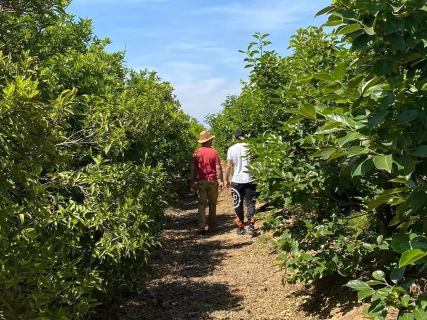

The Union of Associations of Self-Employed Workers and Entrepreneurs (Uatae) has warned that, without the presence of small producers, "there will be no generational change in the countryside." For this reason, the organization demands a "specific strategy" that facilitates the entry of new generations into agriculture and livestock farming and, at the same time, guarantees economic conditions that allow those already engaged in these activities to sustain themselves.
The Secretary General of Uatae, María José Landaburu, has explained that the "huge initial investment" necessary to start a farm and the absence of guarantees about whether the price received will adequately cover labor costs are hindering the generational change in rural areas.
In this regard, Landaburu has emphasized that the real problem "is not convincing young people that the countryside has a future, but ensuring that they can make a living from it."
Uatae has pointed out the main obstacles for those wishing to enter the sector as access to land, the price of machinery, initial financing, and uncertainty about the profitability of farms.
To these barriers are added the difficulties that small producers already generally face: the increase in costs, the negotiating weakness against large operators in the food chain, and increasingly extreme weather episodes.
For this reason, the organization argues that policies aimed at incorporating young people "must go beyond" start-up aid and offer support during the first years of activity, the phase in which farms are most fragile.
Additionally, Uatae proposes improving access to financing, strengthening advisory services, and facilitating the transfer of farms that, while viable, "are at risk of disappearing when their owners retire."
The entity also calls for strengthening instruments against abusive practices within the food chain, with the aim of reinforcing the position of farmers and ranchers against large buyers and distributors.
"We cannot talk about generational change while we accept as normal that those who produce are the link that works with the tightest margins," defended Landaburu, who added that, to ensure the change, "first we have to ensure that the activity they receive is economically viable."
The organization has also warned that the disappearance of family farms has negative effects on suppliers, workshops, and local businesses in the municipalities where they are located.
In light of this scenario, Uatae proposes to complement agricultural policies with investments in housing, transportation, connectivity, and public services, so that living and working in small municipalities does not mean giving up essential services or having to make constant trips to access them.