Survey crisis Ceuta: 81% of PSOE voters demand that Sánchez appear and 74% ask for elections, according to SocioMétrica

The SocioMétrica survey for El Español places support for Pedro Sánchez to appear immediately in Congress regarding the Ceuta crisis at 88.6%. The request reaches 80.6% of PSOE voters, while 71% demand a reshuffle of the Government and 74% call for early elections.

3 minutes

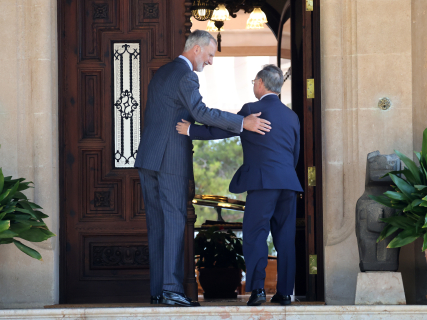
EuropaPress 7704032 rey vi junto juan jesus vivas lara presidente ciudad autonoma ceuta palacio

EuropaPress 7704032 rey vi junto juan jesus vivas lara presidente ciudad autonoma ceuta palacio

Add DEMÓCRATA to Google

Ask FREN

Published

Last updated

3 minutes

Most read

The crisis in Ceuta has opened a direct political front against Pedro Sánchez even among his own voters. A survey by SocioMétrica for El Español places the percentage of Spaniards at 88.6% who believe that the president of the Government should appear immediately in Congress to explain what happened in the autonomous city.

The most relevant data is within the socialist electorate. 80.6% of those who voted for the PSOE believe that Sánchez should go to the Chamber to give explanations. 70% of Sumar and Podemos voters and more than 90% of PP and Vox voters also demand it.

The survey does not limit itself to requesting an appearance. 71% of respondents believe that Sánchez should undertake a government reshuffle to replace the ministers who, according to the survey's formulation, did not foresee what was going to happen. Additionally, 74% believe that the president should dissolve the Cortes and call for elections immediately.

The data that hits the Government: 80.6% of socialist voters demand explanations

The main political novelty of the survey is not that the opposition demands explanations. The key is that this demand fully enters the PSOE electorate.

According to SocioMétrica, eight out of ten socialist voters want Sánchez to appear in Congress due to the crisis in Ceuta. This is a particularly delicate piece of data because it breaks the usual logic of blocks: it is not just a demand from PP and Vox, but a transversal demand.

The pressure also reaches the left situated to the left of the PSOE. 70% of Sumar and Podemos voters share the need for an immediate appearance.

88.6% want Sánchez to go to Congress

Total support for the appearance reaches 88.6%.

This figure makes this question the strongest point of the survey. In a moment of high polarization, few issues achieve such a broad majority among different electorates.

The Government has announced appearances by several ministers for the last week of August: Fernando Grande-Marlaska, José Manuel Albares, Margarita Robles, and Félix Bolaños. However, the survey shows that public opinion points directly to the president.

The difference is not minor. A ministerial appearance shifts the explanation to a technical or departmental level. A Sánchez appearance would elevate the debate to the political and presidential level.

71% demand a government reshuffle

The second impact figure is 71%. That is the percentage of Spaniards who, according to SocioMétrica, believe that Sánchez should remodel the Government after the Ceuta crisis.

The request also has support within the progressive bloc. 44.8% of PSOE voters and 45.5% of Sumar and Podemos voters back that possibility.

Among right-wing voters, the demand is very majority: 87.5% of PP voters and 91.8% of Vox voters want changes in the Executive.

Only 23.3% of the total rejects opening a Government crisis now.

74% call for early elections

Moreover, 74% of Spaniards believe that Sánchez should dissolve the Cortes and call for early elections. The position is almost unanimous among PP and Vox voters, with support of 92% and 96%, respectively.

But a crack appears again in the socialist electorate: 48.4% of PSOE voters also support bringing forward the elections.

The rejection of that option is concentrated in Sumar and in nationalist and independentist parties. According to the survey, 75% of Sumar voters oppose going to the polls now, just like 70% of voters from nationalist and independentist formations.

Appearance, remodeling, and elections: three levels of pressure

The survey outlines three levels of political demand.

The first is the parliamentary appearance. There the consensus is overwhelming: 88.6% of the total and 80.6% among socialist voters.

The second is the remodeling of the Government. It also has a clear majority, although with more resistance within the progressive bloc.

The third is the electoral advance. It is the strongest measure and, even so, receives support from 74% of the total and almost half of the socialist electorate.

This chain of events turns the Ceuta crisis into a problem that goes beyond managing an emergency. The survey measures a demand for explanation, a request for accountability, and a discussion about the continuity of the legislature.

The Government tries to shift the response to the ministers

The Executive has opted to announce ministerial appearances at the end of August.

The formula allows for explanations without Sánchez directly interrupting his summer agenda or appearing immediately before Congress.

The Ceuta crisis reopens the debate on general elections

The survey arrives at a moment when the electoral calendar is once again at the center of political debate.

The Government maintains the will to exhaust the legislature, but the polls published during the last weeks have increased the pressure on Sánchez to call for early elections.

SocioMétrica had already placed at the end of June at 74.4% the percentage of citizens in favor of immediate elections. The new poll, focused on Ceuta, maintains that pressure at 74%.

The difference is that now the debate is not only supported by corruption, parliamentary weakness, or the lack of Budgets. A territorial, migratory, and security crisis is added.

More key points, information and questions with FREN

AI-GENERATED CONTENT

What is the parliamentary status of the processing of a possible appearance of Pedro Sánchez in the Congress?

At this moment, there is no request for Pedro Sánchez's appearance in the Congress being processed: the database of initiatives of the XV Legislature does not show any initiative of the type "Appearance" addressed to the President of the Government. The last major relevant appearance was held on June 24 before the Plenary, already seen and closed. That session was scheduled at Sánchez's own request and several groups, and the date was set by the Board and ratified by the Board of Spokespersons, so its parliamentary processing has already concluded. Today, therefore, when talking about a “possible appearance,” it is in the realm of political debate, not an open parliamentary file.

Formal situation of appearances in the XV Legislature

According to the specific search in the Congress initiatives database for the XV Legislature, no initiative of the type "Appearance" is registered whose object is the presence of the President of the Government, Pedro Sánchez, neither identified as "President of the Government" nor by his own name. That is, to date, the initiatives register does not show any ongoing requests for the president's appearance: there is no file, no initiative number, nor status ("pending qualification," "admitted," "included in the agenda," etc.) to report on.

This implies that, from a strictly parliamentary point of view, there is currently no “in process” appearance pending a decision by the Board or inclusion in the agenda by the Board of Spokespersons. If a new request were registered, it would appear as an initiative of the type "Appearance" in the Congress initiatives search engine, with its updated status.

The June 24 appearance: processing already exhausted

The most recent reference is the appearance held on June 24, in which Sánchez informed the Plenary about the judicial investigations affecting the PSOE and about the last European Council. The official note from the Congress ("The President of the Government informs the Plenary about the political situation regarding the judicial investigations and the last European Council") details the agenda of that week and how the president's intervention was scheduled for Wednesday the 24th at 9:00, at his own request and that of the Republican and Mixed Groups; it can be seen in the corresponding Congress press release.

Sánchez's own intervention is fully transcribed on the Presidency of the Government's website, under the title “Intervention of the President of the Government before the Congress plenary to inform about the political situation related to the latest known judicial investigations, as well as the last European Council meeting,” available at this Moncloa link. That appearance was, therefore, already held; from the processing point of view, the file is closed.

The newspaper Demócrata has closely followed this episode. First, when Sánchez announced he requested to appear to explain the scandals affecting the PSOE and the European Council (article about the appearance request and another almost identical piece, information about investigations on Zapatero and Ferraz); then, when the Board of Spokespersons definitively set June 24 as the session date (Sánchez will attend Congress on June 24); and finally, with prior and contextual analyses about what PP, Vox, and the investiture partners expected (pre-appearance report, as well as the Demócrata agenda of that week and several previews about appearances, such as this agenda about a previous appearance and the February live coverage “Live, follow Sánchez's appearance in Congress”).

Role of the Board and the Board of Spokespersons

In procedural terms, the scheme followed in these cases is the usual one and is well illustrated by Demócrata's own coverage: first, the submission of requests (by Sánchez and the groups, collected in pieces like ERC demanding immediate explanations or Compromís seeing the appearance as “essential”); then, the admission and scheduling by the Board and the Board of Spokespersons; and finally, inclusion in the Plenary agenda, which is reflected in the official Congress note already cited.

In parallel, Demócrata has contextualized the political tension surrounding that session, in pieces such as the one explaining that the PP transferred to the Senate the request for early elections after the veto in Congress (report on the transfer to the Senate, complemented by the news about the Senate vote on the same day 24), or articles focused on the Sánchez–Feijóo face-off around corruption and early elections (corruption tension, early election offensive and battle over corruption).

How to follow future requests

As long as no new appearance initiative is registered, there will be no “processing status” to consult. If a new file is opened, it can be followed through the Congress initiatives search engine and the official notes of the Chamber, as well as through Demócrata's coverage in its politics and Cortes section, where news such as the live coverage of the Permanent Deputation on appearances are common (Permanent Deputation debate or the preview on whether to call Sánchez and several ministers, Permanent Deputation decision).

To complete the institutional context about the role of the Board and the Board of Spokespersons in these types of decisions, the divulgative analysis “Fren answers: what is the difference between the Board of the Chamber and the Board of Spokespersons of the Congress of Deputies?” can also be consulted, accessible in this explanatory article, and, from a legal perspective, pieces such as the one explaining the role of Congress if the Supreme Court pointed to Sánchez (article about the suplicatory).

Other institutional and political context information cited in the investigation, although not directly referring to this appearance, complete the picture of recent activity in Congress and the Senate and can be consulted at the following links: motion on the “unsustainable situation of the Government”, motion on the “extreme weakness of the Government”, the various control sessions to Sánchez (June 10, April 29, April 22, June 16 and June 17, as well as the control session of June 24 itself, collected here), as well as the official Government agendas for the days May 20, June 10, June 17, and other appearances or press conferences of the president (upon arrival at the European Council, at the EU–Western Balkans Summit and the extensive end-of-term press conference).

In parallel, activity in the Senate and regional parliaments adds general political context about appearances and control, visible in various Senate notes (for example, information about appearances requested by the Socialist Group or those related to RTVE) and in information about other regional legislative bodies and sectoral topics, such as the Redacción Médica piece on the medicine law and Sánchez's presence in Congress (analysis on the medicine law), as well as various Demócrata news focused on regional parliaments or other political actors: for example, the Cortes of Castilla y León and their Board (PP–Vox–PSOE negotiation in the Board and article on incompatibilities), the Parliament of Catalonia (tribute to the victims of Francoism and the statements of David Cid), the Indra case in the Cortes (appearances about Indra), other government appearances (Marlaska on the Leire Díez plot), the institutional act with the Pope in Congress (act with Pope Leo XIV) or national and international political debates (criticisms by Aitor Esteban, Junts pressure to advance elections, analysis on Congress's last word if the Supreme Court pointed to Sánchez, here, and other pieces on Sánchez in a European key such as those related to coordinating the social media veto for minors, in politics and internationally: meeting promoted by Macron and international coverage, as well as the appearance on the Middle East scheduled for March (request to appear on Iran and the Middle East and its specification in the Plenary on the 25th, explanation on the stance regarding the war in Iran)).

This overview shows that Sánchez's recent “major” appearance already took place and was closed in terms of processing, and that, as of today, any new appearance is only a political possibility until it translates into a formal request registered in Congress.

How could I check myself if in the coming weeks a new request for Pedro Sánchez's appearance in Congress is registered? Which parliamentary groups have most strongly promoted Sánchez's latest appearances and with what specific political objectives? What political consequences did the June 24 appearance and the subsequent motions on the “unsustainable situation of the Government” have in Congress?

What are the powers of the President of the Government regarding the dissolution of the Cortes and the calling of elections?

The Constitution assigns the President of the Government a central role in the early dissolution of the Cortes Generales and the calling of elections, but not as an unlimited or unilateral power. The dissolution is always formalized by a royal decree of the King, who acts on the proposal of the president and with his countersignature. There are very clear temporal and material limits, as well as cases of “automatic” dissolution where the President of the Government loses prominence in favor of other bodies. Below are the constitutional and practical keys to these powers.

Constitutional basis of the power to dissolve

The basis is mainly found in Article 115 of the Spanish Constitution (CE), which establishes that:

  • The President of the Government can propose the dissolution of the Congress, the Senate, or both Chambers.
  • The dissolution is carried out by the King through a royal decree, which must be countersigned by the president himself.
  • The dissolution decree includes the calling of elections.

Added to this are the articles on the duration of the mandate and elections (arts. 68 and 69 CE) and the Organic Law of the General Electoral Regime (LOREG), which specify the deadlines between dissolution and election day.

Material and temporal limits

The presidential power to propose dissolution is not absolute. The main limits are:

  • Prohibition during a motion of censure in process (art. 115.2 CE): dissolution cannot be proposed while a motion of censure is underway in Congress. This prevents the president from “escaping” parliamentary control through early elections.
  • Minimum period between dissolutions (art. 115.3 CE): a new dissolution cannot be proposed before one year has passed since the previous one, except in the special case of investiture deadlock.
  • States of alarm, exception, and siege (art. 116 CE): while serious exceptional states (especially exception and siege) are in force, dissolution of the Chambers does not proceed, which practically limits the presidential power.
  • Maximum term of the legislature: the ordinary duration of the Congress's mandate is four years (art. 68.4 CE). Upon reaching that limit, elections must be called, so the president's “freedom” is reduced to advancing the date, not exceeding the term.

Intervention of other State bodies

Although the initiative is essentially presidential, other powers intervene:

  • The King: formally issues the royal decree of dissolution and calling, but his action is regulated; he cannot refuse if the president meets the constitutional requirements.
  • Council of Ministers: politically approves the proposal and the basic content of the royal decree (dissolution date and election date), although the Constitution only formally requires the president's initiative.
  • Congress of Deputies (in investiture deadlock): in the case of art. 99.5 CE, if two months pass without any candidate being invested, the King dissolves the Chambers with the countersignature of the president of Congress, not the President of the Government, which shifts governmental prominence.

Practical procedure of dissolution and calling

In practice, the typical scheme is as follows:

  • The President of the Government makes the political decision to advance elections (or not complete the full term) and sets a target date.
  • The matter is taken to the Council of Ministers, where the proposal and the text of the royal decree are approved.
  • The formal calendar for signing the royal decree is negotiated and closed with the Royal Household.
  • The King signs the dissolution and calling decree; the president countersigns it.
  • The decree is published in the Official State Gazette (BOE), with two key elements: dissolution date and election date, which must be between 54 and 60 days after the call (deadline set by LOREG).

Types of dissolution: ordinary, automatic, and other cases

Generally, three types of scenarios can be distinguished:

  • Ordinary early dissolution: the “classic” political power of the President of the Government (art. 115 CE). He decides, within the indicated limits, to advance elections for political opportunity reasons.
  • Automatic dissolution due to investiture deadlock (art. 99.5 CE): if within two months from the first investiture vote no one has obtained Congress's confidence, the King dissolves both Chambers and calls new elections. Here the President of the Government (acting or nonexistent) has no margin of decision; countersignature corresponds to the president of Congress.
  • Dissolution due to expiration of the mandate: although legally also articulated by royal decree, the president lacks a real temporal choice margin, because the Constitution itself obliges to call elections once the four-year legislature is exhausted.

In summary, the President of the Government has a powerful political leadership tool through early dissolution and calling elections, but that power is framed by constitutional controls, formal intervention of the King, and automatic mechanisms (such as investiture deadlock) that prevent its discretionary use without checks and balances.

What specific deadlines does LOREG set between the dissolution of the Cortes, the electoral campaign, and the voting day? How exactly does the automatic dissolution mechanism due to investiture deadlock work and what role does the president of Congress have? How does the dissolution of the Congress differ from that of the Senate and can the President of the Government dissolve only one of the two Chambers?

What legal requirements must be met to carry out a reshuffle of the Government of Spain?

A reshuffle of the Government of Spain (changes in ministers or in the ministerial structure) is ultimately based on the Constitution and the current legislation regulating the Executive. However, the available information only describes in detail the procedure to amend an existing law, not the specific regime of appointment and dismissal of ministers nor the concrete mechanics of internal reshuffling. From these sources, it can be precisely explained what happens when the reshuffle requires changing a law (for example, the one that sets the basic structure of the Government) and what formal steps that normative reform must follow. It is also possible to clearly point out which aspects are not covered by the consulted sources.

General framework and limits of the available information

The available sources explain the procedure of a legislative reform, that is, how to modify a law already in force, but do not detail the specific legal regime of dismissal and appointment of ministers nor the structure of the Council of Ministers. There are no, for example, explicit references to the specific provisions of the Constitution or the Government Law that regulate those powers of the President of the Government.

Therefore, only the part of the question related to the possible need to amend laws to carry out a reshuffle (for example, if one wants to stably change the ministerial structure that a law has already set) can be answered rigorously. Everything related to the concrete acts of appointment and dismissal of ministers, the exact intervention of the King in those acts, or the degree of formal participation of the Cortes Generales is not developed in the available sources.

When the reshuffle requires changing a law

The sources explain that when a Government reshuffle requires amending a law (for example, if the basic structure of ministries is set in a norm with the rank of law), the general procedure of legislative reform applies:

  • Initiative: the reform is initiated by a bill presented by the Government itself, or a bill presented by parliamentary groups, Senate, regional assemblies, or, in certain cases, by popular initiative.
  • Parliamentary processing: the initiative is debated and voted on in the Congress of Deputies and then in the Senate. During this phase, groups can present amendments to modify the text.
  • Definitive approval: if the text is approved in both Chambers, a final wording is configured and sent to the King for sanction and promulgation.
  • Publication in the BOE: the reform is published in the Official State Gazette and comes into force on the date indicated in the text or, failing that, 20 days after publication.

Within this framework, the legal requirements for a reshuffle that implies changing existing laws (for example, redefining ministries when their structure is legally fixed) necessarily include:

  • Promoting and processing a legislative reform with the necessary majorities in Congress and Senate.
  • That the text is finally sanctioned by the King.
  • That the amended norm is published in the BOE and comes into force as provided in the law itself.

Without that legislative reform, the reshuffle could only be done to the extent that current legislation already enables the Executive to modulate the structure without needing to go through the Cortes again; but the sources do not detail that margin of maneuver.

Government intervention and limits on amendments

In the parliamentary dimension of a legislative reform associated with the Government reshuffle, the sources also clarify a relevant aspect: the veto power of the Executive over certain amendments. According to the available information, the Government can oppose the processing of amendments that imply an increase in credits or a decrease in budget revenues compared to the General State Budgets. If it formally expresses its disagreement, those amendments cannot be processed.

This is relevant because if the Government reshuffle requires a legislative reform with budgetary impact (for example, creation or suppression of bodies that imply significant changes in expenditure or income), the Executive retains a specific capacity to block parliamentary amendments that alter the planned budgetary balance.

Aspects not covered by the sources

The consulted sources do not provide information about:

  • The detailed procedure of dismissal and appointment of ministers (beyond the general fact that there are formal acts of appointment and dismissal).
  • The exact form of the King's intervention in those individual acts.
  • Whether a specific Government reshuffle (without legislative reform) requires the intervention or vote of the Cortes Generales.
  • The specific regulation in the Government Law or the Constitution about the internal structure of the Council of Ministers.

Consequently, no further information is available in the consulted sources to detail all procedural requirements of a Government reshuffle beyond the case where an associated legislative reform is necessary, whose scheme is clearly described.

In which specific provisions of the Constitution and the Government Law are the appointment and dismissal of ministers regulated? What margin does the President of the Government have to change the structure of ministries without going through a legislative reform? In which cases has a Government reshuffle practically required an amendment of existing laws and how was it processed?

Play

Test your knowledge with FREN!

How much do you know about this topic? Answer the following 3 questions.

What percentage of PSOE voters believe that Pedro Sánchez should appear in Congress over the Ceuta crisis?

Question 1 of 3

How many Spaniards surveyed believe that the Cortes should be dissolved and early elections called?

Question 2 of 3

What has the Government announced regarding explanations for the Ceuta crisis?

Question 3 of 3

Hola, soy Fren. ¿Cómo te ayudo?