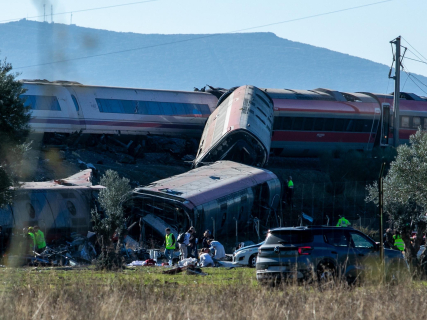

The railway accident recorded this Wednesday, October 28, in Urda (Toledo), where an AVE from Renfe has struck from behind an Iryo train, has placed the functioning of the circulation protection systems among the main technical aspects that investigators will have to examine. The Madrid-Seville high-speed line uses the LZB system, a continuous supervision technology designed to control train speed and ensure compliance with movement authorities.
Engineer Ricardo Díaz, professor of Chemical and Materials Engineering, has questioned in statements to Espejo Público, on Antena 3, how a rear-end collision could have occurred in an infrastructure equipped with railway protection mechanisms. The expert has pointed out that, when a train occupies a protected section of track, the safety systems must prevent another convoy from advancing toward it without respecting the established circulation conditions.
"What cannot be is a rear-end collision, what are we talking about?", Díaz has stated, who has recalled that train stoppages due to incidents or traffic regulation needs are common and must be contemplated by the safety systems.
The engineer has also mentioned the functioning of track circuits, responsible for detecting the occupation of certain stretches of the infrastructure. His statements come when the causes of the accident have not yet been determined nor has the existence of a fault in the protection systems been confirmed.
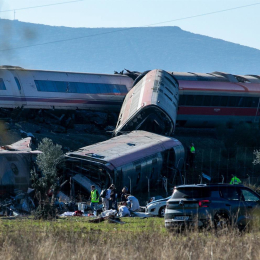
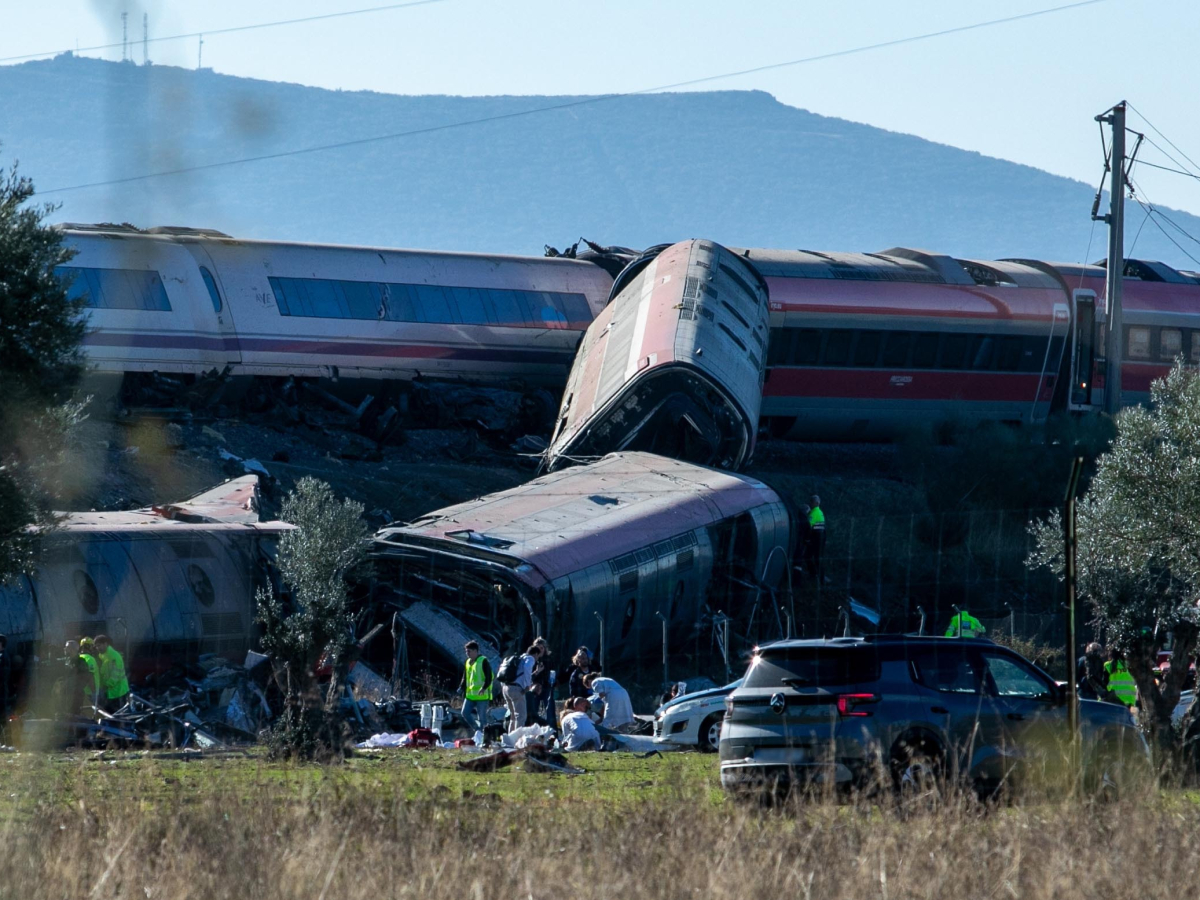
According to the initial information provided by Adif, the accident occurred in the vicinity of kilometer point 118, between Mora and Orgaz and Urda, in the province of Toledo. The impact between the two trains has caused the derailment of the last carriages of the Iryo, two of which have fallen down an embankment.
What LZB is and how it controls railway traffic
LZB, acronym of Linienzugbeeinflussung, is a railway protection system of German origin based on the continuous transmission of information between the track installations and the onboard equipment in the trains.
Its implementation in Spain dates back to the inauguration of the Madrid-Seville high-speed line, in 1992. It is designed to supervise traffic at high speeds, when braking distances make it insufficient to rely exclusively on the observation of external signals.
The system transmits to the train information on the authorized speed, the available distance and the traffic restrictions it must observe. Based on these data, the onboard equipment supervises the movement and determines whether the convoy is running within the established limits.
Featured story
Renfe enables a helpline for the families of the victims of the Urda railway accident
1 minute
Its operation is based on three main elements:
-
Ground control installations. They receive information on the occupancy of the infrastructure and the traffic conditions, and calculate the authorizations that must be transmitted to the trains.
-
Transmission cable installed in the track. It allows the continuous exchange of information with the vehicles' antennas.
-
Onboard equipment. It supervises the train's actual speed, calculates the braking curves and can intervene on the braking system when certain safety limits are exceeded.
In the cab, the driver has indications on the permitted speed, the target speed and the distance to the point at which a restriction must be met.
When the system requires reducing speed, it establishes a braking curve that takes into account the characteristics of the train. If the supervision thresholds are exceeded, it can order an automatic intervention, including the application of the emergency brake.
Therefore, the LZB is not limited to warning the driver of the existence of a restrictive signal: it continuously supervises that the train can comply with the authorized traffic conditions.
What happens when one train stops and another travels behind it
The separation between convoys depends on the blocking systems and on the information they provide to the protection equipment.
On a line equipped with LZB, the presence of a train in a protected section must be detected by the safety installations. That occupancy conditions the movement authorizations of the convoy traveling behind.
If the preceding train is stopped, the system must establish the necessary restrictions so that the following one reduces its speed and, when appropriate, stops before reaching the authorized movement limit.
The LZB supervises that reduction by means of a braking curve. Its purpose is to ensure that the train can stop within the available distance, provided that the information received and the operating conditions are as expected.
Protection does not consist of directly detecting the rear of the preceding train as a radar would. The system uses occupancy information and the movement authorizations calculated by the safety installations.
This difference is fundamental for analyzing the Urda accident. A rear-end collision requires checking whether the position of the preceding train was correctly recorded, what authorization the convoy traveling behind received, and how its protection equipment acted.
Track circuits and LZB: two different functions
Ricardo Díaz has referred to track circuits when explaining why he is surprised that the accident occurred.
Although both elements are part of the railway safety architecture, they perform different functions.
The track circuit makes it possible to determine whether a section of infrastructure is occupied by railway material. In its conventional configuration, it uses the electrical properties of the rails to detect the presence of a train. There are also other occupancy detection devices, such as axle counters.
The LZB, for its part, uses information about the state of the infrastructure and the conditions of circulation to supervise the movement of the train and establish the limits it must respect.
Therefore, a possible occupancy detection problem and an incident in the transmission of information to the on-board equipment would be different anomalies.
They must also be distinguished from a braking failure or from a circulation carried out under exceptional procedures.
It has not been confirmed that any of these elements failed in Urda. Their verification is part of the technical questions that will have to be clarified.
What the investigation would have to check about the LZB
The investigation of the accident will have to reconstruct the sequence of circulation of both trains before the impact.
One of the first aspects will be to establish why the Iryo convoy was in the position in which it was struck and whether it was completely stopped or was traveling at a speed lower than that of the AVE.
Next, it will be necessary to know what information the safety installations recorded about the occupation of the track.
If the preceding train was stopped within a protected section, it must be checked whether that occupation was correctly detected and what restrictions were transmitted to the train approaching from behind.
It will also be relevant to determine:
-
The speed of the AVE during the moments before the impact.
-
The movement authorization that it had in force.
-
The protection system that was effectively active at that point.
-
The speed and distance indications received in the cab.
-
The existence of possible alarms, communication losses, or automatic interventions.
-
The moment when the brakes were applied and the response of the rolling stock.
The data stored by the onboard equipment and the records of the traffic control systems will make it possible to reconstruct part of that sequence.
In the event that an anomaly is detected, the investigators must establish whether it originated in the infrastructure facilities, in the communications, in the onboard equipment or in another element of the railway operation.
What happens if the LZB loses communication with the train
The LZB is conceived as a railway safety system and has mechanisms to manage certain fault situations.
A loss of communication does not, by itself, imply that the train may continue to run without restrictions. The procedures provided contemplate warnings to the driver, interventions by the system and specific conditions to recover or modify the running regime.
The response depends on the nature of the incident and on the state of the system at that moment.
For this reason, a possible loss of transmission would not be enough to technically explain a rear-end collision. It would be necessary to determine what failure occurred, how the equipment detected it, what protection measures were activated and under what conditions the train continued to run.
Nor can it be assumed that a failure of the LZB is equivalent to a total loss of the safety mechanisms. The infrastructure has procedures and complementary systems whose functioning must be analyzed together.
Could there have been a human error?
Among the matters that will have to be examined is also the conduct of the drivers and of the personnel responsible for traffic regulation.
However, the existence of a rear-end collision does not automatically allow the accident to be attributed to human error.
Under normal conditions, the LZB supervises driving and can intervene when safety limits are exceeded. Therefore, even if a driver did not react in time to a restriction, it would be necessary to check whether the system had the necessary information to act and whether it was operating in the intended mode.
The investigation will also have to determine whether any exceptional situation existed, such as operation under degraded conditions, a signaling incident, or a specific movement authorization.
In that context, possible human action and the operation of the equipment do not constitute necessarily mutually exclusive explanations. The technical reconstruction must establish what happened at each stage and what safety barriers were available.
For now, there is no official information that allows it to be stated that the accident was the consequence of a driver error, an incorrect movement order, or an LZB failure.
The differences between LZB, ASFA and ERTMS
The Spanish railway network uses different protection systems, whose performance and operating methods are not identical.
Conventional ASFA transmits information to the train through balises installed at specific points of the infrastructure. Its monitoring functions are more limited than those of a continuous control system.
The LZB maintains continuous communication and allows braking curves and movement authorizations to be monitored.
ERTMS, developed to facilitate European railway interoperability, incorporates different operating levels. In its continuous monitoring configurations it can transmit movement authorizations and automatically control compliance with speed restrictions.
The Madrid-Seville line began operating with LZB and has been the subject of modernization projects for its signaling and protection installations.
Nevertheless, the existence of more recent technologies does not mean that LZB lacks the necessary functions to maintain separation between trains. Its safe operation depends on the integrity of the information, of the installations and of the traffic procedures.
The records will determine whether the system intervened before the collision
The Urda accident has occurred on an infrastructure designed for high-speed rail traffic and equipped with automatic protection mechanisms.
The statements of engineer Ricardo Díaz focus attention on a specific technical question: how could a rear-end collision between two trains have occurred when the safety systems are designed to monitor their separation.
The investigation must establish whether the train traveling behind received a movement authorization compatible with the position of the preceding train, whether speed restrictions were recorded, and whether there was any automatic braking intervention.
It must also be checked whether the infrastructure and onboard equipment functioned according to their specifications.
Until those records are analyzed, it cannot be determined whether the accident was related to the LZB, to another element of the signaling, to an operational circumstance, or to a combination of factors.