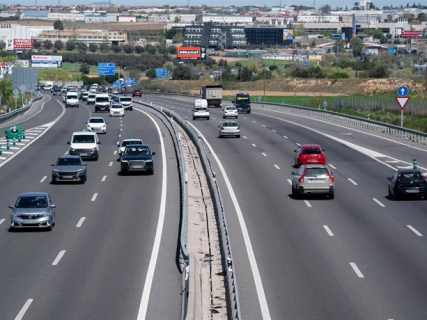
Operation exit of August 15: the worst hours to travel and the roads with the most traffic

The DGT foresees 5.61 million movements between Friday, August 14, and Sunday, August 16, and recommends especially avoiding the roads between 4:00 PM and 11:00 PM on Friday and between 6:00 PM and 11:00 PM on Sunday.

5 minutes

WhatsApp Image 2026 04 06 at 16.12.22

WhatsApp Image 2026 04 06 at 16.12.22

Add DEMÓCRATA to Google

Ask FREN

Published

Last updated

5 minutes

Most read

The Special Traffic Operation of August 15, 2026 will mobilize millions of vehicles on Spanish roads coinciding with the change of fortnight, summer vacations, and numerous local festivals.

The General Directorate of Traffic (DGT) will activate the device at 3:00 PM on Friday, August 14, and will maintain it until 12:00 AM on Sunday, August 16, during which it expects 5,610,000 trips of long and short distance.

When the Special Operation of August 15 begins

The DGT will launch the Special Operation of August 15 at 3:00 PM on Friday, August 14, although the first significant traffic problems are expected from the early hours of the afternoon. The device will remain active until midnight on Sunday, August 16, to cover both the outbound movements and the return of those who finish their days of rest.

Traffic estimates that during these three days there will be 5.61 million trips on Spanish roads. The trips typical of the change of fortnight will be joined by trips to coastal towns, beaches, and second homes, common during one of the weekends with the highest mobility of the summer.

There is also an additional factor: the holiday of August 15 coincides with local festivals in numerous Spanish towns. This will increase short-distance trips on both main and secondary roads, with special attention to nights and early mornings.

The worst hours to travel on Friday, August 14

The first major conflict zone will arrive on Friday, August 14, between 4:00 PM and 11:00 PM. The DGT expects high intensities and congestion in the outbound direction from large urban centers during those seven hours, so it recommends advancing or delaying the trip whenever possible.

The problems will concentrate especially on the main exit roads from the big cities and on the routes leading to the tourist areas of the coast. Traffic will also increase considerably on the roads used to reach second homes and towns celebrating festivals.

The Traffic recommendation is to plan the trip in advance and choose the most suitable route, avoiding the most conflictive time slots. Therefore, for those who have flexible schedules, traveling between 4:00 PM and 11:00 PM on Friday will be the least recommended option of the first day of the operation.

What will happen on the roads on Saturday, August 15

Intense traffic will continue during the Saturday the 15th from the early hours of the morning. On this occasion, movements will again concentrate in the direction of exit from the large urban centers, although shorter trips will gain more prominence.

Traffic will increase especially on the routes that connect coastal towns, access to the coast, beaches, and second home areas. This will be joined by movements related to the celebration of the Virgin of August festival in numerous municipalities.

The DGT does not establish a closed time slot in its forecast published this Thursday for the entire Saturday equivalent to the seven hours indicated for Friday. It does expressly warn that traffic will be intense from the early hours of the morning, so it is advisable to check the road situation immediately before starting the trip.

On Sunday, the worst time to return home

The Sunday, August 16 will have two different moments of complicated traffic. During the morning, problems may occur in short-distance movements on the roads that connect coastal towns and in the accesses to beaches and tourist areas.

The main problem will come, however, during the afternoon. The DGT places between 6:00 PM and 11:00 PM the most conflictive time slot for the return, when many drivers finishing their vacations or the weekend will begin to return simultaneously.

The greatest difficulties may occur on the main communication axes from the tourist areas, rest areas, and second homes to the big cities. Therefore, Traffic advises avoiding those five hours as much as possible and staggering the return.

Which roads will have more traffic during the August bridge

The forecast from the DGT does not provide a single list of highways affected for the entire country, as the delays will depend on each territory and the actual evolution of movements. It does clearly identify the types of roads where it expects higher traffic intensities during the Operation of August 15.

The main problems are expected on the roads of exit and entry of the large urban centers and on the corridors that connect the interior with the tourist areas of the coast, beaches, and second home areas. During Saturday and Sunday, coastal roads and direct accesses to the beaches will also gain special importance.

Traffic recommends checking incidents before leaving because a delay, accident, or specific incident can quickly modify the most convenient route. The information is especially important in this operation due to the combination of long-distance movements and millions of short trips related to beaches and local festivities.

Additional lanes, alternative routes, and restrictions

To increase the capacity of the roads in the most conflictive points, the DGT will install reversible and additional lanes using cones during peak hours. Alternative routes will also be established with the aim of reducing pressure on the main corridors when traffic is particularly high.

Traffic will also halt certain road works during the operation and will limit the holding of sporting events and other activities that involve occupying the roadway. The goal is to avoid additional obstacles precisely during the days when a higher concentration of vehicles is expected.

There will also be restrictions on the circulation of vehicles transporting dangerous goods, special transports, and certain trucks carrying goods in general. These limitations do not affect all roads equally or throughout the entire weekend, but are applied in specific sections, dates, and times established by Traffic.

More speed, alcohol, and drug controls

The Special Operation of August 15 is not limited to managing traffic stops. The Traffic Group of the Civil Guard will intensify preventive control measures for speed, alcohol, and drugs during these days, coinciding with numerous nighttime movements related to the patron saint festivities.

The DGT has fixed and mobile radars, cameras, and camouflaged vans for the control of mobile phone use and seatbelt use. To these devices will be added helicopters, drones, and unmarked vehicles and motorcycles that will circulate on different types of roads.

Traffic has especially reinforced its message of caution after a weekend in which 19 people died in traffic accidents. The DGT insists on not lowering the guard even during short and familiar trips and reminds the need to respect speed limits, use the seatbelt, and not drive after consuming alcohol or drugs.

How to check traffic in real time before traveling

The DGT recommends checking the real-time traffic status before starting any trip during the August 15 bridge. The situation can change rapidly, and an incident can cause delays even outside the time slots that initially present a higher risk of congestion.

Updated information is available through the incident map of the General Directorate of Traffic. It can also be consulted through radio and television bulletins and via the phone 011, in addition to the communications that Traffic disseminates during the operation.

Check the DGT real-time traffic map

For those who can choose when to start the trip, the two main references are already confirmed: avoid between 4:00 PM and 11:00 PM on Friday the 14th to leave and between 6:00 PM and 11:00 PM on Sunday the 16th to return. On Saturday the 15th, the recommendation is to avoid as much as possible the early hours of higher intensity and check the traffic before getting behind the wheel.

More key points, information and questions with FREN

AI-GENERATED CONTENT

What process must the DGT follow to approve and implement a Special Traffic Operation at the national level?

The DGT does not require a new law for each Special Traffic Operation but acts through an administrative resolution by the Director General supported by the Traffic Law and an annual resolution of "special traffic regulation measures." The process combines a technical-planning phase (flow analysis and measure design), a formal approval phase (motivated resolution published in the BOE), and an operational phase (coordination with the Civil Guard, Autonomous Communities, and municipalities, citizen information, and monitoring). Legally, it is mainly based on the consolidated text of the Law on Traffic, Motor Vehicle Circulation, and Road Safety and on circulation and vehicle regulations. Within this general framework, specific campaigns (Easter, summer, Christmas, etc.) are programmed as "special operations."

Legal framework and competent body

The main legal basis is the consolidated text of the Law on Traffic, Motor Vehicle Circulation, and Road Safety, approved by Royal Legislative Decree 6/2015, available in the BOE (consolidated text of the Traffic Law). Articles 5, 12, and especially 18 assign to the Ministry of the Interior and the Central Traffic Headquarters competencies of:

  • Regulation, ordering, and management of traffic on interurban roads and crossings.
  • Authorization of sporting events on state roads.
  • Road closures or access restrictions for certain vehicles for safety or traffic flow reasons.

These competencies are exercised "through the autonomous body Central Traffic Headquarters," and for surveillance, management, and assistance, the Civil Guard acts, "especially its Traffic Group," which specifically depends on said body, as stated in the law itself (see the excerpt reproduced in the query about Royal Legislative Decree 6/2015).

Annual resolution of special measures

The immediate support for Special Traffic Operations is the annual resolution of special measures. A recent example is the Resolution of January 14, 2026, from the Directorate General of Traffic, "establishing special traffic regulation measures during 2026" (special measures resolution 2026), with a subsequent error correction (error correction 2026).

This resolution explains the general scheme:

  • It is issued "for reasons of road safety and traffic flow, in accordance with the dates when massive vehicle movements are expected."
  • It expressly relies on articles 5, 12, and 18 of the Traffic Law (consolidated text), the General Traffic Regulations (Royal Decree 1428/2003), and the General Vehicle Regulations (Royal Decree 2822/1998), as well as the report from the Higher Council of Traffic and Road Safety.
  • It acts "in agreement with the competent bodies of the Ministries of the Interior and Transport, Mobility, and Urban Agenda."

The Director General of Traffic "resolves" and establishes detailed circulation restrictions in annexes (calendars, sections, vehicle types, and exemptions), which serve as an umbrella for all specific Special Operations of the year.

Internal planning phase

Within this annual framework, the DGT develops, at a technical level, each specific operation (for example, an Easter operation):

  • The Traffic Management Centers analyze travel forecasts and define critical periods, as the resolution itself states by assigning them the determination of the "degree of importance of travel flow."
  • Measures are designed: additional restrictions for heavy vehicles or hazardous goods (in line with what is indicated in the resolution and regulations such as Royal Decree 97/2014 on the transport of hazardous goods), enabling additional lanes, prohibition of sporting events on certain dates, etc.
  • Coordination is carried out with the Civil Guard Traffic Group (escorts, patrols, controls) and with the administrations owning the affected roads, as required by the Traffic Law when referring to sporting events and road closures.

Approval and publication act

Formal approval does not require the Council of Ministers: it materializes in a resolution by the Director General of Traffic, issued:

  • "After a report" from the Higher Council of Traffic and Road Safety.
  • In agreement with the competent bodies of the Interior and Transport Ministries.
  • Motivated by safety and flow reasons.

The resolution is published in the BOE, as with the 2026 special measures (special measures 2026), which gives it general effectiveness on roads under state jurisdiction, without prejudice to the competencies assumed by autonomous communities and local entities as provided in the Traffic Law.

Execution, information, and monitoring

Once in force, execution is articulated through:

  • The Traffic Civil Guard, which carries out surveillance, regulation devices, and roadside assistance according to the Traffic Law.
  • The Management Centers, which monitor traffic in real time, adapt lanes and detours, and assess the need for additional measures.
  • Citizen information (variable message panels, website, and telephone and informational channels), consistent with other DGT resolutions on traffic information.

After the campaign, the DGT can evaluate results (accident rates, travel times, compliance with restrictions) and, if necessary, adjust future annual resolutions of special measures, as shown by the modifications and corrections usually approved each year (modification of measures 2023).

What differences exist between the competencies of the DGT and those of the autonomous communities with transferred traffic in Special Operations? How do the DGT and the Civil Guard Traffic Group coordinate in practice during a specific Special Operation, such as Easter? What specific restrictions can the annual resolution of special measures include regarding heavy vehicles and hazardous goods?

What are the legal competencies of the Directorate General of Traffic regarding regulation and control of circulation?

The Directorate General of Traffic (DGT) is the body of the General State Administration specialized in managing circulation and road safety in most of the Spanish territory. Its competencies are defined in the basic traffic regulations and in the royal decrees organizing the Ministry of the Interior. In practical terms, the DGT regulates essential aspects of circulation, directs and coordinates traffic surveillance, imposes sanctions for infractions, manages vehicle and driver registries, and leads state road safety policies. The following details these competency blocks from a legal-administrative perspective, without citing specific provisions due to lack of access to legal texts in the consulted sources.

General framework of competencies

The basic regulations on traffic, motor vehicle circulation, and road safety assign to the State Administration, and within it to the DGT, the power to order and manage traffic on interurban roads and certain crossings, as well as to set general circulation conditions. Additionally, the Ministry of the Interior's structural royal decrees assign it the function of developing and executing government traffic and road safety policy, as well as directing the bodies and services responsible for these matters.

Regulation of circulation and traffic rules

In regulation matters, the DGT mainly exercises regulatory and executive competencies within the law's framework. These functions include:

  • Development and application of basic traffic regulations through instructions, resolutions, and interpretative criteria directed at citizens, companies, and security forces.
  • Setting technical and operational standards related to signage, safety devices, circulation of certain vehicles (hazardous goods, special transport, VTC, etc.), and temporary traffic limitations in special operations.
  • Regulation of circulation restrictions for road safety, works, weather phenomena, or congestion, especially on the state road network.

Control, surveillance, and traffic management

The DGT is responsible for the general planning of traffic control and surveillance on roads under its jurisdiction. Its functions include:

  • Direction and coordination of road surveillance services carried out by state security forces specialized in traffic.
  • Management of traffic control centers, which monitor circulation via cameras, variable message panels, and intelligent transport systems, and adopt dynamic regulation measures (reversible lanes, detours, speed limits).
  • Planning special operations (bridges, holidays, major events) through regulation devices, increased surveillance, and user information.

Sanctioning power and infraction regime

Traffic regulations assign the DGT significant sanctioning power at the state level. This includes:

  • Instruction and resolution of sanctioning procedures for infractions detected by agents or automatic means (radars, traffic light control cameras, etc.) on roads under its jurisdiction.
  • Management of the points system associated with the driving license, including deduction, recovery, and annotation of loss of validity due to point exhaustion.
  • Processing administrative appeals against sanctions and managing the executive collection of fines, in coordination with other competent collection bodies.

Registries, authorizations, and administrative management

Another key aspect is administrative management linked to circulation:

  • Management of the Vehicle Registry: registration, deregistration, ownership changes, annotation of encumbrances, and issuance of circulation permits.
  • Management of the Driver Registry and driving permits: issuance, renewal, exchange of foreign permits, and annotation of relevant records and sanctions.
  • Granting special circulation authorizations for exceptional transports, sporting events on roads, and other special cases.

Road safety, information, and institutional coordination

Finally, the DGT plays a leading role in the State's road safety policy:

  • Development of road safety plans and strategies, with objectives to reduce accident rates and normative, educational, and control measures.
  • Information and awareness campaigns on safe driving, alcohol and drugs, speed, seat belts, helmets, or distractions.
  • Collection, processing, and analysis of data on traffic accidents and other indicators to support normative and management decisions.
  • Coordination with autonomous communities and local entities, which retain their own competencies on urban roads and, in some territories, over all traffic matters.

Overall, the DGT concentrates the state function of ordering and controlling circulation and guaranteeing road safety, within a system also involving autonomous communities and municipalities with their own competencies.

What competency differences exist between the DGT and autonomous communities that have transferred traffic, such as Catalonia or the Basque Country? How is the points-based driving license system legally structured and what specific role does the DGT play in its management? What internal bodies compose the DGT's structure and what specific functions does each have regarding circulation and road safety?

Which other autonomous communities have implemented additional restrictions or their own devices during the August departure operation in recent years?

In recent years, the communities with traffic competencies or their own road management structures that have deployed additional restrictions or their own devices during the August departure operation (or in operations closely linked to that period) are, clearly in the available sources, Catalonia, the Basque Country (Euskadi), and Navarra, to which are added reinforced local devices such as that of the Murcia City Council. The Directorate General of Traffic (DGT) explicitly acknowledges that these three communities set their own restrictions on heavy transport circulation during the August operation. Additionally, the Basque Government details specific summer operations of signage and management of critical road junctions, and some municipalities organize complementary local police deployments. There is no detailed information, in the consulted sources, about specific measures from other communities in the August departure operation between 2019 and 2023.

Catalonia, Basque Country, and Navarra: own restrictions on heavy vehicles

The most explicit data comes from the Demócrata piece August 2026 departure operation: dates and DGT restrictions. It recalls that the DGT's annual resolution limits the circulation of:

  • Trucks over 7,500 kg MMA
  • Vehicles transporting hazardous goods
  • Special vehicles or those requiring complementary authorization

And, very importantly, it adds that "the affected schedules and roads change according to the autonomous community" and that Catalonia, the Basque Country, and Navarra apply their own restrictions. That is, during the August departure operation (and other summer special operations) these three communities:

  • Publish their own calendars of time prohibitions and specific sections for heavy vehicles and hazardous goods.
  • Can toughen or modulate the DGT's state limitations based on their road network and traffic patterns.

This same territorial differentiation scheme is also seen in other state summer devices recorded by Interior and the DGT, where "autonomous operations" are distinguished within the general plan, as noted in DGT and Interior notes on the 2024 summer device (DGT note and Interior statement).

Basque Government's own summer device

Beyond heavy vehicle restrictions, Euskadi details specific operations on its network during the summer campaign. In 2025, the Basque Government published the note Euskadi records traffic increase above expected at mid-point of Summer Departure-Return Special Operation, describing its own device for the departure and return operation:

  • "Special signage operations" at very specific points (AP-1–N-622 in Etxebarri-Ibiña; N-622–A-1 in Vitoria-Gasteiz, etc.).
  • By-pass and lane management at strategic junctions such as the Armiñón Junction during the return operation.
  • A weekend contracted tow service on the Euskadi–Cantabria limit section of the A-8, active on peak days, to quickly remove broken down or accident vehicles.

This is clearly an "own" device: designed, executed, and communicated by the Basque Government's Traffic Directorate, complementing the DGT's general measures for the summer departure and return operation.

Navarra and Catalonia: special measures for heavy vehicles in extraordinary devices

Although not strictly linked to the August departure operation, there is a recent precedent showing the logic of Catalonia and Navarra acting in contexts of high summer mobility. The Demócrata report on the 2026 total eclipse, Map of traffic cuts in Spain for today's eclipse, details that Catalonia, Navarra, and the Basque Country "have established special measures for certain heavy vehicles" in their territory, within a device coordinated with the DGT.

The pattern is similar to the August departure operation: communities with traffic competence or advanced road management services adjust schedules, sections, and types of restricted vehicles to anticipate capacity and safety problems on their main corridors.

Local devices: the example of Murcia City Council

At the municipal level, specific reinforcements linked to the August departure operation have also been seen. In 2025, the Murcia City Council issued an official note, More than 200 Local Police officers will ensure safety and traffic flow during the August 1 departure operation, announcing:

  • A deployment of 207 Local Police officers to regulate accesses and exits of the municipality coinciding with the special operation on August 1.
  • Specific objective to ensure flow in the urban area and interurban network links, coordinated with DGT planning.

Although a municipal case, it illustrates how administrations other than the state DGT activate their own operations on the same days and hours of the departure operation.

Limits of available information

The consulted sources do not provide exhaustive lists, year by year (2019-2025), of all communities that have applied additional measures in the August departure operation. What is clearly documented is that:

  • Catalonia, the Basque Country, and Navarra have their own restriction regimes for heavy transport during these dates.
  • The Basque Government details a singular signage and junction management operation each summer.
  • Some local corporations, like Murcia, organize specific reinforcements of surveillance and traffic regulation coinciding with the departure operation.

No further information is available in the consulted sources about similar measures in other autonomous communities during the August departure operation in recent years.

What differences exist between the restrictions applied by the DGT and those set by Catalonia, the Basque Country, and Navarra in the August departure operation? How has the Basque Government's summer traffic device evolved in recent years and what weight does it have compared to the DGT's? What travel forecasts and special traffic device have been announced for the August 2026 departure operation?

Play

Test your knowledge with FREN!

How much do you know about this topic? Answer the following 3 questions.

How many trips does the DGT anticipate during the Special Traffic Operation on August 15, 2026?

Question 1 of 3

What is the most problematic time slot for traveling on Friday, August 14 according to the DGT?

Question 2 of 3

What additional measures will the DGT implement to manage traffic during the Special Operation on August 15?

Question 3 of 3

Hola, soy Fren. ¿Cómo te ayudo?