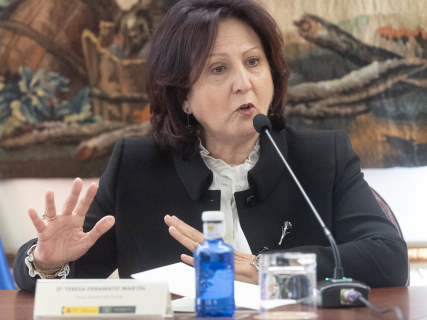

Every time the State Attorney General makes headlines for an investigation or a judicial decision, the same question arises: what functions does he really have and how far does his power extend? He is the highest authority of the Public Prosecutor's Office, an institution regulated in article 124 of the Spanish Constitution and developed by the Organic Statute of the Public Prosecutor's Office. Its main mission is to promote the action of Justice, ensure compliance with the law, protect citizens' rights, and defend the public interest.
What functions does the State Attorney General have?
Although he does not decide sentences nor is he part of the Judiciary, the Attorney General does direct the actions of all prosecutors in the country. Among his main responsibilities are:
- Directing the Public Prosecutor's Office. He establishes general criteria through instructions, circulars, and decrees that all Public Prosecutor's Offices in Spain must apply.
- Defending legality and the public interest. He intervenes in criminal proceedings and also in civil, social, or contentious-administrative matters when the law so provides.
- Coordinating the actions of provincial Public Prosecutor's Offices. He organizes the work of provincial, autonomous, and special prosecutor's offices, as well as resolving differences in criteria between them.
- Institutionally representing the Public Prosecutor's Office. He acts as the spokesperson for the institution before the Government, the Cortes Generales, the Judiciary, and international organizations.
In practice, he sets the policy of action for the Public Prosecutor's Office, although prosecutors must apply the law with objectivity and impartiality in each proceeding.
Who appoints the State Attorney General and when does he cease to hold office?
The appointment process is regulated by the Organic Statute of the Public Prosecutor's Office and consists of several phases. The Government proposes the candidate, who must appear before the Congress of Deputies and be heard by the General Council of the Judiciary (CGPJ). Finally, the King formalizes the appointment by royal decree. The legislation requires him to be a Spanish jurist of recognized prestige with a broad professional career. Although he usually comes from the fiscal or judicial career, the rule does not require it mandatorily.
Now, the State Attorney General is appointed every four years with no possibility of renewal in office, unless the first term was less than two years. However, the Attorney General may cease to hold office when: the term linked to the Government that proposed him/her ends; he/she voluntarily resigns; it coincides with his/her retirement or death; it coincides with an incapacity; or an agreed separation occurs in accordance with the assumptions provided for in the Organic Statute of the Public Prosecutor's Office.
Does the Attorney General depend on the Government?
This is one of the issues that generates the most debate. The Public Prosecutor's Office operates under two principles: unity of action and hierarchical dependence. This means that all prosecutors must follow common criteria and are subordinate to their superiors, with the Attorney General being the highest authority in the institution.
However, the law also establishes that the Public Prosecutor's Office must act with impartiality and functional autonomy, exclusively defending legality. The Government may convey general guidelines on criminal policy to the Attorney General, such as prioritizing the prosecution of certain crimes. However, it cannot order how to act in a specific proceeding, as this would constitute interference in the actions of the Public Prosecutor's Office.
Precisely, the fact that the Executive proposes his/her appointment while full independence is required constitutes one of the main political and legal debates about this institutional figure.
What is the difference between the judge and the State Attorney General?
While the State Attorney General is dedicated to defending legality, citizens' rights, and the public interest, promoting legal action when the law so establishes, the judge is the authority responsible for resolving conflicts by applying the law.
On the one hand, during a criminal proceeding, the prosecutor analyzes the facts, participates in the investigation, proposes proceedings, files charges when he/she considers there are sufficient indications of a crime or requests dismissal if he/she believes there are none. During the trial, he/she may also request a conviction or acquittal, but the final decision always rests with the judge or the court.
On the other hand, the judge's mission is to ensure that the judicial process is carried out with all guarantees and, after analyzing the evidence and hearing the parties, issue a ruling. In criminal proceedings, for example, the judge decides whether a person should be convicted or acquitted. In other areas, such as civil or labor law, it resolves conflicts between citizens, companies, or administrations.