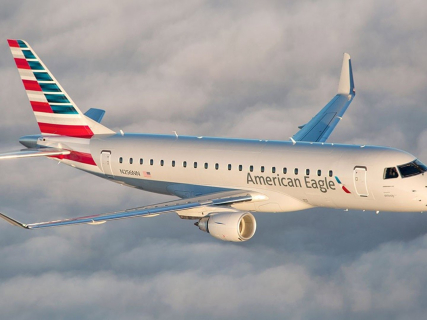

American Airlines and Infinium have announced a decisive advance for global aviation with the completion of the first commercial passenger flight powered by electrosustainable aviation fuel, known as eSAF or electro-SAF.
The route linked Corpus Christi International Airport (CRP) with Dallas Fort Worth International Airport (DFW), testing in real conditions the operability and integration of these next-generation electrofuels in commercial aviation.
The batch of eSAF used was produced and blended at Infinium's Project Pathfinder plant, located in Corpus Christi, considered the world's first commercial facility dedicated to the manufacture of synthetic fuels using liquid technology from electricity (Power-to-Liquids), in operation since 2023.
The fuel was blended with conventional kerosene meeting the specifications of the international ASTM standard for Jet A, allowing its direct use in engines and standard airport infrastructure, without the need to modify aircraft or supply tanks.
This achievement represents the first delivery at a commercial airport in the United States of a sustainable aviation fuel produced without raw materials of biological origin (non-biobased).
Unlike traditional biofuels, the eSAF developed by Infinium is manufactured through the capture of carbon dioxide waste combined with renewable electricity.
Thanks to this process, it is possible to cut greenhouse gas emissions by more than 90% throughout the entire life cycle of the fuel compared to conventional fossil fuels.
Strategic alliances to scale production by 2027
Commercial aviation consumes nearly 378.541 billion liters of kerosene globally each year to transport more than 4 billion passengers.
Despite regulatory and corporate support, sustainable fuels currently account for less than 1% of global air fuel consumption, making it a priority to increase the production of solutions compatible with the current fleet.
In this context, American Airlines already maintains a long-term purchase agreement for the production of the future Infinium complex, Project Roadrunner. This development, financially backed by Breakthrough Energy Catalyst, Brookfield Asset Management, and structured debt by HSBC, is in the construction phase in Texas.
It is expected to begin its commercial deliveries in 2027, with a production capacity close to 10 million liters annually of eSAF kerosene.
The operation has also received financial support from global entities such as Citi, whose corporate services department backs the program to mitigate Scope 3 emissions associated with the travel of its employees, thus reinforcing the necessary public-private cooperation to decarbonize commercial aviation.