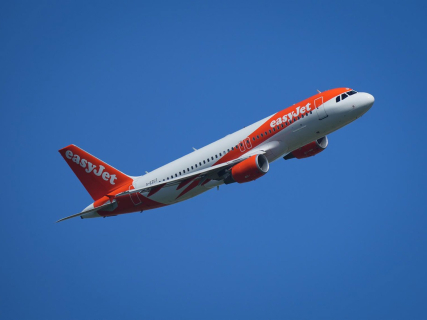

The American investment fund Castlelake has officially communicated that, after a detailed analysis of the possible operation, it rules out launching a public takeover bid (OPA) for easyJet, leaving the ground clear for Apollo to try to take control of the airline.
The investor's withdrawal breaks the rivalry scenario for the British low-cost company and has had an immediate impact on the London stock market, where easyJet shares have fallen by around 7% on the London Stock Exchange.
In a note sent to the market, Castlelake expressed its gratitude to the board of directors and the management team of easyJet for the "constructive collaboration" maintained during the analysis process.
With this step back, the fund is prevented from presenting a new proposal in the short term, except in very specific cases, such as the express approval of the airline's board, the announcement of a firm offer by a third party, or a significant change in circumstances.
An escalation of offers halted by the emergence of Apollo
The exit of Castlelake closes a stage of intense negotiations. The fund began contacts in early June 2026 with an initial proposal of £5.60 per share (€6.54), which was successively increased to £6 (€7), £6.25 (€7.30), £6.50 (€7.59), and finally, £6.90 per share (€8.06).
On this last figure, the easyJet board had reached a preliminary understanding on July 10.
The board changed completely when the private equity giant Apollo Management emerged, presenting a higher cash offer of £7.15 per share (€8.35), thus surpassing the amount proposed by Castlelake.
Although the easyJet board recently decided to extend the deadline for the two bidders to make a definitive decision, setting the deadline at 5:00 PM (local London time) on Friday, August 7, Castlelake preferred to withdraw before the final stretch.
Apollo stands alone before the August 7 deadline
After Castlelake's withdrawal, Apollo remains the only candidate in a position to attempt to purchase the airline.
The American fund has until this Friday, August 7, to announce a firm acquisition offer or, otherwise, withdraw from the operation in accordance with British regulations on mergers and acquisitions.
Any proposal made by Apollo must face, in any case, the regulatory restrictions that affect investors from outside the European Union and the United Kingdom.
As it is an American firm, Apollo cannot directly assume total control of easyJet: the aviation legislation of the United Kingdom and the European Union requires that the majority of the capital and effective control of airlines with community licenses remain in the hands of shareholders from the region. This framework will force the fund to articulate the operation with the help of a European strategic partner.
Operational turbulence and pressure from fuel costs
The financial and corporate tension comes at a particularly complex time for easyJet. In its third fiscal quarter, the company recorded a 70% drop in its profit before taxes, affected by the impact of the conflict in the Middle East, lower demand on certain routes, and, notably, the increase in fuel costs.
The fuel bill increased by 13% in the period, which means about 105 million pounds additional, due to the higher price of the part of consumption not covered by financial hedging instruments.
Despite the deterioration of the quarterly accounts and the volatility in the stock market, the management remains optimistic for the fiscal year 2026, in which it expects an increase in capacity close to 6% year-on-year and a 3% increase in the number of seats offered.