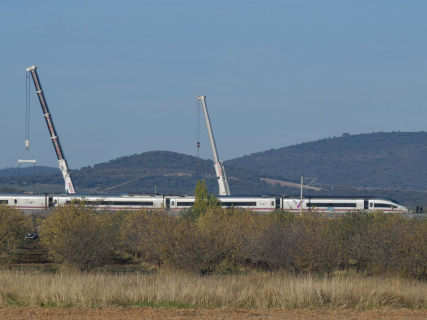

The Association of Financial Users (Asufin) has requested the implementation of specific measures to contain disproportionate price increases in emergency situations, after the mobility problems arising from the railway tragedy that occurred this Wednesday in Urda, Toledo.
The organization denounces that this episode has generated great uncertainty about fares and has revealed generalized increases in the prices of alternative transport options, such as flights or private hire vehicles.
Asufin recalls that the regulation designed to supervise and limit prices in emergency contexts fell in Congress and that, since then, no new regulation has been promoted to address this problem.
The association warns that this type of situation, by abruptly altering supply and demand, leaves users in a situation of special vulnerability and highlights the effect of the so-called dynamic pricing, whose increases may be linked to the application of automated algorithms and not necessarily to direct human decisions.
According to the entity, these increases impact the most vulnerable groups with greater intensity, who are forced to bear excessive surcharges. Likewise, it considers that this system causes an imbalance between consumers and the large globalized companies that build their commercial strategies on the intensive use of algorithms.
In this framework, Asufin, which is part of the European consumer organization BEUC, recalls that it has repeatedly called for measures to strengthen the transparency of artificial intelligence systems.
Among its demands, it defends consumers’ right to know the logic and the factors used by these systems when they directly affect their interests, for example, in the preparation of credit profiles, the contracting of insurance, or personnel selection processes.
The association maintains that the use of these technologies in price determination opens up new challenges for consumer protection and emphasizes the urgency of establishing mechanisms that prevent emergency situations from resulting in exorbitant increases in transport prices.