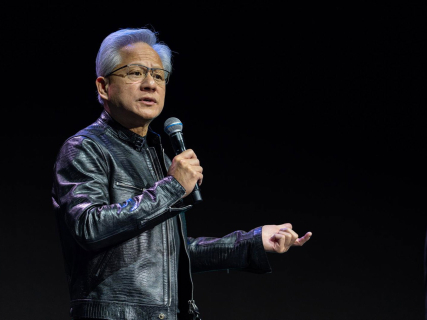
Nvidia presents results: examination of the 'boom' of artificial intelligence

The results of Nvidia will measure this Wednesday how far the investment cycle in artificial intelligence that is mobilizing hundreds of billions of dollars can continue.

2 minutes

fotonoticia 20260811131201 1920

fotonoticia 20260811131201 1920

Add DEMÓCRATA to Google

Ask FREN

Published

Last updated

2 minutes

Most read

Nvidia presents this Wednesday results in a key meeting for the immediate future of the 'boom' of artificial intelligence. The market expects a new leap from the chip manufacturer, which has become a thermometer of the development of the essential infrastructure for this technology.

When? The company will publish the results corresponding to the second fiscal quarter of 2027 --up to the past July 26-- at approximately 22:20 hours of mainland Spain. The conference with analysts and investors will be from 23:00 hours.

What is the forecast? The consensus compiled by LSEG and cited by Reuters places quarterly revenues around 92.180 billion dollars, almost double what it was a year earlier. The main dish, however, will be the forecast for the coming months.

The options market discounted before the presentation an approximate movement of 5.4% in Nvidia's shares, equivalent to about 280.000 billion dollars in market capitalization, according to data collected by Reuters. And that reaction may extend to the rest of the companies.

More wood. Analysts expect Nvidia to anticipate about 104.200 billion dollars in revenue in the third quarter. This would represent a year-on-year growth of nearly 83%, according to LSEG. The market also expects the gross margin to remain around 75%.

Nvidia comes from growing even faster. In the first fiscal quarter, the company reached 81.615 billion dollars in revenue, 85% more than a year earlier, while the data center business reached 75.200 billion, 92% more.

Why is it an indicator? Nvidia supplies a good part of the accelerators used in the data centers built by Microsoft, Amazon, Alphabet, Meta, and other companies.

Reuters estimates that investment in data centers by large tech companies will exceed 730.000 billion dollars this year. This is in addition to the spending of companies specialized in computing services for AI, including CoreWeave.

Is it sustainable? The current discussion is how long this pace can be maintained and who will end up generating the necessary revenues to make such an investment profitable. And there Nvidia plays another important role.

Who pays for the party. Nvidia is no longer limited to selling processors to the companies that build AI infrastructure. It is also helping to finance the ecosystem that buys its products.

Reuters notes that Nvidia has recently contributed to organizing around 500 billion dollars of financing from six major U.S. financial institutions for clients building artificial intelligence infrastructure.

The company has also taken on financial commitments related to projects of some of its main clients. Among them is a guarantee of up to 105 billion dollars linked to the leasing of a large data center of OpenAI in Ohio.

This model has generated a new concern among some investors: to what extent Nvidia is financing directly or indirectly companies that then use that money to purchase infrastructure equipped with its technology.

More key points, information and questions with FREN

AI-GENERATED CONTENT

What are the next regulatory or results reporting steps Nvidia must follow after publishing this quarter?

After publishing its quarterly results, Nvidia enters a fairly standardized chain of reporting obligations before the United States Securities and Exchange Commission (SEC) and the market. Although the specific details of each quarter depend on the company's internal calendar, the regulatory framework and usual practices clearly allow identifying the next steps to follow.

1. Immediate market communication: press release and possible Form 8‑K

The first milestone is usually the earnings press release and the update of the investor relations website. At this stage, Nvidia discloses key figures (revenue, profit, margins, data center segment, etc.) and a summary of outlooks, as reflected in recent analyses about its record earnings and the weight of artificial intelligence in its accounts, published by the newspaper Demócrata (Nvidia earnings analysis).

This information is usually formalized before the regulator through a Form 8‑K (current report). It is not a full financial report, but it serves to officially record that a material event has occurred: the publication of results and, if applicable, changes in guidance, announcements about dividends or buybacks, or strategic moves communicated taking advantage of the same occasion.

2. Conference call with analysts and guidance under SEC rules

In parallel or immediately after, Nvidia holds the conference call with analysts and institutional investors. This is a market step, not purely “bureaucratic,” but conditioned by U.S. disclosure regulations (Regulation FD):

  • It must ensure that material information is shared non-discriminatorily.
  • Any significant update of forecasts (guidance on revenue, capex, AI chip demand, etc.) must be considered material information and, if not already in the earnings release, is usually also channeled via 8‑K.

Given Nvidia's systemic weight in the AI investment cycle and in U.S. stock indices, the market uses this call as a barometer of expectations, something that is recurrently reflected in the economic coverage of the newspaper Demócrata about the company.

3. Filing the Form 10‑Q: the real quarterly report

In the medium term, the key milestone is the submission of the Form 10‑Q to the SEC, the complete quarterly report. Unless changes proposed by some policymakers and the regulator to reduce the frequency of these obligations take effect — the SEC has even studied having listed companies report only twice a year instead of quarterly, as reported by Demócrata in this information about the SEC proposal — the current regime remains quarterly.

For a large company like Nvidia, classified as a large accelerated filer, the reference deadlines are:

  • Form 10‑Q: generally must be filed within about 40 days after the end of each fiscal quarter.
  • Includes condensed financial statements, management's discussion and analysis (MD&A), updated risks, relevant litigation, and details about business segments.

The market follows this filing because, although the headline is already known from the earnings release, the 10‑Q provides the regulatory and accounting detail level used by analysts and regulators.

4. Coordination with Form 10‑K and other recurring obligations

At fiscal year-end, Nvidia is required to file the Form 10‑K, its annual report:

  • Generally must be submitted within 60 days following the fiscal year-end for large issuers.
  • Includes audited financial statements, extensive business description, risks, corporate governance structure, and compensation policies.

Ordinary quarters are coordinated with this annual calendar: the 10‑Qs feed the narrative and information that is then consolidated in the 10‑K, to which much of the key documentation on risks and policies is referred.

5. Specific next steps after this quarter

Specifically, after publishing this quarter, Nvidia has ahead:

  • Maintain the information already announced to the market aligned with SEC regulations (8‑K and subsequent clarifications if there are corrections or additional events).
  • Complete and file the corresponding Form 10‑Q within the regulatory deadline, with full financial statements and management explanations.
  • Update, if applicable, its official guidance under the terms allowed by disclosure regulation, considering that any material change requires formal public communication.

Unless a profound regulatory change is approved in the United States, Nvidia will continue to be subject to this quarterly reporting pattern, combining formal SEC requirements with the pressure of a market that scrutinizes every figure and every nuance of its AI business outlook in detail.

What powers and functions does the CEO of Nvidia have according to U.S. law?

Under U.S. law, there is no single statute that lists in detail the powers of the CEO of a specific company like Nvidia. Rather, the CEO's functions result from the combination of three main sources: the corporate law of the state where the company is incorporated (in practice, almost always Delaware), the company's own bylaws and internal regulations (bylaws, charters, board rules), and the CEO's employment contract. Based on this general framework, it is possible to describe quite precisely what the CEO of a large public company like Nvidia can and should do.

First, U.S. corporate law, especially Delaware law, establishes that the supreme management and supervisory body is the board of directors. The CEO is not an autonomous body created by law, but an “officer” to whom the board delegates the daily management of the business. This means that:

  • The ultimate power to decide general strategy, approve significant transactions, and supervise management rests with the board.
  • The CEO acts within the authority framework granted by the board, which is defined in the bylaws, board resolutions, and the CEO's contract.

Within that framework, the central function of the CEO in a company like Nvidia is the day-to-day executive management of the company. This includes, according to U.S. corporate practice:

  • Leading the ordinary activity of the company and coordinating other executives (CFO, COO, CTO, etc.).
  • Executing the strategy and plans approved by the board of directors.
  • Proposing to the board strategies, acquisitions, significant investments, and relevant organizational changes.
  • Making operational decisions within the spending, risk, and policy limits set by the board.

From a legal perspective, the most important are not so much the formal “powers” but the fiduciary duties that corporate law imposes on the CEO (and other officers). Under Delaware and other states' law:

  • The CEO has a duty of care: must act with the care that would be reasonably expected of a prudent manager, adequately informing themselves before making decisions.
  • Has a duty of loyalty: must put the company's and all shareholders' interests ahead of personal interests, avoiding undisclosed conflicts and self-dealing transactions.
  • Is subject to the duty to act in good faith, which means not knowingly ignoring serious risks, illegalities, or fraud within the company.

These obligations are not formulated only for Nvidia's CEO but for any senior executive of a U.S. corporation. Delaware case law (for example, in cases like In re Walt Disney Co. Derivative Litigation or Stone v. Ritter) has shaped how officers' conduct is evaluated and under what conditions they can be held liable to the company and its shareholders if they breach these duties.

Additionally, as Nvidia is a publicly traded company in the U.S., the CEO is subject to specific obligations derived from federal securities law (SEC, Securities Exchange Act of 1934, Sarbanes-Oxley Act, etc.). Among these are:

  • Responsibility for the truthfulness and completeness of the financial and corporate information Nvidia communicates to the market (periodic reports, material events, prospectuses).
  • Participation in the company's internal controls over financial statement preparation and risk management.
  • Prohibition against market manipulation or insider trading, especially strictly applied to a CEO.

In practice, Nvidia's CEO also acts as the chief public and contractual representative of the company, although this is not a direct creation of law but a combination of the board's mandate and general representation rules. The CEO is usually authorized to sign contracts, represent the company before third parties, lead relations with investors and authorities, and speak on behalf of the company, always within the powers granted by the board and internal documents.

In summary, U.S. law does not detail article by article what Nvidia's CEO can do, but it sets a clear framework: the board commands and delegates; the CEO manages day-to-day operations, executes strategy, represents the company, and must strictly comply with fiduciary and market disclosure duties. The specific content of their powers is specified in Nvidia's bylaws and internal agreements and in their contract, which always fit within these general legal principles.

What legal or regulatory requirements must large tech companies meet to invest in artificial intelligence infrastructure in the United States?

I cannot provide a rigorous answer about the legal and regulatory requirements that large tech companies must meet to invest in artificial intelligence infrastructure in the United States, because I specialize in Spanish politics and institutions and regulation related to the Spanish and European context. This includes the functioning of the Congress and Senate, state and regional laws, government activity, and regulation affecting companies and sectors from the Spanish perspective, but not an exhaustive and up-to-date knowledge of the specific regulatory frameworks of other countries such as the United States.

To answer your question precisely, one would need to delve into details of U.S. federal and, in many cases, state law: rules on investment control, sectoral regulation (telecommunications, cloud services, energy, critical infrastructure), competition law, data protection and privacy, rules on export of sensitive technology, national security controls, as well as possible requirements from agencies such as the Federal Trade Commission (FTC), the Federal Communications Commission (FCC), the Department of Commerce, the Department of Energy, or bodies associated with the Committee on Foreign Investment in the United States (CFIUS). One would also need to consider local land use, urban planning, environmental, and infrastructure planning rules, which vary greatly between states and municipalities. All this exceeds the scope for which I am designed.

What I can do, within my scope, is help you:

  • Explain Spanish and European regulatory frameworks related to artificial intelligence, the digital economy, and large tech companies: for example, the European Artificial Intelligence Act (AI Act), the Digital Services Act (DSA), the Digital Markets Act (DMA), data protection regulations (GDPR and its transposition in Spain), the General Telecommunications Law, or rules on critical infrastructure and cybersecurity.
  • Analyze requirements in Spain for data centers, sovereign clouds, or AI infrastructures: administrative licenses, environmental assessments, connectivity obligations, relations with network operators, possible public aid or participation in strategic projects such as PERTE or EU high-performance computing initiatives.
  • Describe how political and parliamentary scrutiny of large tech companies is articulated in Spain: appearances before Congress, committees related to economic affairs, digital transformation, competition defense, or data protection, as well as debates on content regulation, taxation, or algorithm use.
  • Connect the Spanish/European context with the United States generally: for example, comparing regulatory approaches (more ex ante rules in Europe versus a more fragmented and competition-oriented approach in the U.S.), or explaining how companies operating in Spain must simultaneously comply with European requirements and those imposed in other markets such as the U.S.

If you are looking to make investment or compliance decisions in the United States, the most prudent course is to consult:

  • Law firms specialized in U.S. law, especially in areas such as telecommunications, privacy, national security, competition law, and technology regulation.
  • Official sources from the involved federal agencies (for example, FTC guides on unfair practices, Department of Commerce documents on advanced technology export controls, or FCC materials on licenses and infrastructure).
  • Sector reports from consultancies and international organizations (OECD, World Bank, think tanks specialized in technology policy), which usually synthesize key regulatory requirements by country for investments in digital and AI infrastructures.

If you want, I can be useful as conceptual and comparative support. For example, I can:

  • Help you structure a list of questions you should ask U.S. legal advisors, taking as reference what is required in Spain and the EU regarding AI and data centers.
  • Explain in detail what requirements a large tech company would face if it wanted to invest in AI infrastructures in Spain (permits, aid, limits, regulatory actors) and from there you can compare with the U.S. case with help from other sources.
  • Analyze political implications in Spain of whether a large tech company locates its AI infrastructures in Spanish or European territory, and how that fits into the EU's digital sovereignty and open strategic autonomy strategies.

If you reformulate your question towards the Spanish or European context (for example, “what requirements must large tech companies meet to invest in AI infrastructures in Spain or the EU”), I can provide a much more detailed analysis, supported by current regulation and political and institutional debate.

Play

Test your knowledge with FREN!

How much do you know about this topic? Answer the following 3 questions.

When will Nvidia release the results for the second fiscal quarter of 2027?

Question 1 of 3

What year-over-year growth percentage is expected for Nvidia's revenue in the third quarter according to analysts?

Question 2 of 3

What new AI processor architecture is Nvidia preparing to launch after Blackwell?

Question 3 of 3

Hola, soy Fren. ¿Cómo te ayudo?