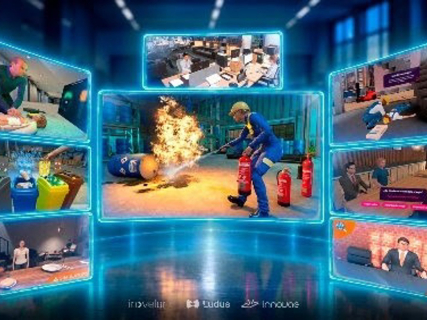

Telefónica Educación Digital, the unit of Telefónica España specialized in training and development of digital skills in the corporate environment, will lead the technological modernization of more than 2,811 Vocational Training (FP) centers in Spain over the next four years.
As the company has communicated, this division will take on the design, implementation, and launch of educational content associated with simulators and digital twins. These solutions allow for the recreation of real work contexts through immersive and virtual reality technologies, bringing students closer to situations typical of professional day-to-day life.
The purpose of this program is to adjust the training of students to the current demands of the productive fabric, incorporating the most cutting-edge practical tools on the market. With this, it is expected to reach up to 1.2 million FP students distributed throughout Spain.
The plan will prioritize the reinforcement of key transversal skills in the current labor market. Among the contents that will be worked on are workplace safety, prevention of occupational risks, occupational health, sustainability, employability, inclusion, and the strengthening of language skills.
The project includes more than 157,000 initial licenses, expandable by another 12,000, in addition to a welcome pack for each simulator, which includes the software, manuals, and necessary educational materials. The simulators have been developed in collaboration with Ludus, a startup from the Wayra ecosystem —the corporate venture capital arm of Telefónica—, along with manufacturers Innovae and Invelon, Spanish companies specialized in virtual reality (VR) and digital twins. These solutions are ready to operate on standard equipment, including VR devices already available in other centers.
Among the functionalities of these applications, direct interaction with virtual scenarios, the recording of user actions, the issuance of immediate feedback, and the option to keep a usage history stand out. Likewise, the simulators connect to a centralized platform of the Ministry of Education, Vocational Training, and Sports, from which licenses will be managed and distributed under a concurrent model or simultaneous use by multiple users. This platform also includes support services, maintenance, and continuous updates until the year 2030.
"At Telefónica, we want to be more innovative and competitive to solve the needs posed by companies and administrations and provide them with more and better services. The simulators help students learn protocols, make decisions, and face risk scenarios through safe virtual environments," says the CEO of Telefónica Educación Digital, Rosalía O'Donnell Baeza.
As she has highlighted, "these solutions promote experience-based learning in which guided training, autonomous practice, and objective performance evaluation are combined."