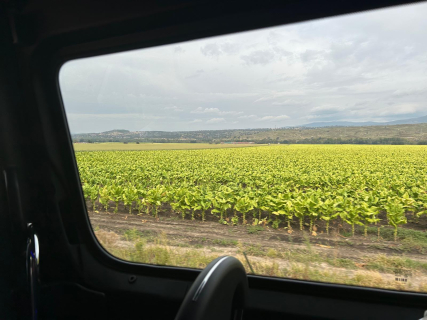
The countryside attracts young people again: the Extremaduran model that turns tobacco into industry, employment, and roots

The incorporation of young farmers, the technification of the farms, and the development of auxiliary companies are expanding job opportunities in La Vera and Campo Arañuelo.

7 minutes

PM plantacion tabaco

PM plantacion tabaco

Add DEMÓCRATA to Google

Ask FREN

Published

7 minutes

Most read

DEMÓCRATA travels through the north of Cáceres collecting the testimony of farmers, cooperators, entrepreneurs, and mayors who describe how tobacco cultivation generates work throughout the year, incorporates women, and attracts immigrant workers who end up settling in the region.

Young people are returning to the countryside in La Vera and Campo Arañuelo. Some are starting their own farms; others are taking over family operations and are betting on incorporating technology to manage the crop. Around them, agricultural activity supports cooperatives, auxiliary companies, and industrial centers that expand employment options beyond farm tasks.

DEMÓCRATA has traveled to the north of Cáceres at the beginning of autumn to learn about this reality on the ground. The visit, carried out in partnership with Philip Morris, has allowed for a tour of the different phases of the activity: from the Jarcha farm, where a digital grower explains the process from planting to harvesting and the transfer of the leaf to the drying center, to the cooperative COOLOSAR, the facilities of CETARSA and the municipalities of Losar de la Vera and Talayuela de la Vera.

Farmers, business leaders, cooperators, workers, and the mayors of both municipalities, Antonio Sánchez Díaz and Roberto Baños, respectively, agree in pointing out the incorporation of young people, the technological advancement of farms, and the development of activities linked to cultivation.

They also describe a labor structure that employs women and immigrant workers and that, in some cases, allows the latter to settle in the region.
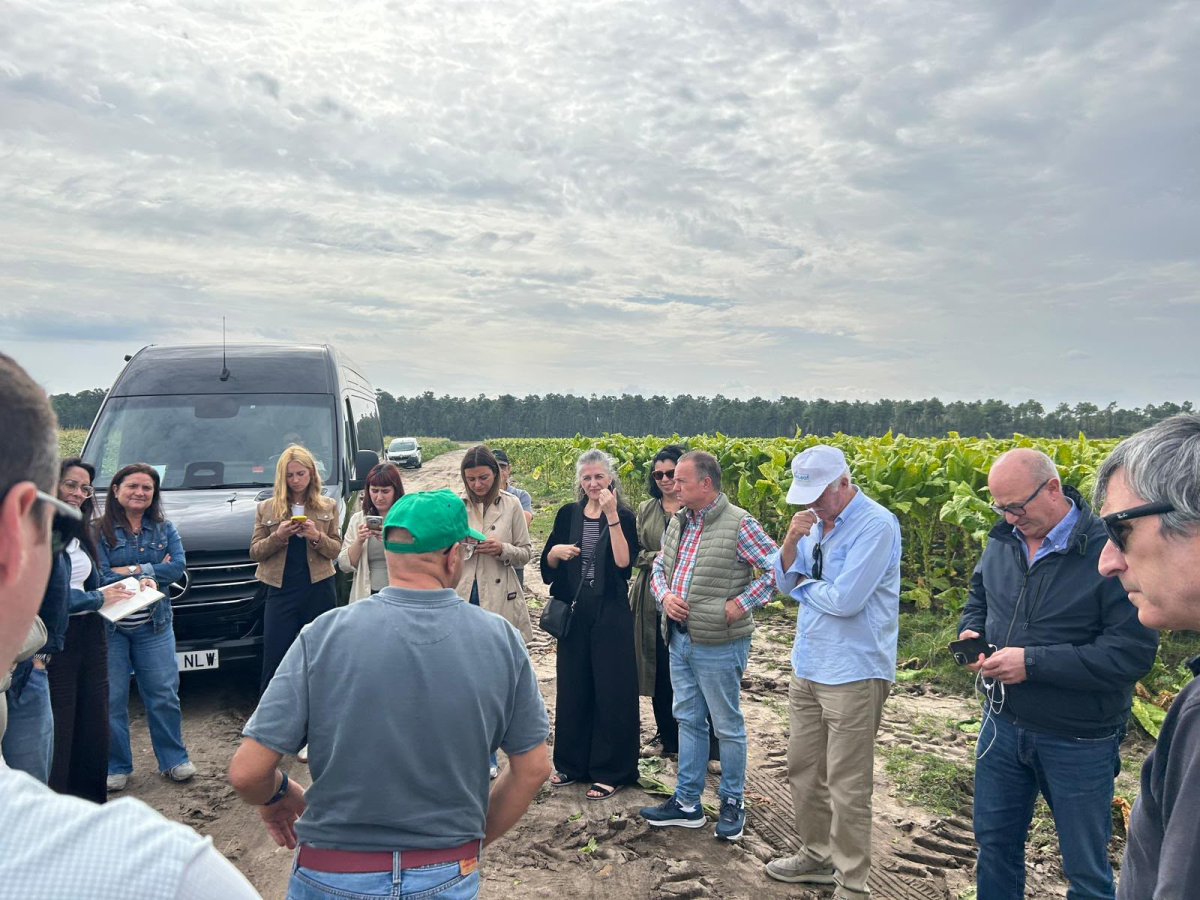
PM visita a la finca la jarcha
Visit to the tobacco production farm, Jarcha. Photo: DEMÓCRATA. 

Jarcha: technology at the service of cultivation

The first stop is the Jarcha farm. There, a digital grower shows how work is carried out on a tobacco farm and how the different phases of cultivation unfold until the leaf reaches the drying center. The activity requires planning, agronomic knowledge, investment in machinery, and monitoring the needs of the plant.

Technology is incorporated into this work to facilitate decision-making and improve the management of the farm. The program Digital Growers, driven by Philip Morris Spain in collaboration with the Scientific and Technological Research Center of Extremadura (CICYTEX), seeks to bring digital tools closer to farmers and study in which tasks they can be useful.

The project started in January 2026 and held its first session in Talayuela on the 15th of that month, with the participation of more than 40 growers. In an initial diagnosis of 45 farms, 91% identified irrigation and fertilization as areas where technology could add value.

The data reflects the needs detected by the participants, not an improvement in results already demonstrated.

The experience of Jarcha allows us to observe how these tools are incorporated into an activity that still depends on agronomic knowledge and daily work. The management of a farm increasingly demands planning and the ability to use information in decisions about the crop.

COOLOSAR: a cooperative that diversifies its activity

In Losar de la Vera, COOLOSAR shows another dimension of the economy linked to the field. The cooperative is not limited to drying tobacco: it has extended its activity to cheese production, fertilizers, and agricultural supplies, in addition to having a gas station and its own financing line.

Its Quesucos Veratos have received numerous recognitions in specialized competitions, including an award in the "Alimentos de España Mejores Quesos" and several distinctions in Gourmetquesos.

The cooperative also has its own financing line supported by contributions from its members. The cooperators thus contribute to the resources of an entity that provides services linked to agricultural activity and develops other businesses in the region.

At the head of COOLOSAR is Feli Zabala Zabala, managing director. The entity brings together activities ranging from tobacco drying to food production and the supply of products for the field. This diversification extends its activity beyond a single phase of cultivation and maintains services related to agriculture in Losar de la Vera.
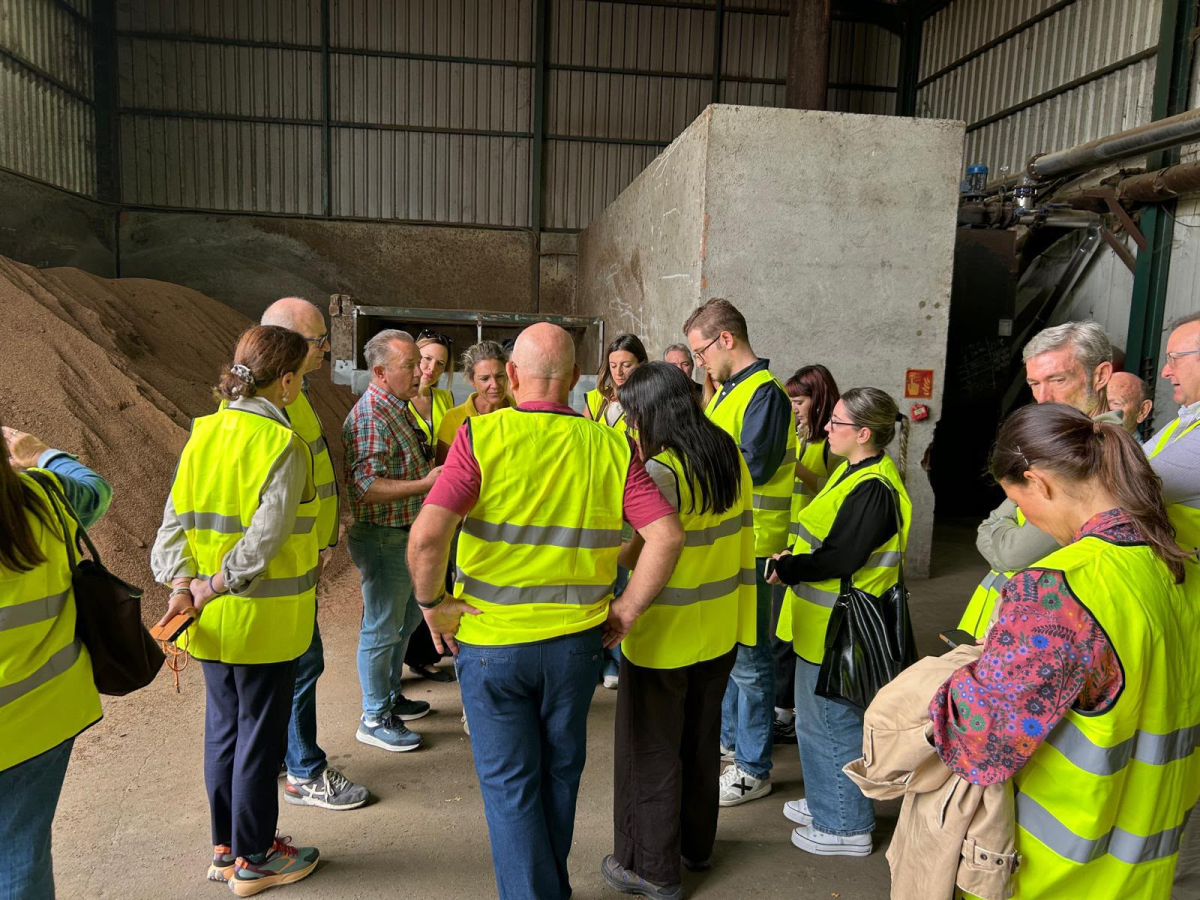
PM visits the COOLOSAR cooperative
Visit to the COOLOSAR cooperative, in Losar de la Vera (Cáceres). Photo: DEMÓCRATA.

CETARSA: the link with the industry

The tour continues at the CETARSA facilities, with a presence in Navalmoral de la Mata and Talayuela. The company buys, ferments, and processes raw tobacco, and constitutes one of the main links between growers and the transforming industry.

The connection between the farms, the drying centers, the cooperatives, and the industrial facilities explains the diversity of jobs associated with the sector. Alongside those who cultivate and handle the leaf, the chain needs transportation, supplies, maintenance, and technical services.

The president of CETARSA, Juan Andrés Tovar, represents the perspective of an activity that depends on agricultural production and requires facilities, organization, and capacity to respond to the needs of the industry. The leaf grown in the Extremadura farms goes through different phases before being incorporated into the transformation processes.

This continuity between field and industry expands the labor scope of the crop. Employment is not concentrated solely in the farms, but is distributed among the different activities involved in the production chain.
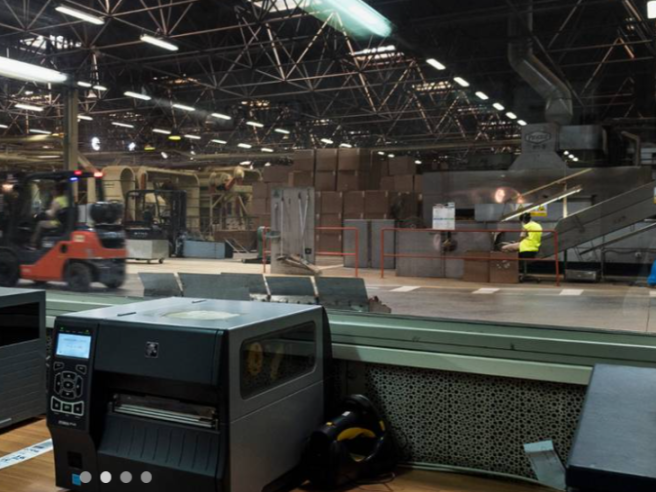
Captura de pantalla 2026 10 10 165321
Interior of CETARSA. Photo: CETARSA.

The crop in the Extremadura economy

The economic weight of tobacco in northern Cáceres goes beyond the value of the harvest. Extremadura concentrates nearly 99% of the crop in Spain and 74% of its production is destined for export, with sales abroad of around 70 million euros annually.

According to the Afi report for the Tobacco Table, the crop and the first transformation generate 69 million euros of direct added value and a total economic impact of 126 million, including indirect and induced activity. The chain supports nearly 2,000 full-time equivalent jobs and around 20,000 families, according to sector estimates.

Employment also presents particular traits: in 2024, two out of three workers in the crop in Extremadura had permanent contracts and the average contribution base was around 24,000 euros annually.

These figures help explain the territorial dimension of an activity that connects the farms with the cooperatives, suppliers, and the transforming industry, and that concentrates in regions like La Vera and Campo Arañuelo a good part of its economic impact. 


Young people, women, and immigration: employment in the region

The incorporation of young people into the farms is one of the changes highlighted by the interlocutors consulted by DEMÓCRATA. The new growers are starting farms or modernizing existing ones, with investments in machinery and management tools. Technification is part of an activity that requires agronomic knowledge and planning.

Employment linked to tobacco also reaches other professional profiles. The testimonies collected during the visit describe the presence of women in tasks related to cultivation and industrial activity, as well as the participation of immigrant workers in the local economy.

In Talayuela, the arrival of foreign population is linked, among other factors, to job opportunities. The mayor, Roberto Baños, has referred to the presence of Moroccan population in the municipality and also to their weight in some educational centers. Part of the workers who arrive to join the labor market end up residing in the locality.

In Losar de la Vera, Mayor Antonio Sánchez Díaz knows the importance of agricultural activity and the services associated with cultivation in the life of the municipality. Together with Talayuela, the locality is part of a territory where farms, cooperatives, and processing companies maintain a direct relationship with employment.

The interlocutors consulted describe an activity that offers work in different phases of the year and that is not limited to the cultivation season. The continuity of agricultural tasks, drying, transformation, and auxiliary services allows for different occupations within the same production chain.

PM roberto baños alcalde de talayuela
Roberto Baños, mayor of Talayuela de la Vera, talking to the media. Photo: DEMÓCRATA. 

Philip Morris and the transformation of the tobacco industry

The journey takes place at a time of change for the tobacco industry. Philip Morris is redirecting part of its business towards new generation products, including devices that heat tobacco instead of burning it. This industrial evolution coexists with an agricultural chain that still requires raw materials, quality controls, and processes adapted to the specifications of each destination.

The company has been continuously buying tobacco leaf in Extremadura since 1992. It has also developed initiatives aimed at farmers, including the Entrepreneur Program. Digital Growers, thus joining that relationship with the aim of exploring the use of technological tools in the farms.

Although the evolution of the industry has modified the needs for production and processing, the connection between the growers and the later phases of the chain is maintained. The quality of the leaf, its traceability, and the adaptation to industrial requirements are part of that process in which this company works.

A chain that starts in the land

La Vera and Campo Arañuelo bring together the different pieces of an activity that connects agriculture, cooperativism, industrial transformation, and services. Jarcha shows the incorporation of digital tools into the farm; COOLOSAR combines the drying of tobacco with cheese production and other businesses; and CETARSA processes the leaf before its industrial destination.

The testimonies collected by DEMÓCRATA link that activity with the incorporation of young farmers, the modernization of the farms, female employment, and the arrival of immigrant workers who settle in the area. Around the crop, a network of companies and services develops that extends economic activity beyond work in the field.

In the north of Cáceres, tobacco is part of a productive structure that links the farms with cooperatives and industry. Its activity is reflected both in the farms and in the companies and municipalities that participate in the different phases of the chain.


More key points, information and questions with FREN

AI-GENERATED CONTENT

What is the current stage of processing for specific public aid for young farmers in Extremadura?

In Extremadura, specific aid for young farmers is currently mainly supported by two major regional lines regulated by Decree 169/2024, of December 30, and the income supplement for young farmers under the CAP. According to the available official information, the structural regional aids are in the open call phase until December 31, 2026, while the annual CAP deadlines are processed through specific campaigns, whose application periods for 2025 and 2026/27 have already taken place.

1. Regional establishment and modernization aids (Decree 169/2024)

The Junta of Extremadura has established a specific regime for generational renewal through Decree 169/2024, of December 30, which sets the regulatory bases and the first call for two types of aid:

  • Aid for the establishment of young farmers.
  • Aid for investments in modernization and/or improvement of agricultural holdings carried out by young farmers.

The decree and its call extracts were published in the DOE No. 13, of January 21, 2025, where the first call for both lines (bases and joint call) was made. The design itself foresees that the call will remain open for two calendar years, and the administrative sheet of the Junta sets the application period between January 22, 2025, and December 31, 2026.

Consequently, as of today:

  • The establishment line is formally open, in the phase of receiving and processing applications until 12/31/2026, unless the credit is exhausted or the regulation is modified.
  • The modernization/improvement line is in the same situation: active call with an open deadline until 12/31/2026.

Meanwhile, the files submitted in 2025 are already progressing administratively: the Official Journal of Extremadura has been publishing announcements of rectification, hearing procedures, and modification and increase of credit, indicating that many individual applications are in evaluation and resolution proposal phases, not just in registration.

The regulation and its developments establish, among other substantive elements:

  • For the establishment aid, a basic premium of €20,000 per young person, with increases depending on the business plan and other circumstances, up to a maximum of €70,000 per beneficiary.
  • For the modernization aids, a total allocation of about €22 million, intended for investments in buildings, renewable energies, new plantations, machinery, etc.
  • The possibility to apply for both aids simultaneously within the same 2024‑2027 framework, co-financed by FEADER, the Ministry of Agriculture, and the Junta itself.

These lines depend on the Department of Agriculture, Livestock and Sustainable Development of the Junta of Extremadura, which is responsible both for issuing the bases and for resolving the calls. The Government Council agreement approving the decree and the first call is detailed in the agreements of December 30, 2024, accessible through the Junta's portal (Government Council agreements) and the DOE itself (Decree 169/2024 in the DOE).

2. Income supplement for young farmers in the CAP

In addition to these specific subsidies, young farmers in Extremadura have the complementary CAP aid for young farmers, granted via single application. This aid:

  • Is part of the direct aid block of the CAP Strategic Plan 2023‑2027.
  • Is processed annually through the regional call for the single application, which Extremadura has approved for the 2025 and 2026/27 campaigns.
  • Had, for the 2026/27 campaign, an extended submission deadline until mid-May, as published in the DOE and reported by the Demócrata newspaper, after the Junta extended the initial period due to difficulties caused by rains.

From a processing point of view, the single application window for each campaign closes on the established dates (for example, around May 15–31, 2026). Once the deadline closes, applications move to control, calculation, and payment phases (advances, main payments, and, if applicable, regularizations), including those associated with the complementary aid for young farmers and ranchers.

In recent news, the Junta has highlighted that young holders are being significantly included in CAP advances and payments, both in the 2025 campaign advances and in the payment of the National Reserve of rights, where young people concentrate a large part of the allocation.

3. Complementary financial instruments

In addition to non-repayable subsidies, the Junta is implementing a centralized management financial instrument (in collaboration with financial entities and SAECA) to facilitate loans to new farmers and modernization projects, with amounts ranging from €10,000 to €300,000 for incorporations, and up to €600,000 for certain investments. This instrument does not replace direct aid but complements it in the financing structure of young holdings.

In summary, two levels can be distinguished today: on one hand, the specific regional establishment and improvement aids that are in the open call phase until 12/31/2026, with individual files already in evaluation and resolution; on the other hand, the complementary CAP aid for young people, processed campaign by campaign through the single application, whose annual deadlines are concentrated in spring and have been extended occasionally.

Can you detail the requirements and selection criteria to access the young farmers' establishment aid provided in Decree 169/2024 in Extremadura? What specific investments are considered subsidizable in the modernization and improvement line for young farmers' holdings in Extremadura? How is the regional establishment aid coordinated with the CAP income supplement for young farmers in terms of compatibility and aid limits?

What are the competencies and political trajectory of Antonio Sánchez Díaz and Roberto Baños as mayors?

These are not two equivalent profiles: there is public information about Antonio Sánchez Díaz as a mayor in Spain, while a “Roberto Baños” mayor does not appear identified in the consulted sources with a specific mayoral position. Below I clearly differentiate both cases.

Antonio Sánchez Díaz

According to information available in municipal sources, Antonio Sánchez Díaz is mayor-president of Losar de la Vera, in the province of Cáceres (Extremadura), and belongs to the People's Party (PP). In the local government structure, he is expressly listed as the highest authority of the City Council and as a councilor with delegated management areas.

His competencies and responsibilities can be grouped into two areas:

  • General functions of the Mayor-Presidency, typical of any Spanish mayor:
    • Represent the City Council and the municipality before other administrations and the public.
    • Lead the municipal government and administration, setting political and management priorities.
    • Call and preside over sessions of the Plenary and the Local Government Board, managing debates and executing their agreements.
    • Exercise the superior leadership of municipal staff and City Council services, within the framework of local regime legislation.
    • Make executive decisions in matters legally attributed directly to the Mayor's office (contracting within certain limits, ordinary budget management, security and emergencies, etc.).
  • Specific delegated areas in the government of Losar de la Vera, which he personally assumes:
    • Economy and Finance: preparation and monitoring of the municipal budget, treasury supervision, control of income and expenses, promotion of tax ordinances and fees, and generally the orientation of the City Council's economic policy.
    • Citizen Security: coordination of municipal policies on security, civil protection, and emergencies, as well as relations with the Local Police or other competent services within the municipality.

Regarding his political trajectory, the open sources consulted allow us to affirm with certainty:

  • That his reference municipality is Losar de la Vera (Cáceres), where he serves as Mayor.
  • That his political affiliation is with the People's Party.
  • That his profile is clearly linked to the municipal sphere, combining overall political leadership of the City Council with direct responsibility over the Economy and Finance and Citizen Security areas.

However, the available sources do not systematically detail his prior career (exact years of each term, possible stages as councilor before becoming mayor, or positions in other institutions). Beyond confirming that he is currently mayor-president and delegated councilor of those areas, a long political biography cannot be rigorously reconstructed without risking confusion with namesakes.

Roberto Baños

In the case of Roberto Baños, research in institutional records, public office databases, official bulletins, and press has not allowed locating a mayor in Spain with that name whose identity, municipality, party, and trajectory can be reliably linked.

The results that appear when searching for “Roberto Baños” mainly refer to:

  • People with other surnames or different positions (for example, regional officials or technicians without a mayoral role).
  • Mentions of the term “baños” in the common sense of bathing facilities or waters, unrelated to a surname.
  • Latin American or local contexts without clear connection to Spanish municipal politics.

Consequently:

  • No specific municipality has been identified where Roberto Baños is or has been mayor.
  • No record in the consulted sources of his political party, nor whether he has actually held a mayoralty.
  • A prior political trajectory (previous positions, re-elections, progression through other government levels) cannot be reconstructed with minimum certainty.

Only generically can it be recalled that, in Spain, mayors exercise the competencies established by the Law regulating the bases of the local regime and regional regulations: municipal government leadership, City Council representation, promotion and execution of plenary agreements, budget management, and coordination of services such as urban planning, basic services, or local security. But these general functions cannot be specifically attributed to a “Roberto Baños” until we know precisely which municipality or country is involved.

To provide a complete and comparable profile to that of Antonio Sánchez Díaz, it would be necessary at least to know the municipality, the province, or some documentary reference where “Roberto Baños” appears as mayor.

Can you detail the composition and main government lines of the Losar de la Vera City Council during Antonio Sánchez Díaz's mayoralty? What does the Law on the Bases of Local Regime say about the competencies of mayors and how are they applied in practice in small municipalities like Losar de la Vera? If I provide the exact municipality, could you try to reconstruct again the political trajectory of Roberto Baños and his responsibilities as mayor?

What legal requirements must agricultural cooperatives meet to diversify their activity in Spain?

In Spain, an agricultural cooperative can diversify its activity considerably (services to members, agro-food processing, commerce, rural tourism, etc.), but it must comply with a legal framework formed by basic state regulations and, above all, by the Cooperative Law of its autonomous community, as well as the specific sectoral regulations of each new business line.

As a state reference, notable are the Law 27/1999, on Cooperatives (for cooperatives of state scope), Law 20/1990, on the tax regime of cooperatives, and agrarian and food chain regulations (Law 30/2022 on CAP management, Law 13/2013 on promotion of cooperative integration, Law 12/2013 and its reform of the food chain, Law 49/2003 on rural leases, etc.). Many communities have approved their own cooperative laws (for example, Catalonia, Valencian Community, Madrid, Castilla-La Mancha, Euskadi, Canary Islands, Balearic Islands, Asturias, etc.), which are usually applied to agricultural cooperatives located in their territory.

1. Fitting diversification into the social purpose and sections

The key legal step is that the new activities fall within the cooperative social purpose established by the applicable law and the statutes:

  • Cooperative legislation allows agricultural cooperatives to develop, in addition to production and marketing, preparatory, complementary, or subordinate activities: services to farms, agro-food processing, logistics, joint marketing, supplies, etc.
  • Many laws contemplate the creation of sections within the cooperative (for example, supply section, processing section, credit section, services section, rural tourism section), with differentiated internal accounting.
  • Law 27/1999 and autonomous laws usually set limits on activity with non-member third parties and on “non-cooperative” results, to preserve the mutualist character. Activities clearly unrelated to the cooperative purpose are only admissible to the extent and with the quantitative limits set by each law.
2. Statutory reform and internal agreements

It will almost always be necessary to adapt the internal organization:

  • Modify statutes to:
    • Expand or specify the social purpose and the cooperativized activities.
    • Create new sections (for example, processing or rural tourism), regulating their economic regime and member participation.
    • Adjust rules on contributions, cooperative returns, mandatory funds, or collaborator member regimes if third-party investors are involved.
  • Statutory modification must be approved by the General Assembly with the reinforced majority required by law (on statute modification) and following the formal requirements of call, quorum, and documentation established by Law 27/1999 or the autonomous law and the statutes themselves.
  • Additionally, the Governing Council must approve the development agreements: launching the section, budgets, hiring staff, investing in assets, financing (issuance of special shares or participative titles, partnership accounts, etc.) according to cooperative and commercial legislation.
3. Registry inscription and formal obligations

All statutory changes and, if applicable, the creation of relevant sections must be reflected in the competent Cooperative Registry (state or autonomous):

  • Grant public deed of statutory modification before a notary.
  • Submit the deed for registry inscription (without registration, the modification does not fully take effect against third parties).
  • Comply with the keeping and, if applicable, electronic legalization of cooperative books, according to state legislation on registries and the specific Cooperative Registry regulations.
  • Maintain separate accounting of cooperative and non-cooperative results and, if applicable, by sections, as provided by Law 27/1999 and autonomous laws, subsequently affecting surpluses to reserves and mandatory funds (mandatory reserve fund and education and promotion fund).
4. Sectoral regulations and specific authorizations

Besides cooperative law, each new business line must comply with the rules of the corresponding sector:

  • Agro-food processing: food safety regulations, sanitary registration, traceability, labeling, hygiene of facilities, environment (waste, discharges, emissions), agro-food industry.
  • Rural tourism and wine tourism: autonomous regulations on rural tourism and accommodation, establishment classification, opening licenses, accessibility and safety requirements, specific agrotourism regulations where applicable.
  • Industrial or energy services and activities (dryers, biogas plants, photovoltaic, etc.): urban planning licenses, environmental authorizations, industry, energy, occupational risk prevention.
  • Lease of farms or facilities: compliance with Law 49/2003 on Rural Leases, existing contracts, and rules on use and community exploitation of land.
5. Tax, agrarian, and aid aspects

Diversification affects the cooperative tax regime (Law 20/1990) and the classification of the cooperative as specially protected, which depends on maintaining the proportions of cooperative activity and treatment of members and third parties. It may also affect:

  • Access to CAP aids and subsidies for integration and agro-food modernization, which refer to Law 13/2013 and state royal decrees on aid to associative entities.
  • Compatibility with autonomous programs promoting agro-food cooperativism, which often require that the main activity remains agricultural and cooperativized.

In practice, the reasonable path is: prior analysis of fit within the autonomous cooperative law, technical drafting of the statutory reform (social purpose, sections, and economic regime), approval in Assembly and registration, and, in parallel, processing all necessary sectoral licenses. A specialist advisor in agricultural cooperatives helps adjust diversification to avoid risking cooperative status or tax and aid benefits.

Play

Test your knowledge with FREN!

How much do you know about this topic? Answer the following 3 questions.

What percentage of tobacco cultivation in Spain is concentrated in Extremadura?

Question 1 of 3

Who is the managing director of the COOLOSAR cooperative?

Question 2 of 3

What characteristic stands out about employment in the tobacco sector in Extremadura in 2024?

Question 3 of 3