

When the teams from the different ministries travel to Brussels within the framework of the Council of the Union meetings, they are aware that it will not be a quiet few days on their agenda. On the agenda, they string together bilateral meetings, working lunches, coordination meetings, and the sessions with the Twenty-Seven themselves. This Monday, the Member States met to assess the role of youth in the development of community policies.
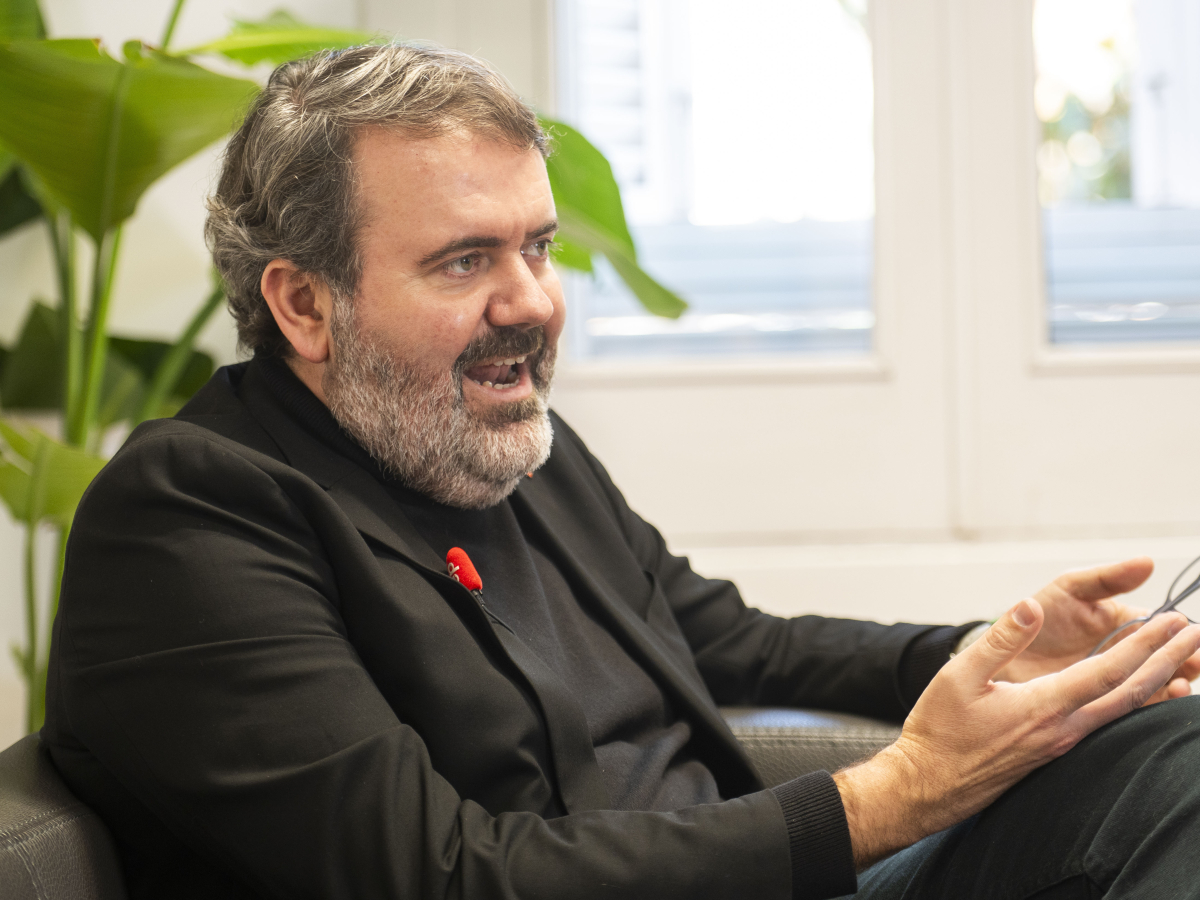
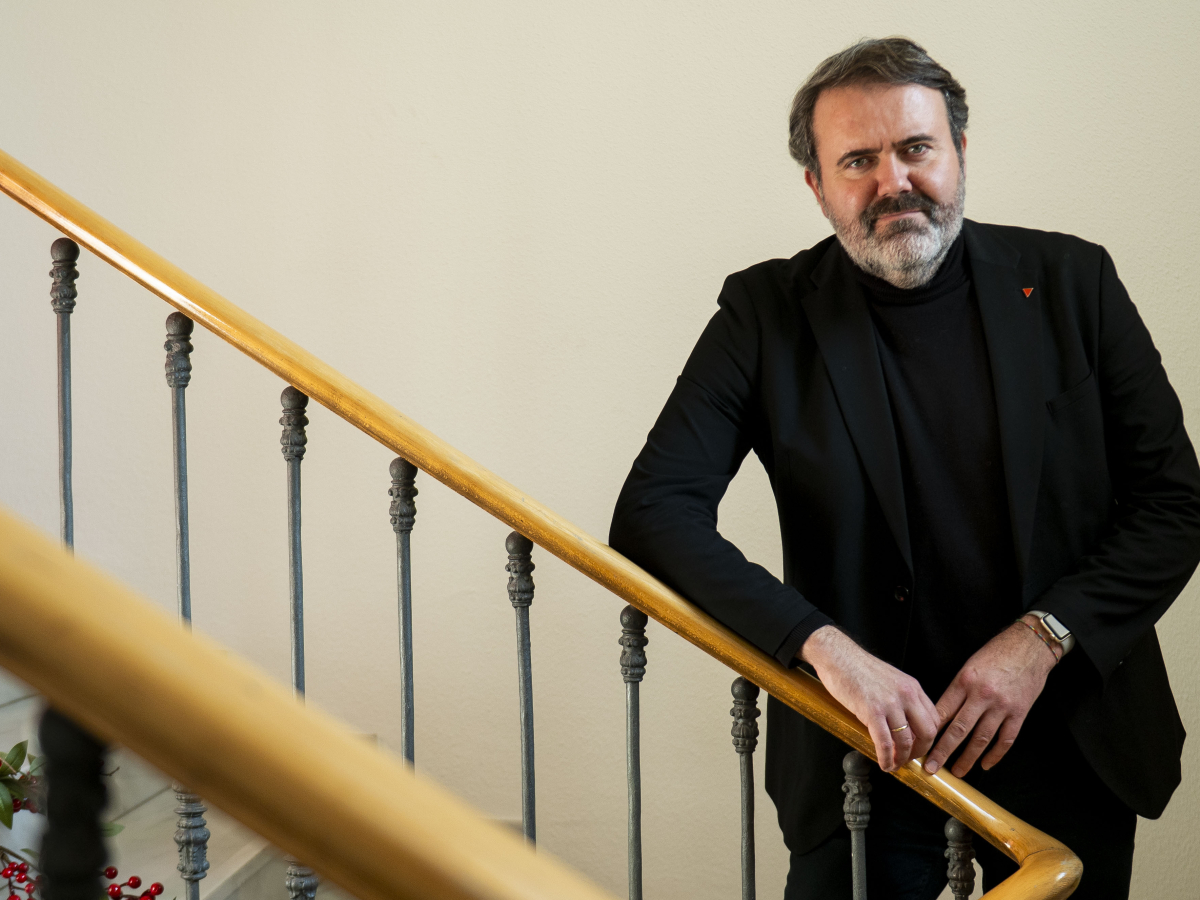
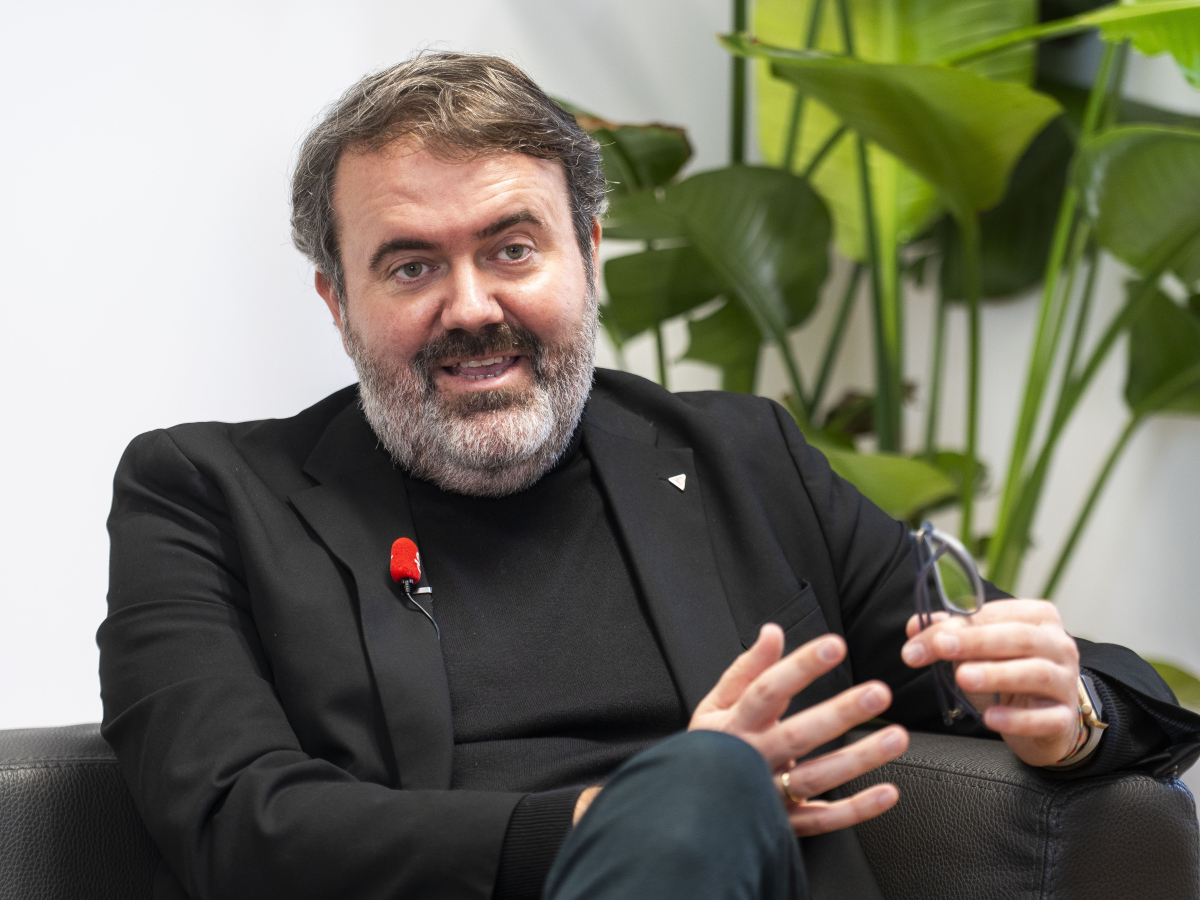
On the sidelines of these meetings, and in one of the rooms available at the Permanent Representation of Spain to the European Union, the Secretary of State for Youth and Childhood, Rubén Pérez (1977), reserves a moment to talk with Demócrata about one of the key initiatives that his department will promote during this legislature. The Government has just approved the reform of the Organic Law for the Comprehensive Protection of Children and Adolescents against Violence, often known as LOPIVI.
Pérez defends the timing of its processing, considering it necessary to develop in depth figures such as the “well-being coordinator in educational centers”, in a context in which Brussels wants to place youth at the center of its offensive against big tech companies. “Europe is taking Spain as a reference in digital protection of minors,” he states.
Question: Why do you consider it necessary to reform a law that dates from 2021 now?
Answer: The LOPIVI was born with very important prior consensus. There was a lot of work from civil society, which was the one that promoted the law. From there, there was a very deep awareness of the need to change the legislative framework.
It is precisely the actors who participated in the drafting of the LOPIVI — the associative fabric, the child protection organizations — who are now telling us: “Let's take advantage of the fact that the law is already in place, that we still have time to correct some aspects and to seal certain loopholes that remained in the first text.”
For example, the LOPIVI already spoke in its original wording of avoiding the use of the so-called parental alienation syndrome. However, in practice we continued to see judicial rulings that, without expressly mentioning SAP, reproduced the same arguments exactly: the supposed influence of the mother on the minors or the manipulation of the children in separation processes. We understood that this had to be reviewed and left much more closed.
We also saw it as necessary to reinforce the entire part related to child protection within the protection systems, especially the residential sphere, the so-called minors' centers, in a context also very marked by the reality of migrant children.
There are aspects that are already fully implemented and others that still require a path, such as the figure of the well-being coordinator in educational centers. We consulted again to incorporate issues now that probably should have already been in the first text.
Question: Do you think that judicial inertia still exists in Spain that could be harming children?
Answer: Without a doubt. I believe we still need to raise awareness among a significant part of the judicial system. There are judges who take for granted that they will not hear the minor. Others do so because the law obliges them or because there is pressure from the parties in a divorce proceeding, but that hearing often becomes a mere formality, with no real consequences in the final decision.
And listening to the minor is one of the fundamental rights that we want to put back on the table. It is included in the Convention on the Rights of the Child and is part of the recommendations of the United Nations.
Featured story
The Government could approve this Tuesday the reform of the law for the protection of children
2 minutes
Furthermore, we cannot continue to use the “maturity of the minor” as an immobile concept for twenty years. Society and the educational system have changed. Today a 12-year-old minor enters secondary education. We have to review many commonplaces about maturity and understand that listening to the minor is not something improvised, but a regulated and guaranteeing procedure.
In the case of LOPIVI, for example, the Barnahus model in sexual violence processes establishes very defined and very safe listening mechanisms for the minor. We believe that it is a good time to empower children in the defense of their rights when they suffer violence.
Question: You want to eliminate the 12-year limit, but, I imagine, it won't be the same to hear a teenager as a three-year-old child.
Answer: Of course, evidently not. What we defend is that the listening process be adapted to each age group.
Today there are legal, educational, and social mechanisms to also listen to very young children. We, for example, spoke in the reform of the LOPIVI of incorporating specific protocols in the educational stage from 0 to 3 years. Because situations of violence against children can also occur in those environments.
A small child may not verbalize the same way as an adolescent, but they can express themselves through drawing, play, or other mechanisms. And that can also provide very valuable information.
That is why the reform incorporates a very important training component for all professionals involved in proceedings with minors: judges, lawyers, prosecutors, social workers, and administrative staff. The key is to have adequate listening tools.
Question: And how is it guaranteed that this listening is effective and not merely symbolic?
Answer: That is precisely one of the big debates. The reform affects not only the LOPIVI, but also articles of the Law of Civil Procedure, the Penal Code, and other judicial norms.
We want to accompany those changes with the creation of specialized childhood sections in the courts. For us, that is nuclear: to build a judicial system much more adapted to childhood and its specific needs.
Question: You have mentioned SAP before. Is there any monitoring system contemplated to detect resolutions that continue to use it?
Answer: Yes. The reform itself contemplates the nullity of those judicial resolutions or actions that continue to be based on approaches linked to the SAP, even if they are formulated with other expressions.
Question: Does the Government engage in self-criticism regarding the failures of the child protection system in recent years?
Answer: We have carried out the largest prevalence survey of violence against children in Spain since the nineties. More than 14,000 adults were interviewed, and finally, about 10,000 valid interviews remained. More than 33% of minors had suffered some type of violence during their childhood.
I believe that all administrations must make a collective mea culpa. We have been a country too permeable to violence against children and we have normalized behaviors that are violence: not feeding a child properly, not taking care of them, psychological violence, physical violence, or sexual violence.
Now, I also believe that Spain is one of the countries that has advanced the most legislatively in this matter. We have done so with the LOPIVI, but also with initiatives such as the law on digital environments and minors or the future development of the law on vicarious violence. We have a very solid legal corpus, but we need to reform all sectors that interact with children.
Question: What changes do you consider a priority in the educational field?
Answer: The figure of the well-being coordinator is key, but right now it is not working the same way in the 17 educational systems.
In many cases, a teacher who already has a teaching load, tutoring, and other responsibilities is appointed as coordinator. That doesn't work. The well-being coordinator needs their own time and resources to build mechanisms for coexistence and violence prevention within the centers. There is still a lot of dialogue with the autonomous communities on this matter.
Question: You have also spoken about vicarious violence. At what point is that debate within the Government?
Answer: Several ministries have worked together: Justice, Equality, and Social Rights. Each brought a different perspective.
Equality focused on violence against women and its impact on children; we wanted to especially reinforce the position of the minor as a direct victim.
Because many times vicarious violence is presented only as an annex to gender violence, but when you focus on the minor, you understand that perhaps visits, overnight stays, or any contact with a parent reported for gender violence must be immediately suspended. A large part of the most serious cases we are seeing had clear precedents of violence against the mother.
Question: Do you expect parliamentary consensus for these reforms?
Answer: I think so. Even on very complex issues like the digital environments law, we have seen considerable consensus. The only group that presented a total amendment was Vox, and even then they acknowledged in their reasoning that the text protected children. On issues such as sexual violence, school bullying, or the digital protection of minors, there is a fairly cross-cutting shared concern.
Question: Here in Brussels, the protection of minors on social networks has become a growing priority for the European Commission. Spain is also promoting measures in that direction. How is that coordination between Madrid and Brussels going?
Answer: Very good. We are the first country that already submitted a year and a bit ago a draft bill, now a bill, on digital environments and minors. The European feedback was very good. Europe also wanted to regulate some things. For example, we wanted to regulate the area of online gambling and even gambling on console platforms, the issue of loot boxes.
We included in the text the regulation to avoid, because it is a very tempting formula for entry into pathological gambling for many minors, these loot boxes that operate in games. We have even met with operators like Epic Games, because Fortnite uses them as an element of attraction, even if there is no direct economic transaction.
And the European return was good because they also wanted to regulate that within the framework of age verification and identification of people who access that type of game. Practically, the text returned with some recommendations that had more to do with the already regulated European framework, the DSA and other European directives. And I believe that Europe has taken Spain as a benchmark country in this, in opening up debates.
Because the debate of minors yes or no in digital environments Spain has already been discussing it since the beginning of the legislature, since 2023.
Question: One of the central points is to raise the minimum age to access social networks to 16 years. Why do you consider that change important?
Answer: Because, among other things, our law raises to 16 years the possibility of opening a social network in your name.
In Spain, 14 years is already the age at which a minor can transfer their data to a private operator. And social networks are not NGOs or charities, they are private operators. Therefore, what we are doing is raising it to 16. No minor can open a WhatsApp account or a Facebook account or any platform because they are transferring their data at the moment they accept the terms.
That is already agreed and worked on in the law, including with the Commission and with the Spanish Data Protection Agency.
Question: And what remains pending to put that system into operation?
Answer: Europe is telling us to have a regulatory body. We think it could be the National Markets and Competition Commission.
Spain had three axes. One was the law on digital environments and minors itself. Another was the report by the committee of 50 experts who drew up recommendations for all public administrations. And a third factor was an age verification tool that we had already been working on with the Spanish Data Protection Agency.
Then the Ministry of Digital Transformation also appeared and work began on the European framework to make a joint proposal. The Spanish idea, along with that of other countries, has borne fruit in a European proposal.
For us, it is perfectly fine as long as we have an age verification tool. Everyone says: "That won't solve the problem because VPNs exist." Well, the problem is that right now we have nothing more than pressing a button and saying you are 18 years old. I think it is very positive that Europe has agreed on the same tool and has used the work of several countries.
Question: What can Spain contribute to the rest of Europe with this legislation?
Answer: I believe that the group of European countries are working on this.
Recently, in Malta, within the framework of the Lanzarote Convention against violence, we had Secretaries of State and ministers from different countries and the discussion was exactly where to regulate: if at 14, 15 or 16 years old.
All countries are approaching a common position. Recently we were also talking with Andorra because they want to regulate OnlyFans, which for us is a serious problem, because we understand that it is a platform of procuration sold and hidden as a platform of free access.
France also wants to regulate and has produced expert reports on the impact on young people's mental health. We are in very similar processes to arrive at the same idea: 16 years as the age limit for both data transfer and access to certain networks.
Question: You have been especially critical of technology platforms. Do you think the sector is trying to evade responsibilities?
Response: Of course. Because for a long time the position was: “The best way to avoid problems is for minors not to enter”.
And Mark Zuckerberg said that in an absolutely crooked way in the Los Angeles trial: “My platform does not allow minors to enter. If they enter, it is their responsibility and that of their parents.” That hand-washing from the sector is no good. The sector often prefers the discourse of “under 16s off the networks” because it knows they will continue to enter and thus no one forces them to change their platforms.
Featured story
Europe places digital violence at the center of its new offensive for gender equality
5 minutes
Question: So, what is the approach that Spain advocates?
Answer: We do not want that.
If they tell us that WhatsApp today is an element of socialization for young people and children, and that the classroom WhatsApp group regulates classroom life, then we will have to assume that reality. The one who is not on WhatsApp does not find out about homework or activities.
And many parents tell us: “I use WhatsApp to give my son autonomy; to know when he arrives at school or when he returns home”. Of course, WhatsApp responds: “No, minors cannot be on my network”. But they know they keep entering.
So, why don't we do the same and create an app tailored for under-16s? An app where the father, mother, or legal guardian can regulate which adults the minor talks to or control certain content.
That is changing the prism. Because if the prism is simply prohibiting before 16 years of age, exactly the same thing will continue to happen.
We have the example of Australia. It has been an implementation failure. Seven out of ten minors are still on social networks and what has been generated are false identities and new networks. Here we are talking about assuming that if the real world has minors, the digital world must also have minors. And if the real world is adapted to protect them, the digital world must also be regulated in the same way.
Featured story
Goodbye to lying about age on the internet: Europe activates its definitive solution
5 minutes
Question: Do you perceive that Europe is beginning to share that vision?
Answer: Yes. I believe there is already a certain consensus. There will be very important conferences this week in Barcelona on digital rights. And we are no longer just talking about prohibition, we are talking about digital rights, digital protection, and precautions.
That is a very interesting advance that Europe has also managed to agree on with resolutions and agreements from the European Parliament. And furthermore, this debate is already extending even beyond the European sphere.
In the previous meetings of the upcoming Ibero-American Summit, raising the debate on digital environments and minors as one of the summit's topics is being considered. When you talk to other countries, you realize that the problems are exactly the same. There is no difference between Europe and Latin America in this. We are facing the same debate.
Brussels Democrat
"Off the record"
While debates on technological sovereignty, artificial intelligence, and digital regulation multiply in Brussels, the Spanish government wants to put another discussion on the European table: how to protect a generation that has grown up within screens. Rubén Pérez leaves the Permanent Representation's meeting room with the feeling that the debate has already changed phase. It is no longer solely about prohibiting or limiting, but about deciding what responsibilities technology platforms will assume for millions of minors who, whether authorized or not, are already part of the digital ecosystem.
The reform of the LOPIVI and the future law on digital environments precisely reflect this paradigm shift: moving from a reactive model to a preventive one, where childhood ceases to be an invisible actor both in courts and on the internet. The Executive is aware that the battle will be long and will clash with the resistance of a sector accustomed to operating under its own rules. "The sector does not want to adapt its applications to the digital access of minors," summarizes Pérez during the conversation.
But in the community corridors, the debate no longer seems marginal. Spain has managed to place itself at the center of a discussion that affects all of Europe and is also beginning to extend to Latin America: how to guarantee rights, safety, and protection in a digital space originally designed for adults. The question that hangs over Brussels is no longer whether minors are on social networks, but under what rules they will continue to be.