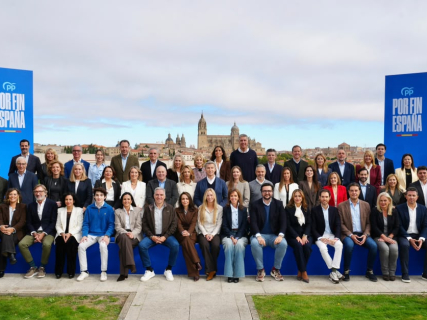
Feijóo rushes the closure of the PP lists for the 29N: these are the 52 heads of candidacy

Feijóo presented in Salamanca the heads of the lists for Congress for the 29N, while the leadership of the PP finalizes this Monday the collection of signatures from the rest of the candidates throughout Spain.

WhatsApp Image 2026 10 25 at 11.15.05

WhatsApp Image 2026 10 25 at 11.15.05

Add DEMÓCRATA to Google

Ask FREN

Published

Last updated

4 minutes

Most read

Elecciones 29N · Encuestas

La media de las encuestas

Media a 26 de octubre de 2026 · 15 institutos

  • PP31,2 %
  • PSOE27,1 %
  • Vox18,8 %
  • Sumar6,4 %
  • Podemos3,1 %
  • ERC2,3 %
010203040ene 2024jul 2024ene 2025jul 2025ene 2026jul 2026

Media del último estudio de cada instituto en 30 días y su evolución semanal desde el 23J. Partidos con al menos un 2 %.

Todas las encuestas

Elecciones generales del 29 de noviembre · Demócrata

The PP faces the last hours to register its candidacies for the 29N with Alberto Núñez Feijóo as the head of the list for Madrid and a renewal of 31 of the 52 number ones compared to the general elections of 2023. The published polls place the popular party as the first force in the elections on the upcoming November 29, although the final distribution of seats and the composition of the future Congress remain open.

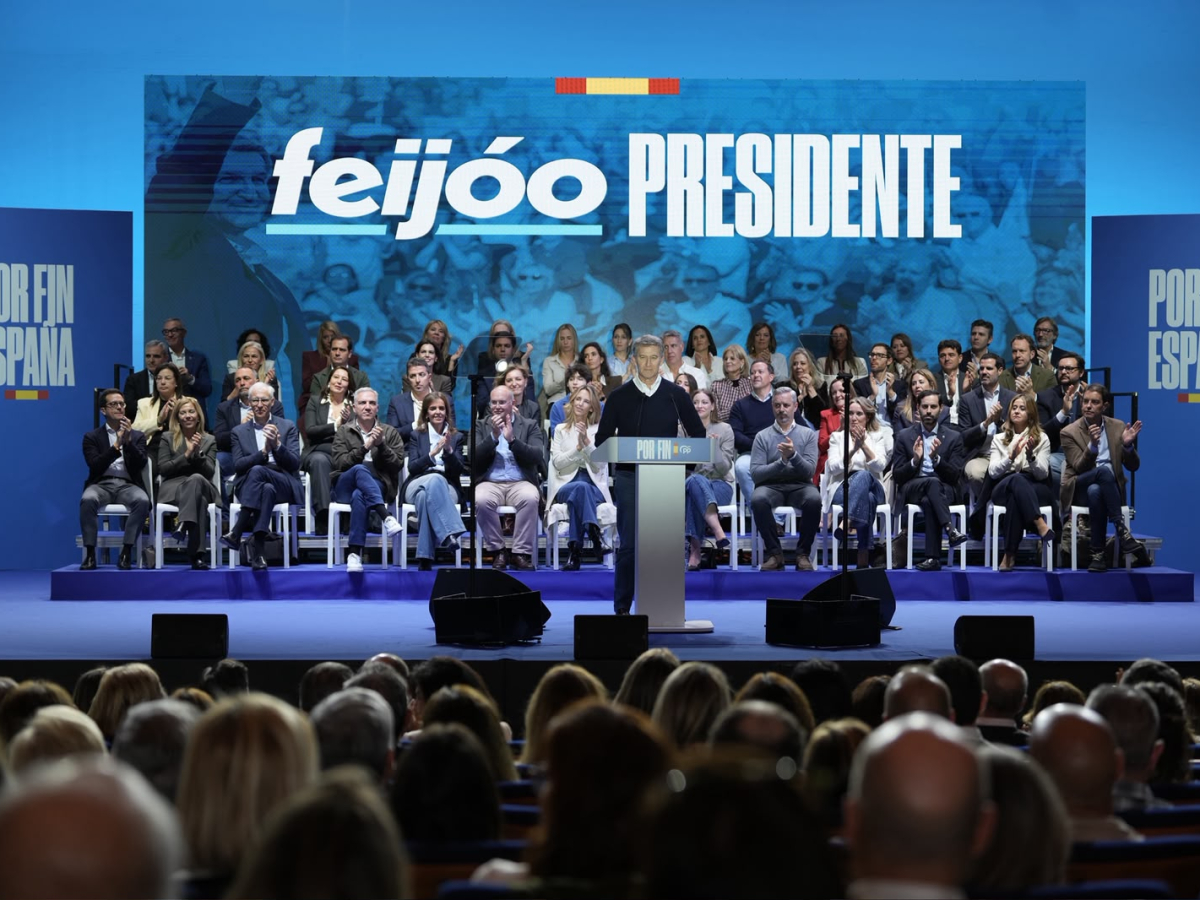
Feijóo presented on Sunday in Salamanca the heads of the list for the 52 electoral constituencies. The event, held alongside the president of Castilla y León, Alfonso Fernández Mañueco, served to stage a renewal that reaches nearly 60% of the candidacies and combines national leaders, regional officials, and representatives from the municipal sphere.

The deadline to register the lists before the provincial electoral boards ends this Monday at midnight. The popular leadership gathers at 11:00 the leaders who still need to resolve the last details of their candidacies, on a day when Madrid concentrates part of the attention due to the uncertainty about the top positions.
WhatsApp Image 2026 10 25 at 13.21.34
Feijóo, at the presentation of the heads of the list for the 52 constituencies. Photo: Tarek.

The 52 heads of the list of the PP for the 29N

The PP maintains 21 heads of the list compared to the elections of 2023 and changes 31. The renewal reaches nearly six out of ten candidacies and has a special impact in Catalonia, the Basque Country, Andalusia, and the Valencian Community.

The list of candidates announced by the party is distributed by constituencies as follows:

Andalusia

  • Almería: Carmen Crespo.

  • Cádiz: María José García-Pelayo.

  • Córdoba: Lorena Guerra.

  • Granada: Jorge Saavedra.

  • Huelva: Pilar Miranda.

  • Jaén: Luis Mariano Camacho.

  • Málaga: Elías Bendodo.

  • Sevilla: Juan Bravo.

Aragón

  • Huesca: Ana Alós.

  • Teruel: Alberto Herrero.

  • Zaragoza: Rocío Dívar.

Asturias and Cantabria

  • Asturias: Ángela Pumariega.

  • Cantabria: Isabel Urrutia.

Balearic Islands and Canary Islands

  • Balearic Islands: José Vicente Marí.

  • Las Palmas: Sergio Ramos.

  • Santa Cruz de Tenerife: Gustavo González de Vega.

Castilla-La Mancha

  • Albacete: Francisco Navarro.

  • Ciudad Real: Carmen Fúnez.

  • Cuenca: Raquel Oliver.

  • Guadalajara: Itziar Asenjo.

  • Toledo: Carlos Velázquez.

Castilla y León

  • Ávila: Héctor Palencia.

  • Burgos: Ángel Ibáñez.

  • León: Ester Muñoz.

  • Palencia: Milagros Marcos.

  • Salamanca: Carmen Seguín Kattán.

  • Segovia: Pablo Pérez.

  • Soria: Tomás Cabezón.

  • Valladolid: María Pardo.

  • Zamora: Montserrat Chimeno.

Catalonia

  • Barcelona: Xavier García Albiol.

  • Girona: Diana Moya.

  • Lleida: Roger Melero.

  • Tarragona: Mónica Landete.

Valencian Community

  • Alicante: Macarena Montesinos.

  • Castellón: Elena Albalat.

  • Valencia: María José Catalá.

Extremadura

  • Badajoz: Teresa Tortonda.

  • Cáceres: Cristina Teniente.

Galicia

  • A Coruña: Miguel Tellado.

  • Lugo: Francisco Conde.

  • Ourense: Ana Vázquez.

  • Pontevedra: Julio García Comesaña.

Madrid and Murcia

  • Madrid: Alberto Núñez Feijóo.

  • Murcia: Mirian Guardiola.

Navarra

  • Navarra: the candidacy is presented in coalition with UPN, with Leticia San Martín and Sergio Sayas in the top positions.

Basque Country

  • Álava: Iñaki Oyarzábal.

  • Bizkaia: Esther Martínez.

  • Gipuzkoa: Jon Echeverría.

La Rioja, Ceuta and Melilla

  • La Rioja: Cuca Gamarra.

  • Ceuta: Rafael Martínez-Peñalver.

  • Melilla: Sofía Acedo.

A renewal close to 60%, with municipal and autonomous weight

The renewal of 31 heads of list responds to a combination of territorial changes and changes in the composition of the candidacies. The PP incorporates mayors, councilors, and regional leaders, with the intention of giving prominence to profiles with management experience.

Among the most visible incorporations are María José Catalá, mayor of Valencia; Xavier García Albiol, mayor of Badalona; and Ángela Pumariega, deputy mayor of Gijón and Olympic sailing champion. New names also enter in the four Catalan provinces and in the three constituencies of the Basque Country.

In Galicia, the general secretary of the PP, Miguel Tellado, will head the list for A Coruña, while Francisco Conde will do so for Lugo, Ana Vázquez for Ourense, and Julio García Comesaña for Pontevedra. In Andalusia, the only heads of list that repeat from 2023 are Elías Bendodo, for Málaga, and Juan Bravo, for Sevilla.

The renewal also reaches Castilla-La Mancha, where Carmen Fúnez repeats for Ciudad Real and Carlos Velázquez joins for Toledo, Francisco Navarro for Albacete, Raquel Oliver for Cuenca, and Itziar Asenjo for Guadalajara. In Extremadura, Cristina Teniente maintains the first position for Cáceres and Teresa Tortonda will head the candidacy for Badajoz.
Madrid, the unknown about the starting positions

Madrid is one of the main focal points of attention in the closing of the lists. Feijóo will again head the candidacy, but the order of the top positions and the real possibilities of obtaining a seat keep the interest in the final composition of the ballot.

In 2023, the PP obtained 15 deputies in the Madrid constituency, with position 14 as a reference to delimit the starting positions. For the 29N, that cutoff is up in the air, according to some polls, in a scenario where the distribution of votes among PP, Vox, and the rest of the parties can modify the allocation of seats.

Among the names that will accompany Feijóo are Cayetana Álvarez de Toledo, Borja Sémper and Alma Ezcurra. The placement of candidates in the top positions is relevant to determine their chances of entering Congress, although the final number of deputies that each party will obtain will not be known until the electoral count.

The published polls place the PP as the leading force ahead of the general elections. In any case, the result will also depend on the provincial distribution of seats and the support that the parties can gather after November 29.

The closure of the candidacies this Monday will allow knowing the final composition of the lists presented by the PP. The candidacies must be published in the Official State Bulletin and then go through the proclamation process provided in the electoral calendar.

In addition, this Monday or early Tuesday, the scope of the agreement between PP and Vox to go together to the Senate will be known.

More key points, information and questions with FREN

AI-GENERATED CONTENT

What parliamentary procedures and deadlines remain for the final proclamation of the candidacies presented for November 29?

To reach the final proclamation of the candidacies for November 29, no parliamentary procedures remain: the process corresponds to the Electoral Administration and, if there are challenges, to the courts. It is necessary to distinguish the publication of the candidacies presented, their proclamation by the electoral boards, and the resolution of possible appeals. The initial publication does not mean that all lists have been definitively admitted.

1. Publication and review of candidacies

In general elections, candidacies for the Congress and the Senate are submitted to the Provincial Electoral Boards. The legal calendar takes as reference the days following the call, not the voting day: submission is made between the fifteenth and twentieth days after the call.

The candidacies presented are published on the twenty-second day after the call. This publication allows knowing the lists and their members, but does not constitute a "provisional proclamation" in the strict sense. It is still necessary to verify if they meet the required conditions and to correct any rectifiable irregularities.

2. Notification of defects and correction

Two days after that publication, the competent boards notify the representatives of the candidacies of the irregularities detected ex officio or reported by other representatives. The candidacies then have 48 hours to correct them.

This phase is decisive: it allows correcting defects before the proclamation is decided. It does not imply opening a new general deadline to submit candidacies nor unlimited freedom to redo them. Constitutional jurisprudence emphasizes that the opportunity to correct rectifiable irregularities must be offered before excluding a candidacy; this is reflected in Judgment 103/2007.

3. Proclamation and official publication

The Provincial Electoral Boards proclaim the candidacies on the twenty-seventh day after the call. It is not appropriate to proclaim those that do not meet legal requirements and have not corrected their defects when they should have.

The proclaimed candidacies are published on the twenty-eighth day. This is the administrative milestone of reference, but there may still be changes resulting from a judicial challenge. Therefore, it is advisable to distinguish between a candidacy already proclaimed and one whose proclamation has become final after all appeals have been exhausted.

4. Judicial appeals and possible constitutional protection

From the proclamation, excluded candidates and representatives of proclaimed candidacies or those whose proclamation has been denied have two days to appeal before the Contentious-Administrative Court. The appeal must include the relevant allegations and evidence; the court must resolve within another two days.

The judicial resolution is final and unappealable in the ordinary route. However, constitutional protection can be requested before the Constitutional Court within the following two days, and it must resolve within three days. Not all candidacies go through this phase: only those whose proclamation or exclusion is challenged.

5. What this means for November 29

The Congress and the Senate do not vote on or ratify the lists. The Central Electoral Board performs general functions of electoral direction and interpretation but does not replace the provincial proclamation nor the specific judicial appeal. The Electoral Census Office also does not proclaim candidacies.

Electoral deadlines are non-extendable and are counted in calendar days. To convert these milestones into specific dates for November 29, it is necessary to verify the official call date and its electoral calendar, which have not been established in the sources consulted. The remaining sequence is, in any case: review, correction, proclamation, publication, and, when applicable, appeals and constitutional protection.

What are Alberto Núñez Feijóo's competencies and political trajectory within the People's Party and Spanish politics?

Alberto Núñez Feijóo has been president of the People's Party since April 2, 2022 and is the main opposition leader to the Government of Spain. His trajectory combines administrative management, leadership of state public services, and thirteen years at the head of the Xunta of Galicia. To understand his competencies, it is useful to separate his responsibilities within the party from the executive powers he exercised previously.

Responsibilities within the People's Party

As national president, he exercises the political representation of the PP, guides its strategy, and coordinates its main leaders. His role includes promoting territorial organization, establishing electoral priorities, and politically directing parliamentary action. These responsibilities correspond to party leadership, not to the direction of the State Administration (official PP profile).

  • Political leadership: sets the general orientation and coordinates the national team, territorial leaders, and institutional representatives.
  • Organization and teams: promotes appointments and distributes responsibilities among his collaborators. The 2025 reorganization placed Miguel Tellado in the General Secretariat and Ester Muñoz as spokesperson in Congress (leadership team).
  • Electoral strategy: leads the candidacy for the Presidency of the Government and organizes the campaign. For the November 29, 2026 general elections, he appointed Tellado as campaign chief (campaign leadership).

From civil servant to state manager

Born in Os Peares, Ourense, on September 10, 1961, he graduated in Law from the University of Santiago de Compostela and joined the senior corps of the Galician Administration in 1985. During the 1990s, he held responsibilities in Agriculture and in the autonomous health administration (trajectory in the Xunta).

Between 1996 and 2000, he was Secretary General of Health Assistance at the Ministry of Health and president of Insalud. Later, he directed Correos from 2000 to 2003. These stages gave him experience in managing large organizations and state public services (profile in Demócrata).

Political consolidation in Galicia

He returned to the Xunta in 2003 as Minister of Territorial Policy, Public Works, and Housing, under President Manuel Fraga. In 2004, he also assumed the First Vice Presidency. After the autonomous government change in 2005, he moved to the opposition; in 2006, he succeeded Fraga as head of the Galician PP (Galician presidencies).

He presided over the Xunta from April 2009 to May 2022, supported by four consecutive absolute majorities: 2009, 2012, 2016, and 2020. As regional president, he led the Galician Government, coordinated the ministries, and institutionally represented Galicia. His government managed areas such as health, education, social services, infrastructure, and territorial policy (political career).

National projection and limits of his powers

In 2022, he left the Xunta to replace Pablo Casado as national president of the PP and was appointed senator for Galicia. In 2023, he obtained a seat for Madrid. Although the PP won the most seats in those general elections, Feijóo did not gather the necessary support to be invested president of the Government (parliamentary profile).

His national role consists of overseeing the Executive, promoting alternatives, and negotiating political support. Leading the opposition does not grant him governmental powers: he does not direct ministries nor execute state budgets. His trajectory is thus distinguished by the transition from autonomous executive management to leading a national government alternative.

How many deputies did the PP obtain in each constituency in the last general elections held in Spain?

The last general elections held in Spain were on July 23, 2023. In them, the People's Party obtained 137 deputies in the Congress. However, the territorial breakdown found contains inconsistencies, so it would not be correct to present it as a complete and verified list of the seats obtained in each constituency.

The official reference to answer your question is the agreement of the Central Electoral Board published in the Official State Gazette, which records the results of the elections to the Congress and the Senate of July 23, 2023. That publication must prevail over any journalistic summary or compilation that does not match it.

What I can confirm and what requires correction
  • Date of the elections: July 23, 2023. These are the elections referred to in your question, not a later call.
  • National result of the PP: 137 deputies. This is the total figure that should result from adding the seats of all its territorial candidacies.
  • Scope of the question: the Congress of Deputies. Senate results should not be mixed with this distribution.
  • Necessary breakdown: 52 constituencies, corresponding to the 50 provinces and the autonomous cities of Ceuta and Melilla.
  • Detected problem: the located territorial list omits A Coruña and does not allow reconstructing the national total coherently.
  • Another caution: Bizkaia and Vizcaya are names for the same constituency; they should not be counted as two different territories.
Why I do not reproduce that distribution as definitive

Your question requires a specific figure for each territory. In this case, offering an apparently complete list but with a missing province or with amounts that do not add up to 137 deputies could lead you to use incorrect results. It is not enough that the national total is correct: each provincial figure must also be correct.

For that reason, I do not assign a number to A Coruña nor consider the other territorial summary values as verified. It would also not be valid to obtain the result for the missing province by subtracting from the national total: that procedure would only work if all other data were previously verified, which is not established here.

The distinction is important if you need the results for a report, territorial comparison, or calculation of variations between elections. An error of a single seat alters both the result of the affected constituency and any subsequent grouping by autonomous communities. A duplicated name can also make a list appear complete when another territory is actually missing.

Reference to obtain the exact distribution

The official results agreement is therefore the reference you should use for the provincial detail. To answer exactly what you ask, you must take in each constituency the number of deputies elected from the PP candidacy and then verify that the total sums 137.

In conclusion: I can confirm the election date and the national result, but not rigorously provide the 52 territorial figures from the located breakdown. I prefer to expressly point out this inconsistency rather than give you a list of numbers that seems definitive and is not properly verified.

Play

Test your knowledge with FREN!

How much do you know about this topic? Answer the following 3 questions.

Who leads the Popular Party list for Madrid in the November 29 elections?

Question 1 of 3

What approximate percentage of the PP list leaders for November 29 have been renewed compared to 2023?

Question 2 of 3

In which autonomous communities has the renewal of PP list leaders for November 29 had the greatest impact?

Question 3 of 3