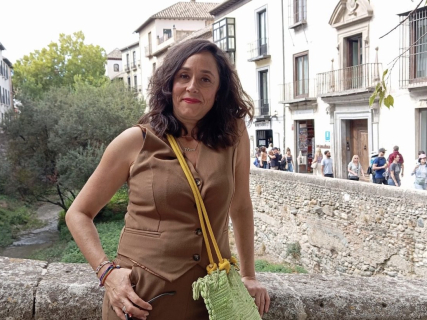
List of Frente Amplio for Huelva for the 29N: Rebeca Martín to Congress and Mónica Rossi to the Senate

The coalition bets on a militant from Izquierda Unida to head its candidacy for Congress, while the councilor from Con Andalucía will run for the Senate on a joint list with the PSOE.

fotonoticia 20261026163222 1920

fotonoticia 20261026163222 1920

Add DEMÓCRATA to Google

Ask FREN

Published

Last updated

3 minutes

Most read

Elecciones 29N · Encuestas

La media de las encuestas

Media a 26 de octubre de 2026 · 15 institutos

  • PP31,0 %
  • PSOE27,3 %
  • Vox18,9 %
  • Sumar6,4 %
  • Podemos2,9 %
  • ERC2,3 %
010203040ene 2024jul 2024ene 2025jul 2025ene 2026jul 2026

Media del último estudio de cada instituto en 30 días y su evolución semanal desde el 23J. Partidos con al menos un 2 %.

Todas las encuestas

Elecciones generales del 29 de noviembre · Demócrata

Frente Amplio has chosen Rebeca Martín Sánchez as the head of the list for the Congress of Deputies for Huelva for the general elections on the upcoming November 29. The coalition has also confirmed that Mónica Rossi, current councilor of Con Andalucía in the Huelva City Council, will be its representative in the joint candidacy for the Senate with the PSOE, called Senate of Progress.

The formation thus presents two candidacies with different trajectories. Martín, a Secondary Education teacher and a member of Izquierda Unida, will lead a list that groups five political organizations, while Rossi will make the leap to national politics after announcing that she will not run again in the municipal elections of 2027.

Who is Rebeca Martín, Frente Amplio candidate for Congress for Huelva

Rebeca Martín Sánchez, 47 years old, was born in Cortegana and has lived for years in the Andévalo onubense region. A Secondary Education teacher and linked to the field of social education, she has developed her career in the associative movement and in initiatives related to coexistence, citizen participation, and the defense of social rights.

A member of Izquierda Unida, a republican and advocate for a secular society, Martín believes that citizen participation is "an essential tool to advance towards a fairer, more equal, and democratic society." Her political proposal involves strengthening the involvement of citizens in public decisions, both at the municipal level and in state institutions.

The candidate also argues that social transformation must be driven by citizen organizations and by the institutions themselves. Under the premise that "to transform society, one must also govern", she aims to bring the main demands of the province of Huelva to Congress.

What parties make up the Frente Amplio list for Huelva

The candidacy for Congress that Rebeca Martín will lead will include representatives from Izquierda Unida, Verdes Equo, Iniciativa del Pueblo Andaluz, Somos Valverde, and Sumar, according to the coalition's communication.

The confluence brings together different left-wing organizations that will run under the initials of Frente Amplio with the aim of obtaining parliamentary representation in the elections on November 29.

Among the political priorities that the coalition has identified for Huelva are the strengthening of public services, job creation, access to housing, equality, environmental sustainability, and territorial cohesion.

For the moment, Frente Amplio has confirmed the name of its head of the list, but has not provided the complete order of the candidates that will accompany Martín on the ballot for Congress for the province.

Mónica Rossi will be a candidate for the Senate on the joint list with the PSOE

Mónica Rossi, current councilor of Con Andalucía in the Huelva City Council, will be the representative of Frente Amplio in the Senate of Progress, the joint candidacy promoted with the PSOE after the agreement reached between both political forces for the general elections.

A social worker by profession and a resident of the Huelva neighborhood of El Higueral, Rossi is also responsible for the Network of Activists and Feminism of Izquierda Unida in the province. Her political activity has been linked to neighborhood movements and institutional representation in the Huelva City Council.

Her incorporation into the Senate candidacy comes after she publicly announced her decision to not run again in the municipal elections of 2027, leaving behind her stage as a candidate in the local sphere to seek a seat in the Upper House.

The electoral agreement between PSOE and Frente Amplio responds to the intention to concentrate the vote of both formations in the Senate, where the majoritarian election system favors the candidacies with more support in each province.

The coalition has defended the need to achieve a parliamentary majority that avoids legislative blockages like those attributed to the PP and Vox during the past legislature.

Frente Amplio prepares for the general elections on November 29

The designation of Rebeca Martín for Congress and the incorporation of Mónica Rossi into the joint Senate candidacy are part of Frente Amplio's electoral strategy to strengthen the presence of leftist organizations in the Cortes Generales.

In Huelva, the coalition will run with its own candidacy for Congress, made up of different political formations, while for the Senate it will participate in an alliance with the PSOE.

With both decisions, Frente Amplio seeks to combine profiles coming from the associative movement and municipal politics to bring to the Cortes Generales the social, economic, and territorial demands of the province.

More key points, information and questions with FREN

AI-GENERATED CONTENT

What is the parliamentary status of the coalition agreement between PSOE and Frente Amplio for the Senate?

As of October 26, 2026, the agreement between PSOE and Frente Amplio for the Senate is not under parliamentary processing: it is an electoral coalition, called Senate of Progress, to run joint candidacies in the November 29 elections. The political pact is closed, but its electoral formalization and its possible consequences for the organization of the future Senate are different matters.

What has been agreed and at what stage it is

PSOE and Frente Amplio finalized the understanding on October 16, coinciding with the last day to communicate electoral coalitions. Its announced scope includes 47 constituencies, with participation from PSOE, Izquierda Unida, Movimiento Sumar, and Más Madrid, as well as territorial agreements with other organizations. This certifies an alliance to present candidacies, not the approval of an agreement by the Upper Chamber. (Demócrata, October 16).

The next step is the submission of the lists to the corresponding electoral boards, whose deadline ends on October 26. According to information published on the 23rd, the agreed distribution reserves approximately 70% of the positions for PSOE and 30% for Frente Amplio and its allies, while the socialists lead the provincial candidacies. This distribution is part of the electoral agreement, not a distribution of parliamentary positions. (Demócrata, October 23).

There are already territorial specifics: the joint candidacy for León has formalized its list before the Provincial Electoral Board, with Laura Fernández Bermejo in the second position. However, the presentation of a candidacy should not be confused with its official proclamation nor with obtaining seats. (Demócrata, October 26).

Why it does not have a parliamentary status

A pact to run in elections is not processed like a bill, a motion, or an initiative subject to Senate voting. Therefore, it should not be described as pending admission, debate, or parliamentary approval. Its immediate course takes place before the electoral administration.

Moreover, the Cortes have been dissolved since October 6. The electoral call recorded in Royal Decree 806/2026, of October 5, sets the elections on November 29 and the constitution of the new Chambers on December 23. Therefore, there is no new joint group constituted as a result of this pact. (Electoral call).

What implications it may have afterwards

The coalition does have a relevant parliamentary consequence after the elections. Demócrata reproduces article 27.3 of the Senate Regulations: "senators who have run in the elections as part of the same party, federation, coalition, or grouping may not form more than one parliamentary group." Sharing a coalition therefore conditions the possibility of forming separate groups for those elected under that formula. (Demócrata, October 20).

This does not mean that the group already exists nor that its name is formally decided. First, the elections must be held and the new Chamber constituted. The pact is limited to the Senate: PSOE and Frente Amplio maintain differentiated candidacies for the Congress. (Demócrata, October 23).

In summary: electoral agreement closed and candidacies in formalization; no parliamentary agreement pending approval nor joint group already constituted.

What are the main competencies of the Spanish Senate and what role do its members play?

The Senate is the Upper Chamber of the Cortes Generales and, together with the Congress of Deputies, exercises the legislative power of the State, controls the Government's actions, and participates in other constitutional functions. Although the Constitution defines it as a chamber of territorial representation, in practice it combines that function with that of a second chamber for reviewing laws.

Its main competencies can be grouped into several blocks:

1. Legislative and review function
  • Second reading chamber: Most laws are first processed in the Congress and, once approved, pass to the Senate. There, senators can debate them, present amendments to the articles, or propose a veto (global rejection of the project).
  • Amendments: If the Senate approves amendments, the text returns to the Congress, which ultimately decides whether to accept or reject them. In this way, the Senate acts as a chamber for technical and political review of the norms.
  • Legislative veto: The Senate can veto a bill, but the veto is not definitive: the Congress can override it by absolute majority (or by simple majority once a certain period has passed). The veto power is therefore a mechanism for delay and reflection, not permanent blockage.
  • Legislative initiative: The Senate can also initiate its own laws, although this is less frequent than in the Congress. In those cases, once the bill is approved in the Senate, it is sent to the Congress for processing.
2. Territorial representation
  • Mixed composition: The Senate is made up of senators directly elected by citizens in each province (and in the islands and autonomous cities, with specific rules) and senators appointed by the autonomous parliaments.
  • Voice of the autonomous communities: The presence of autonomous senators and the possibility that representatives of autonomous governments appear before Senate committees allow the territorial viewpoint to be present in debates, especially on matters affecting the distribution of competencies or autonomous financing.
  • Territorial debates: Although the Constitution conceives the Senate as the chamber of territorial representation, its current configuration makes this function limited. Still, it serves as a relevant forum to discuss autonomous issues and the territorial model.
3. Government control and political functions
  • Parliamentary control: The Senate can direct oral and written questions to the Government, request its presence in the Plenary or committees, and promote interpellations that lead to political debates about government action.
  • Motions and non-legislative proposals: Through these instruments, the Senate can urge the Government to adopt certain policies or express its position on current affairs, although without direct legal effect.
  • State of exception and siege: The Senate participates in authorizing or extending these exceptional states, which require reinforced parliamentary control.
  • Application of article 155 of the Constitution: It is the Senate's responsibility to authorize measures proposed by the Government when an autonomous community seriously breaches its constitutional or legal obligations, or acts in a way that seriously harms the general interest of Spain.
4. Other competencies
  • Participation in appointments: The Senate intervenes in the designation of some institutional positions (for example, magistrates of the Constitutional Court, members of other constitutional or statutory bodies), usually together with the Congress.
  • Investigation committees: Like the Congress, it can create committees to investigate matters of public interest, with the capacity to summon authorities and experts.
5. Role of the senators
  • Dual representation: Each senator represents the citizens who elect them or the autonomous parliament that appoints them, and at the same time participates in representing the entire State. Their role combines the general vision with the defense of specific territorial interests.
  • Work in Plenary and committees: Senators debate and vote in the Plenary on laws, motions, and general policy debates, and carry out more detailed work in committees, where legislative texts are analyzed, hearings are held, and amendments are negotiated.
  • Political and party function: Besides their institutional role, senators are part of parliamentary groups that articulate the parties' positions. They negotiate agreements, participate in political strategy, and serve as a link between the Senate and their parties at other levels (Congress, autonomous parliaments, autonomous or local governments).
  • Personal status: Senators enjoy certain guarantees (such as inviolability for opinions expressed in the exercise of their functions and immunity for certain criminal proceedings) and are subject to incompatibilities intended to ensure their dedication and avoid conflicts of interest.

Overall, the Spanish Senate fulfills the function of a second reading, control, and reflection chamber, with an explicit territorial component, and its members are responsible for channeling both the political representation of their parties and that of the territories to which they belong.

Can you explain in more detail how the Senate's veto works and how the Congress can override it? What practical difference is there between the functions of the Congress and those of the Senate in the law-making process? How exactly are senators elected in each type of territory (provinces, islands, and autonomous communities)?

What results did Izquierda Unida obtain in the last general elections in Huelva?

In the last general elections held, those of July 23, 2023, Izquierda Unida ran in Huelva as part of Sumar, not with an independent candidacy. That coalition obtained in the province 26,607 votes, 10.38%, and no seats in the Congress of Deputies. Therefore, the result to cite corresponds to Sumar, with the clarification that not all those votes can be attributed exclusively to IU (RTVE provincial results).

The result in the province

Taking "for Huelva" as a reference the provincial constituency, and not only the municipality of Huelva, the figures for the candidacy in which IU participated were as follows:

  • Candidacy: Sumar, a coalition that included Izquierda Unida.
  • Elections: general elections of July 23, 2023.
  • Votes obtained: 26,607.
  • Percentage: 10.38%.
  • Provincial position: fourth force.
  • Deputies obtained: none.

The candidacy therefore remained without representation from this constituency. The figures correspond to the entire province: they should not be confused with the results of the capital or a specific locality. You can consult the provincial breakdown at El Confidencial and at laSexta.

How the distribution of deputies was

Huelva elected five deputies to the Congress. The distribution was two seats for PP, two for PSOE, and one for Vox; Sumar did not get any (RTVE, Huelva results).

The important difference is that between obtaining votes and obtaining representation: the 26,607 supports for Sumar constituted its provincial electoral result, but did not translate into a deputy. Consequently, Izquierda Unida's participation in that coalition did not produce a seat for Huelva in those elections. The distribution of representatives can also be contrasted in the information from Onda Cero.

What it means to talk about IU's result

It is advisable to distinguish between the party and the electoral candidacy. IU was part of Sumar, so the published votes correspond to the joint candidacy. They are not a separate measurement of the support received by each of the organizations that made it up.

Therefore, saying "IU obtained 26,607 votes" without adding any explanation would be imprecise: it would present as the own vote of an organization what was the result of a coalition. The clearest formulation is: "Sumar, the candidacy in which Izquierda Unida was integrated, obtained in Huelva 26,607 votes, 10.38%, and no deputies."

This distinction also matters if you want to compare that result with other elections. To do so correctly, you must first identify with which candidacy IU ran in each call and maintain the same territorial scope. It would not be an equivalent comparison to face the provincial result of a coalition with the municipal result of a party.

In summary: IU participated in the 2023 general elections for Huelva within Sumar; the candidacy was the fourth force and remained without representation in the Congress. The essential figures are 26,607 votes, 10.38%, and zero seats. That is the joint result that answers your question, without confusing the coalition's support with votes counted separately for Izquierda Unida.

Play

Test your knowledge with FREN!

How much do you know about this topic? Answer the following 3 questions.

Who has been chosen as the lead candidate for Congress for Huelva in the Frente Amplio candidacy for the general elections on November 29?

Question 1 of 3

With which political formation is Mónica Rossi running for the Senate for Huelva?

Question 2 of 3

What are some of the political priorities identified by Frente Amplio for the province of Huelva?

Question 3 of 3