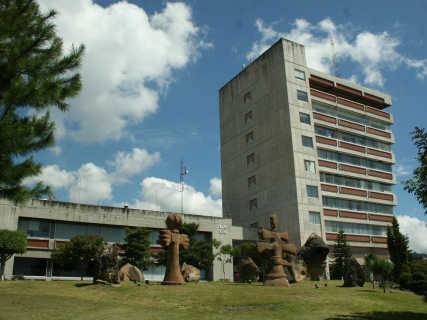
A 21-year-old Spanish student was murdered in Mexico during an exchange from the University of Granada in Morelos.

Claudia Tacoronte Aguilera was studying at the Autonomous University of the State of Morelos after being selected by the University of Granada for an exchange.

1 minute

morelos española asesinada

morelos española asesinada

Add DEMÓCRATA to Google

Ask FREN

Published

Last updated

1 minute

Most read

A 21-year-old Spanish student, Claudia Tacoronte Aguilera, has been murdered in the Mexican state of Morelos while participating in an academic exchange at the Universidad Autónoma del Estado de Morelos (UAEM). The young woman came from the Universidad de Granada (UGR), which had selected her for an exchange stay during the 2026/2027 academic year.

The events occurred on the night of Saturday, September 12, at the Casa de la Cultura de Cuautla, according to information released by the UAEM. The university has expressed its condolences to the family and has called for a thorough investigation to clarify what happened.

The Attorney General's Office of the State of Morelos has opened an investigation for femicide, following the protocol applied to violent deaths of women. The specific circumstances of the crime are still under investigation, and not all details about how the attack occurred have been publicly established yet.

The governor of Morelos, Margarita González Saravia, has confirmed the murder and has stated that the authorities are in contact with the Consulate of Spain to provide support to the young woman's family.

More key points, information and questions with FREN

AI-GENERATED CONTENT

What is the status of the investigation and what are the next legal steps following the opening of a femicide case in Mexico?

With the available information, it is not possible to know the specific status of “a” femicide investigation in Mexico without identifying the case (file, state, prosecutor's office, date, etc.). What can be explained is the typical circuit that a femicide case follows from the discovery of the body to a possible sentence, and what clues indicate whether the investigation is in an initial, advanced phase or already in trial.

1. What usually happens after the discovery of the body?

In a possible femicide scenario, the first steps usually are:

  • Police intervention at the crime scene: cordoning off the area, preserving evidence, taking photographs, locating possible witnesses, securing cameras and other records.
  • Body removal and autopsy: forensic services perform the necropsy to determine cause and manner of death, presence of sexual violence, time of death, etc. The cited news articles on femicides in the region emphasize that the autopsy and expert reports are “fundamental evidence” that are contrasted with other proceedings.
  • Opening or updating the investigation file at the competent Prosecutor's Office, under the figure of femicide when there are indications that the woman's death is linked to gender violence. The Public Ministry (prosecutor's office) formally directs these proceedings.
  • Investigation police intervention: search for the alleged aggressor (when not detained), reconstruction of the victim's route, analysis of phones, cameras, personal objects, etc.
  • Participation of expert services: forensic medicine, ballistics, genetics, electronic device analysis, reconstructions, etc., which help to confirm or discard hypotheses.

In parallel, the standards being promoted —such as those derived from the reform approved by the Mexican Senate to unify the crime of femicide throughout the country— insist that the investigation must be conducted with a gender perspective, homogeneous typification criteria, and coordination between the federation, states, and municipalities.

2. General phases of the criminal process applicable to femicide

Although each federal entity has its own criminal procedure code, and the future general femicide law seeks to harmonize criteria, the basic scheme described in accusatory systems in the region (and summarized by legal press for other countries) usually includes:

  • Initial investigation: covers from the report of the crime (complaint, discovery of the body, police report) until the prosecutor's office has a first set of data to decide whether to file a formal charge. This is the phase in which most material and testimonial evidence is collected.
  • Complementary investigation: if there is a person indicated or detained, evidence is deepened (more expert reports, statements, obtaining additional reports) with the aim of sustaining a solid accusation or discarding hypotheses. In practice, the fact that specific expert reports, new interviews, and technical analyses are being conducted usually indicates that the case is in an intermediate investigation phase.
  • Intermediate stage or trial preparation: evidence that may be presented at trial is refined and discussed before a judge, and the accusation is clearly defined. In other systems, this is described as an “accusation trial” prior to the oral trial, in which the judicial body decides if there is a basis to proceed to that final phase.
  • Oral trial: public hearing before a tribunal, in which the prosecution, defense, and, if applicable, private accusation present evidence and arguments. Witnesses, experts, and the accused person themselves are heard.
  • Sentence: the court may convict for femicide (with the penalties established by applicable legislation) or acquit. There may also be appeals against the sentence.

3. Rights of victims and their environment

The Mexican public discussion on femicides strongly emphasizes the need to combat institutional violence and “patriarchal justice” which, according to testimonies collected in the press, sometimes tends to criminalize victims instead of protecting them. Precisely for this reason, both legislative reforms and public policies insist on:

  • Effective access to justice: that complaints are received, investigated, and processed seriously, avoiding premature case closures or minimizing prior violence.
  • Legal and psychosocial support for family members and surviving victims: advice to understand the case phase, what appeals can be filed, and how to demand that necessary proceedings be exhausted.
  • Gender perspective throughout the process, including specific investigation protocols for femicides, guiding the actions of public prosecutors, investigative police, and expert services.

In summary, after the opening of a femicide case in Mexico, the investigation goes through an intense initial evidence collection phase led by the Public Ministry, followed by a deepening of the investigation, a trial preparation stage, the oral trial, and, if applicable, the sentence. The position of a specific case within this scheme can only be known by directly consulting the investigation file or the corresponding judicial resolutions.

What are the competencies and functions of a state governor in Mexico in cases of violent crimes and support for foreign victims?

I cannot respond with technical rigor to what you ask because I specialize in the political and institutional system of Spain, and the question refers very specifically to the distribution of competencies of state governors in Mexico regarding violent crimes and support for foreign victims. That competency framework depends on Mexican constitutional and criminal law, the corresponding state and federal laws, as well as coordination protocols with the Federation and prosecutors' offices, and it is not part of the scope I am authorized to document with normative precision.

However, I can provide, in a very general way and without entering into specific Mexican regulations, a comparative context of how this type of competencies is usually organized in federal systems, so you have a minimal orientation (but keep in mind this does not replace the specific analysis of the Mexican case):

  • Public security and police: in many federal systems, subnational governments (states, provinces, Länder, etc.) have relevant competencies over their territorial police forces and citizen security policies. The state's executive authority (governor) usually politically directs that structure: defining action priorities, coordination with federal forces, prevention plans, and victim assistance at the state level.
  • Relationship with prosecutors and judiciary: although criminal prosecution normally corresponds to prosecutors and judges (who may be state, federal, or mixed), state executive authorities usually have a role in institutional promotion and coordination: security tables, information exchange, logistical and budgetary support to institutions responsible for investigating and judging crimes.
  • Support for victims (including foreign persons): there is usually, at the subnational level, some form of victim assistance system and social services (psychological support, legal assistance, emergency financial aid, temporary housing, etc.). The governor, as head of the state executive, usually:
    • Promotes or executes victim assistance programs approved by state legislation.
    • Coordinates the different state departments (health, social work, equality, etc.).
    • In the case of foreign victims, facilitates coordination with consulates and embassies, in collaboration with the federal foreign ministry if the system provides for it.
  • Prevention and public policy: besides the immediate response to violent crimes, state executives usually have leeway to design and implement prevention policies: educational campaigns, strengthening police capacities, programs against gender violence or organized crime in coordination with federal authorities, etc.
  • Institutional representation and communication: in serious events, the governor usually acts as the main political representative of the state, both towards the citizenry and other government levels. This includes public statements, monitoring emblematic cases, and political leadership of institutional responses.

I emphasize that the above is only a comparative and generic approximation, not an exact description of the Mexican framework. For a reliable legal analysis, you would need to review the Political Constitution of the United Mexican States, the constitutions of the involved states, public security and victims laws (federal and state), as well as coordination protocols with the Ministry of Foreign Affairs regarding assistance to foreign victims.

What I can help you with in detail are analogous issues related to Spain (for example, functions of Government delegates, regional presidents, or the Ministry of the Interior regarding violent crimes and victim support). If you are interested in that comparative angle from the Spanish side, let me know and we can develop it.

What is the usual procedure of the University of Granada for selecting students in international exchange programs?

The University of Granada (UGR) publishes specific calls each academic year for international mobility (Erasmus+ and other agreements), detailing the selection procedure. Although the specific criteria may vary slightly depending on the call, center, and program, the usual scheme follows fairly stable phases and principles which I summarize below.

1. Publication of the call

The process begins with an official call for mobility places, usually issued by the Vice-Rectorate with competencies in Internationalization and disseminated through:

  • The UGR institutional website (international mobility / Erasmus section).
  • Centers' pages (faculties and schools).
  • Communications from the International Relations Office or mobility secretariats.

The call indicates: included programs (Erasmus+ studies, internships, bilateral agreements, etc.), destination countries and universities, number of places per destination, minimum requirements, full calendar, and required documentation.

2. Usual participation requirements

Although there are nuances depending on degree and program, conditions usually required include:

  • Being enrolled at UGR in official studies (bachelor's, master's, or doctorate, as applicable).
  • Having passed a minimum number of credits at the time of application or before starting the stay.
  • Meeting the language requirements of the destination (accredited language level, often B1 or B2 in English or the country's language).
  • Not having exhausted the maximum number of months of fundable mobility in the same study cycle.
  • Being up to date with academic and administrative obligations with the university.

All these formal requirements are checked before the file is scored.

3. Submission of applications

The application is usually processed through a UGR online application, where the student:

  • Enters personal and academic data.
  • Indicates preferred destinations in order.
  • Provides (or authorizes the university to consult) their academic record.
  • Attaches language certificates and, if applicable, other documentation (disability, large family, etc.).

4. Most common scoring criteria

Selection is made according to a score published in the call itself. There is no single scoring system for all programs, but generally, the following are valued:

  • Academic record (weighted average grade), which usually has a very relevant weight.
  • Language level required by the destination, according to certificates provided or internal tests.
  • Progress in studies (number of credits passed, current year, suitability of the mobility timing to the study plan).
  • In some cases, social criteria (disability, family income, special situations) when the call provides for it.
  • History of previous mobilities, to avoid accumulation of opportunities in few people.

The call usually details the formula or score range assigned to each block (record, languages, other merits), and there may be small adjustments by center or degree.

5. Committees and responsible bodies

Usually, several levels are involved:

  • The Vice-Rectorate of Internationalization or equivalent, which issues the framework call and approves the overall result.
  • The International Relations Office / Mobility Secretariat, which manages processing, checks requirements, and generates lists.
  • The mobility or international relations committees of each center, composed of the dean/director and mobility coordinators, which may participate in place assignment and academic validation of destinations.
  • The academic mobility coordinators by degree, who supervise the suitability of the stay to the study plan.

6. Provisional lists, appeals, and final assignment

Once the scoring is applied, UGR usually publishes:

  • Provisional lists with the score obtained and a period for appeals or corrections.
  • After resolving appeals, a final assignment of places in which each student is assigned a specific destination or placed on a waiting list.

Then, the student must accept or decline the place within the deadline. From there, the procedures for Learning Agreement, enrollment, insurance, and, when applicable, application for complementary scholarships begin.

7. Important: variations between calls

Since the procedure is articulated through annual calls and sometimes internal instructions by center, the specific details (score percentages, exact deadlines, accepted language certifications, additional social criteria, etc.) may change from one academic year to another. To know the procedure in force in a specific year, it is essential to consult:

  • The current UGR international mobility call.
  • The specific instructions of your faculty or school.
  • Information published by the International Relations Office and mobility coordinators.

That documentation has legal and academic validity for each selection process.

Play

Test your knowledge with FREN!

How much do you know about this topic? Answer the following 3 questions.

In which Mexican city was the Spanish student Claudia Tacoronte Aguilera murdered?

Question 1 of 3

Which Mexican academic institution was hosting Claudia Tacoronte Aguilera during her exchange?

Question 2 of 3

What type of investigation has the General Prosecutor's Office of the State of Morelos opened following the murder?

Question 3 of 3

Hola, soy Fren. ¿Cómo te ayudo?