
China has issued an order for its citizens to leave Eswatini, an African state that maintains diplomatic ties with Taiwan, arguing that the country is going through a very delicate security situation due to "widespread fraud in telecommunications and online gambling."
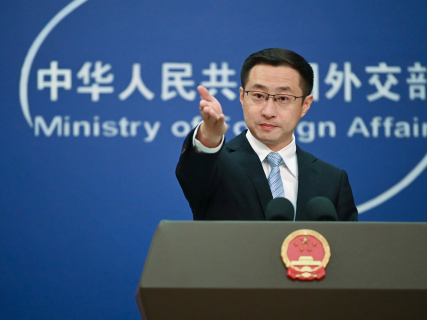
"Eswatini is facing a complex security situation, marked by widespread fraud in telecommunications, online gambling, and extremely high security risks," indicated the spokesperson for the Chinese Ministry of Foreign Affairs, Lin Jian, at a press conference.
According to Beijing, the issuance of travel warnings is a "common practice worldwide." "Committed to a people-centered approach and with diplomacy serving the population, we will do everything necessary to safeguard the security and the legitimate rights and interests of Chinese citizens abroad," he stated.
Lin insisted on the "extremely high risks" that Chinese nationals face in Eswatini and emphasized that the decision to publish this notice comes after a "prudent assessment" of the situation on the ground.
In May, Eswatini hosted the President of Taiwan, Lai Ching Te, on an unexpected visit that occurred after a previous attempt failed, frustrated after several African countries vetoed the use of their airspace for the Taiwanese leader's plane in a context of strong diplomatic pressure from China.
Specifically, Seychelles, Mauritius, and Madagascar withdrew flight authorizations at the last minute, a move that Taipei directly linked to Beijing's pressures on these governments. Regarding that trip, Chinese authorities denounced the "smuggler-style" of Lai's journey and urged both Eswatini and other states not to "seek profit for a small number of Taiwanese separatists."