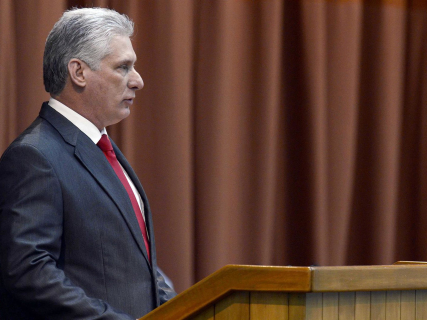
UN experts warn of a "silent Gaza" in Cuba due to US sanctions

The reporters denounce that the expanded restrictions since June are worsening the shortage of fuel, food, and medicines. They demand that Washington revoke the measures that they consider contrary to international law.

fotonoticia 20260806192039 1920

fotonoticia 20260806192039 1920

Add DEMÓCRATA to Google

Ask FREN

Published

Last updated

2 minutes

Most read

Elecciones 29N · Encuestas

La media de las encuestas

Media a 6 de noviembre de 2026 · 14 institutos

  • PP31,0 %
  • PSOE26,2 %
  • Vox19,5 %
  • Frente Amplio6,6 %
  • ERC2,4 %
  • SALF2,2 %
  • Podemos2,1 %
01020304050ene 2024jul 2024ene 2025jul 2025ene 2026jul 2026

Media del último estudio de cada instituto en 30 días y su evolución semanal desde el 23J. Partidos con al menos un 2 %.

Todas las encuestas

Elecciones generales del 29 de noviembre · Demócrata

Independent experts from United Nations have denounced that the new sanctions from the United States against Cuba are worsening the humanitarian crisis on the island and threaten fundamental rights such as health, food, life, and development.

The rapporteurs have called on the international community to act quickly to prevent Cuba from becoming a "silent Gaza", an expression previously used by four U.S. congressmen after visiting the country.

The restrictions reach the energy sector

The U.S. sanctions were expanded since June 2026 to affect strategic sectors of the Cuban economy. Since July 23, the measures also include energy companies and hinder the acquisition of fuel, even for humanitarian uses.

The decision comes at a time of severe energy scarcity. Cuba has recently suffered its third major national blackout, while prolonged electricity cuts affect transportation, agriculture, hospitals, and other essential services.

"The humanitarian consequences are already turning into a full-blown crisis that threatens the rights to health, life, food, and development," the experts have warned.

Simultaneous failures in basic services

The rapporteurs assert that energy, transportation, irrigation, and public services are failing at the same time. The impact would be especially severe for women, children, the elderly, farmers, and other vulnerable groups.

The accumulation of uncollected garbage in some areas of Havana has also raised the risk of disease spread, according to information released by the United Nations.

The agencies of the organization present in Cuba have also warned of increased food insecurity and the lack of medicines and basic products.

Blackouts affect hospitals and treatments

The interruptions in the electricity supply are hindering the operation of health centers and reducing the capacity to preserve medicines, perform diagnoses, and maintain certain treatments.

The experts have particularly warned of a critical shortage of drugs and resources to address diseases such as cancer.

"Food should never be used as a tool of political pressure. Measures that deliberately deprive a population of the means to survive violate the most basic guarantees of the right to life," they have stated.

Experts question Washington's arguments

The U.S. State Department published on July 20 a report titled "Cuba: the capital of 21st-century communism," in which it presents the island as a threat to the security of the United States and to the stability of the continent.

The rapporteurs argue that this document does not provide concrete evidence that Cuba supports terrorist activities or subversive actions. This assessment corresponds to the experts and does not constitute a judicial or institutional resolution of the United Nations.

In their view, the new restrictions are part of a broader strategy of pressure on the Cuban government that adds to the embargo applied for decades.

Request to the Security Council and the General Assembly

The specialists have asked the U.S. government to cease threats against Cuban sovereignty and to lift measures they consider incompatible with international law.

They have also requested that the Security Council and the United Nations General Assembly analyze the situation as a matter related to international peace and security.

The experts who make these types of statements act independently within the special procedures of the Human Rights Council. Their statements do not formally represent a position adopted by all member states of the United Nations.

More key points, information and questions with FREN

AI-GENERATED CONTENT

What is the current status of the processing of new resolutions on sanctions against Cuba in the UN General Assembly?

At this moment, the latest formal resolution of the UN General Assembly on the US embargo against Cuba remains the one approved on October 29, 2025, in which 165 countries called on the United States to end the embargo, with 7 votes against and 12 abstentions, according to the newspaper Demócrata in this report. In 2026, Cuba has launched a new political offensive in the General Assembly: it requested and obtained the holding of a specific session on July 7 about the “need to end the blockade,” but the sources consulted only mention debate and denunciations, not the adoption of a new resolution voted on that day. Therefore, the current situation is that the 2025 annual resolution remains in force as the latest formal pronouncement, while the 2026 process is in a phase of political pressure and discussion, with no record of a new resolution approved to date.

The latest approved resolution (October 2025)

According to the newspaper Demócrata, the General Assembly approved on October 29, 2025, a resolution that “urges” the United States to lift the economic, commercial, and financial embargo against Cuba, which has become an annual event since 1992. The Demócrata report on that vote can be found at “The UN urges the United States to lift the embargo against Cuba after six decades”.

In that session:

  • 165 countries voted in favor of the resolution.
  • 7 countries voted against, including the United States, Israel, and Argentina.
  • 12 countries abstained, including Ecuador.

The Cuban president, Miguel Díaz-Canel, celebrated the result and the foreign minister, Bruno Rodríguez, presented it as a “victory for Cuba” and “for the peoples.” There are no indications in the sources that this was anything other than the traditional annual General Assembly resolution against the embargo.

Cuban offensive in 2026: request for a specific session

In 2026, Havana has stepped up its strategy in the General Assembly following the tightening of the US blockade, especially in the energy sector. Demócrata reports that the Cuban government formally requested the General Assembly to hold a specific session titled “Need to end the economic, commercial, and financial blockade imposed by the United States against Cuba.” This request is detailed in the news “Cuba requests the UN to debate the US blockade against the island”.

According to that information, the session was scheduled for July 7, 2026, with the objectives to:

  • Expose the “aggressive actions” of the United States.
  • Denounce the “energy siege” and the “extreme tightening of the blockade.”
  • Label the blockade as “collective punishment” and a “systematic violation” of International Law.

Holding of the debate on July 7, 2026

Another Demócrata report confirms that the foreign minister, Bruno Rodríguez, traveled to New York for that General Assembly session, intending to denounce the “energy siege” and Washington’s threats; this is covered in “Cuba will bring to the UN its demand to live without energy siege or US threats”.

Subsequently, another Demócrata piece describes the debate’s development, in which Cuba accused the United States of applying “collective punishment” and received support from blocs such as CARICOM, the G77, and China. This session is recounted in “Cuba denounces before the UN a ‘collective punishment’ by the US for the blockade of the island”. The coverage focuses on:

  • The dialectical exchange between the Cuban and US delegations.
  • The political support from broad groups of Global South countries.
  • Washington’s criticism of the UN’s own expenses to organize the meeting.

However, in the consulted sources, it is never mentioned that a new resolution was voted on during that session nor are voting figures provided. The narrative is that of a thematic debate and denunciation, not the traditional annual resolution with a formal call to end the embargo.

General context and information limits

The Spanish press itself recalls that condemnation of the embargo has been a constant practice of the General Assembly since 1992. For example, in the Spanish internal context, the Sumar deputy Ángeles Santos reminded Congress that the UN has already approved “33 votes since 1992” condemning the blockade, as Demócrata reports in this parliamentary information.

With the information available in the consulted sources (mainly the newspaper Demócrata), it can be stated that:

  • The latest formal resolution of the General Assembly on the embargo against Cuba is that of October 2025.
  • In 2026, the process is in a phase of debate and political pressure (specific session of July 7), with no documented record of a new resolution voted on and approved so far.

My main specialty is the Spanish political and diplomatic context; on the strictly global UN level, I can only rely on these references. No further information is available in the consulted sources about a possible new resolution approved after July 2026.

What have historically been the results of the annual UN General Assembly votes on the embargo against Cuba? What specific position is Spain defending at the UN and the EU regarding the US blockade against Cuba? What internal political impact in Spain have the initiatives of Sumar and other Congress groups had regarding the end of the embargo against Cuba?

What are the powers and attributions of the UN Human Rights Council in humanitarian crisis situations?

The UN Human Rights Council (HRC) is not an operational humanitarian body like UNHCR or WFP, but in humanitarian crisis contexts it has key competencies of monitoring, denunciation, standard-setting, investigation, and political pressure on States and other actors. Its role focuses on documenting violations, activating special mechanisms, adopting resolutions, and recommending actions to other UN bodies. Although its decisions are not legally binding, they can have strong political, diplomatic, and symbolic impact, and serve as a basis for subsequent actions by the Security Council, General Assembly, or international justice.

General mandate applicable to humanitarian crises

The HRC is the main intergovernmental UN body responsible for the promotion and protection of human rights. In humanitarian crisis situations (armed conflicts, complex humanitarian emergencies, mass displacements, induced famines, etc.) it exercises its mandate in several ways:

  • Monitoring and assessment of the human rights situation in specific countries, especially when there are serious or systematic violations.
  • Development of standards and interpretative principles on how human rights norms and, where applicable, international humanitarian law should be applied.
  • Promotion of accountability, including gathering evidence and referring information to other mechanisms (such as international or hybrid courts).
  • Promotion of technical cooperation and capacity-building to prevent new violations or support institutional reconstruction after the crisis.

Specific actions in crisis contexts

Special sessions and emergency resolutions

A central tool in humanitarian crises are special sessions, which can be convened when requested by one-third of the Council’s member States. In these sessions, the HRC can:

  • Urgently debate the situation of a country or issue (for example, an armed conflict or mass repression).
  • Adopt resolutions condemning violations, demanding cessation of hostilities, calling for unrestricted humanitarian access, or urging protection of civilians and vulnerable groups.
  • Urge other bodies (Security Council, General Assembly, humanitarian agencies) to take concrete measures.

These resolutions are not binding but serve as political and moral references and can increase international pressure on those responsible for the crisis.

Investigation mechanisms: commissions and reports

In severe crises, the HRC can create Commissions of Inquiry, Independent International Mechanisms, or fact-finding missions. Their functions usually include:

  • Collecting and preserving evidence of serious violations (killings, torture, sexual violence, forced displacement, blocking humanitarian aid, etc.).
  • Identifying alleged perpetrators, both state and non-state actors.
  • Issuing public reports with findings and recommendations, which can be used by national or international courts.
  • Proposing measures for reparations, guarantees of non-repetition, and institutional reforms.

These mechanisms do not replace criminal justice but create an official record of the crisis and can feed processes in the International Criminal Court or other forums.

Special procedures and rapporteurs

The HRC manages the network of special procedures (rapporteurs, independent experts, and working groups) that, in humanitarian crises, can:

  • Conduct on-site visits (if the State permits) to assess the situation.
  • Send urgent communications to governments about individual cases or patterns of violations.
  • Present thematic or country reports that raise awareness of the crisis before the international community.

Their reports are discussed in the Council and can lead to new resolutions or expansion of investigation mechanisms.

Universal Periodic Review and preventive measures

Although the Universal Periodic Review (UPR) is not designed solely for crises, it can serve to:

  • Identify structural risks (discrimination, institutional weakness, impunity) that exacerbate a humanitarian crisis.
  • Recommend concrete reforms and commitments to reduce population vulnerability.

Additionally, the HRC has a mandate for “early warning” and prevention, using information from the UN High Commissioner for Human Rights (OHCHR), special procedures, and civil society to detect situations that may lead to mass atrocities.

Limits and coordination with other bodies

In humanitarian crises, the HRC depends on:

  • The political will of States to approve ambitious resolutions or create robust mechanisms.
  • The cooperation of affected States to facilitate access to investigators and humanitarian agencies.
  • The coordination with the Security Council, which can adopt coercive measures (sanctions, embargoes, referral to the ICC).

Despite these limits, the Human Rights Council is the central forum where human rights violations in humanitarian crises are documented, denounced, and politicized, generating public and diplomatic pressure, and building the factual and normative basis for other international responses.

Could you explain with recent examples how the Human Rights Council has acted in a specific humanitarian crisis? What are the differences between the role of the Human Rights Council and the Security Council in humanitarian crisis situations? How do NGOs and civil society participate in the Human Rights Council’s work during a crisis?

What international legal requirements must be met for the imposition of economic sanctions by one country on another?

In public international law, a State can only impose economic sanctions on another in a legally defensible manner if it respects the limits of the UN Charter, ius cogens, the principle of non-intervention, the rules on State international responsibility, and human rights obligations. Sanctions decided by the UN Security Council have a much stronger legal basis than unilateral ones. The latter are more debated but are considered admissible under certain conditions (for example, as countermeasures against an internationally wrongful act) provided they are proportional and do not violate fundamental rights of the population. The practice of regional organizations such as the EU operates within this general framework, adding their own internal requirements.

1. UN Charter framework and ius cogens

The United Nations Charter establishes several relevant principles:

  • Prohibition of the use or threat of force (art. 2.4): economic sanctions cannot in practice amount to prohibited use of force. The consensus is that economic measures alone are not “armed force,” but if they seek the total collapse of a State or its starvation they could approach ius cogens limits.
  • Peaceful settlement of disputes (art. 2.3 and Chapter VI): before adopting sanctions, States must attempt diplomatic channels, negotiation, mediation, etc.
  • Security Council competence (Chapter VII): when there is a “threat to peace, breach of peace or act of aggression,” only the Security Council can impose sanctions binding on all members. This gives UN sanctions superior legitimacy and legality compared to unilateral ones.

Ius cogens sets absolute limits: a sanction cannot involve violations of peremptory norms such as the prohibition of genocide, torture, slavery, or collective punishment of populations. For example, an embargo that prevents essential medicines to the point of massive risk to civilian life would be very difficult to justify.

2. Principle of non-intervention and sovereignty

The principle of non-intervention prohibits States from intervening in the essential internal or external affairs of another State (form of government, political orientation, elections, etc.). The key question is when an economic sanction becomes a form of unlawful intervention.

The prevailing doctrine considers that:

  • Sanctions aimed at ending a serious unlawful act (for example, illegal occupation, aggression, or serious human rights violations) have greater support.
  • Purely coercive sanctions to force internal political change (for example, overthrowing a government without prior international law violations) approach prohibited intervention.

3. International responsibility and countermeasures

From the perspective of State international responsibility, unilateral sanctions are often justified as “countermeasures”: responses to an internationally wrongful act by another State to induce it to comply again.

For such countermeasures to be lawful, they must meet classic requirements (according to the International Law Commission’s articles on State responsibility, highly influential):

  • Prior violation: they can only be adopted if the other State has previously committed an unlawful act (aggression, serious human rights violation, treaty breach, etc.).
  • Proportionality: the economic severity must be proportionate to the gravity of the infringement and the objective of restoring legality, not to punish without limits.
  • Reversibility and purpose: they seek that the offending State ceases the violation and repairs the damage, and must be lifted when that occurs.
  • Respect for essential obligations: even as countermeasures, they cannot violate ius cogens obligations nor certain basic humanitarian duties.

4. Human rights and humanitarian effects

Each State is obliged to respect human rights under its jurisdiction and, to some extent, also when acting extraterritorially. Sanctions cannot cause:

  • Mass deprivation of food, water, or medicines, violating the right to life and health.
  • Discrimination against specific groups (for example, national minorities of origin in the sanctioned State).
  • Collective punishment of the civilian population, incompatible with international humanitarian law in conflict contexts.

Therefore, it is increasingly required that sanctions be “smart” or targeted (aimed at political, military, or economic elites, not the entire population) and allow clear humanitarian exceptions.

5. Security Council vs unilateral and regional organization sanctions

Security Council sanctions (embargoes, asset freezes, travel restrictions, etc.) are based on Chapter VII of the Charter and are binding on all member States. Their legality is generally accepted, although their design and effects on the civilian population are debated.

In contrast, unilateral sanctions by a State or by regional organizations (such as the European Union) are based on:

  • Their sovereign competence to decide with whom they trade or not.
  • The countermeasures regime against unlawful acts.
  • Their internal rules (in the EU, for example, the common foreign and security policy and the regulations that implement sanctions).

However, their international legality is more debated: third States are not obliged to follow them (unless there is a specific obligation) and they must avoid becoming measures of indiscriminate economic coercion or violating fundamental rights.

What is the concrete difference between “smart” economic sanctions and general embargoes from the perspective of international law? In which recent cases have unilateral sanctions been justified as countermeasures and how has their legality been assessed? What additional limits does European Union law introduce when a member State participates in economic sanctions against third countries?

Play

Test your knowledge with FREN!

How much do you know about this topic? Answer the following 3 questions.

What fundamental rights have UN experts warned are threatened in Cuba due to the new US sanctions?

Question 1 of 3

Since when have US sanctions been expanded to include energy companies in Cuba?

Question 2 of 3

What have UN experts requested from the Security Council and the General Assembly regarding the situation in Cuba?

Question 3 of 3