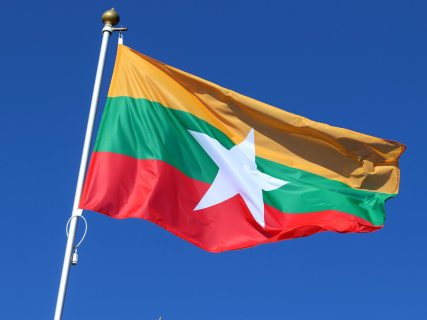

The International Court of Justice (ICJ) will announce on November 19 next its decision on whether the authorities of Myanmar committed genocide against the Rohingya population, in the proceedings initiated in 2019 following the complaint filed by Gambia. In that request, made in November of that year, the African country accused the Myanmar Army and other security forces of having developed "widespread and systematic clearance operations" against this mostly Muslim minority since 2016.
The main judicial body of the United Nations has confirmed this Tuesday the date on which it will deliver the judgment in the case concerning the "application of the Convention for the Prevention and Punishment of the Crime of Genocide" of 1948, a case driven by the Government of Gambia in which up to eleven States have taken part.
The court has recalled that, as far back as January 2020, it ordered Myanmar to adopt "all the measures" necessary to prevent the commission of genocide against the Rohingya minority, after Gambia called for the adoption of provisional measures while the merits of the dispute were being resolved.
Human Rights Watch (HRW), which has emphasized that this is not a criminal proceeding "against specific persons, but rather a request that the State of Myanmar's responsibility for genocide be determined legally," has underscored that the ICJ ruling "will mark a crucial moment in the Rohingyas’ fight for justice".
"The judgment will also serve as a clear reminder that the oppression of the Rohingya continues, and that countries that respect Human Rights must act decisively to support them, promote justice for the atrocities committed, and ensure their safe and voluntary return," said María Elena Vignoli, the NGO’s senior adviser on international justice.
The former 'de facto' leader and Nobel Peace Prize winner Aung San Suu Kyi --for years seen as a benchmark for the defense of democracy and fundamental freedoms-- was the subject of broad international rejection for the brutal repression campaign with which the Myanmar Army responded in August 2017 to a series of attacks carried out by Rohingya militants in Rakhine State.
As a consequence of that military operation, more than 700,000 Rohingyas, whom Myanmar denies citizenship, fled to neighboring Bangladesh in search of refuge. A United Nations investigation commission concluded a year later that Myanmar’s armed forces acted with a "genocidal intent in their response to the Arakan Rohingya Salvation Army (ARSA)."
Suu Kyi admitted abuses committed by Myanmar’s forces, although she described as "misleading" the accusation of genocide made by Gambia. Article 94 of the United Nations Charter establishes that all member States are required to comply with the decisions of the ICJ.