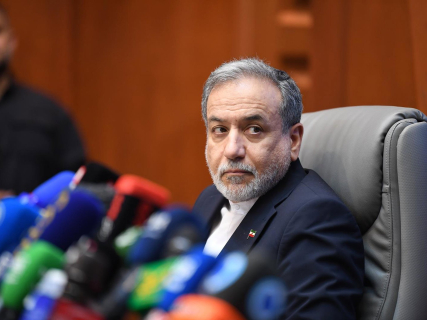

The Iranian Foreign Minister, Abbas Araqchi, declared this Thursday that the United States is making "an even greater miscalculation" regarding the Strait of Hormuz than the one it already made with the war, which is interpreted as a new reply to the words of President Donald Trump, who boasted of having the area under control.
Araqchi pointed out that Washington has been wrong in its assessments for some time due to failures in its Intelligence services, first regarding the war conflict and "now an even greater miscalculation with the Strait of Hormuz."
"Worse than fake news is fake Intelligence. Be careful," warned the head of Iranian diplomacy in a message disseminated on social media, where he concluded by emphasizing that Allah is "greater than any power on Earth."
This Wednesday, the President of the United States stated that the situation in the Strait of Hormuz is under control. "It's ours," he affirmed, also warning Iran that they would receive "a beating" again if they attempted any action, and emphasized that "right now we are in a very good position."
In response, the Gulf Strait Authority (PGSA), an organization established by Tehran to oversee maritime traffic in Hormuz, downplayed these "repeated" statements from U.S. officials and stressed that "they do not change reality."
"The Strait of Hormuz remains blocked and will not reopen until Iran's conditions are accepted," stated the PGSA in a brief note disseminated on social media.
The standoff between Washington and Tehran continues: while Trump proposes new economic sanctions and keeps the option of more attacks open to force the reopening of the Strait of Hormuz, Iran only accepts that possibility if the U.S. lifts the blockades on its ports and releases the Iranian assets held in foreign banks.
Furthermore, Tehran conditions free passage through the Strait of Hormuz on a solid ceasefire that also includes Lebanon and the Gaza Strip, habitual scenarios of Israel's territorial ambitions, which has already made it clear that it will not support any agreement that forces it to stop its attacks.