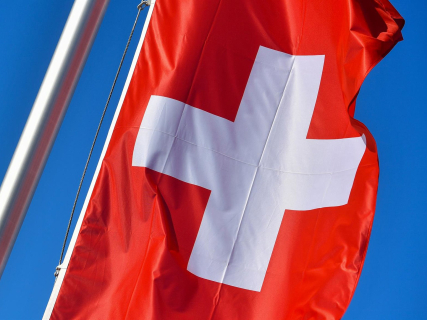

The Swiss have decisively rejected the so-called "initiative on neutrality", a proposal that aimed to establish a much stricter interpretation of one of the historical principles of the country's foreign policy in the Constitution. The projections from the gfs.bern institute for the public broadcaster SRF place the "no" around 70%, while Reuters points out that the initiative has also not achieved the majority of the cantons necessary to succeed, so its defeat is already considered effective pending the final result.
The referendum did not ask whether Switzerland should abandon its neutrality. The country will remain neutral and continue outside of NATO, as it has until now. What was at stake was how far that neutrality could go: whether the current flexibility to adopt sanctions or cooperate militarily with other countries should be maintained, or whether those possibilities should be strongly limited by a new constitutional provision.
What the initiative wanted to change
The proposal, driven by the association Pro Schweiz and mainly supported by the conservative Swiss People's Party (SVP), sought to establish that the country's neutrality would be "perpetual and armed." Switzerland could not join any military or defensive alliance nor collaborate with it unless it was being attacked or there was an imminent military threat. The measure would have affected, for example, certain training and cooperation activities that the Swiss Armed Forces currently maintain with NATO.
It would also have represented a significant change regarding international sanctions. The initiative aimed to prevent Bern from adopting economic measures against states involved in armed conflicts, except when approved by the United Nations or when necessary to prevent Switzerland from being used to evade sanctions. In practice, it would have made it difficult to repeat the decision made in 2022, when the Swiss government adopted much of the European Union's sanctions against Russia after the invasion of Ukraine.
Sanctions against Russia, at the center of the debate
Precisely the war in Ukraine was at the origin of a good part of the discussion. The promoters of the initiative argue that the adoption of European sanctions against Moscow eroded Switzerland's credibility as a neutral country and hindered its traditional role as an intermediary in international conflicts. The SVP argued during the campaign that Bern had come too close to the European Union and NATO and advocated for a stricter interpretation of neutrality.
The Swiss Government and the majority of political parties defended the opposite position. Their argument was that neutrality needs a certain margin of adaptation in the face of international crises and that constitutionally prohibiting certain sanctions or forms of cooperation could reduce Switzerland's ability to defend its own interests. The Foreign Minister, Ignazio Cassis, stated during the campaign that the proposal would harm national security and even limit joint training with NATO.
Switzerland will continue to collaborate with NATO without becoming a member
The result does not imply Switzerland's entry into the Atlantic Alliance. The country does not belong to NATO and maintains the obligation not to participate militarily in wars between other states, but for decades it has cooperated with the organization in security, training, and interoperability programs. The rejection of the initiative allows that collaboration to remain open without introducing into the Constitution the prohibition proposed by its promoters.
This distinction was one of the central points of the campaign: supporters of the "yes" considered that increasing cooperation could progressively dilute neutrality, while their opponents argued that working with neighboring countries and international organizations does not equate to joining a military alliance. According to the analysis of Swissinfo, the vote shows that a majority of citizens prefer to maintain a version of neutrality that allows the Government to retain a certain margin of action.
A neutrality recognized for more than two centuries
The permanent neutrality of Switzerland was internationally recognized in 1815, after the Napoleonic wars, and has been integrated into its constitutional order since 1848. It has allowed the country to stay out of major European conflicts and develop a diplomatic role as a host for negotiations and a representative of the interests of countries that have broken relations with each other. However, the Constitution does not detail how that neutrality should be applied in each international crisis, and that flexibility was precisely what the initiative voted on this Sunday aimed to reduce.
To approve a federal popular initiative in Switzerland, a double majority is required: that of the votes cast nationwide and that of the cantons. Projections indicate that the proposal is far from the first and Reuters confirms that it does not reach the second either, so the constitutional change is ruled out.
The result maintains the current policy
The rejection essentially leaves the current situation intact: Switzerland will continue not to integrate into military alliances, but will be able to continue cooperating with NATO and will retain the possibility of adopting international sanctions without being limited only to those approved by the United Nations. This also means that the measures applied against Russia are not automatically questioned by the result of the referendum.
The result does not close, however, the debate on how far Swiss neutrality should go in a Europe marked by the war in Ukraine and the increase in military spending. What the ballots seem to have ruled out this Sunday is turning that neutrality into a much stricter constitutional rule that limits in advance the Government's ability to impose sanctions or cooperate with its European partners and with NATO.